How to Choose a Dishwasher: Quick Guide
Choosing the right dishwasher isn’t just about finding one that fits in your kitchen. It’s about investing in a machine that cleans effectively, dries thoroughly, runs quietly, and lasts for years. With so many models offering smart controls, advanced drying systems, and various capacity options, it’s easy to feel overwhelmed. The good news? Modern dishwashers use up to 50% less water and energy than hand washing, making them both convenient and eco-friendly.
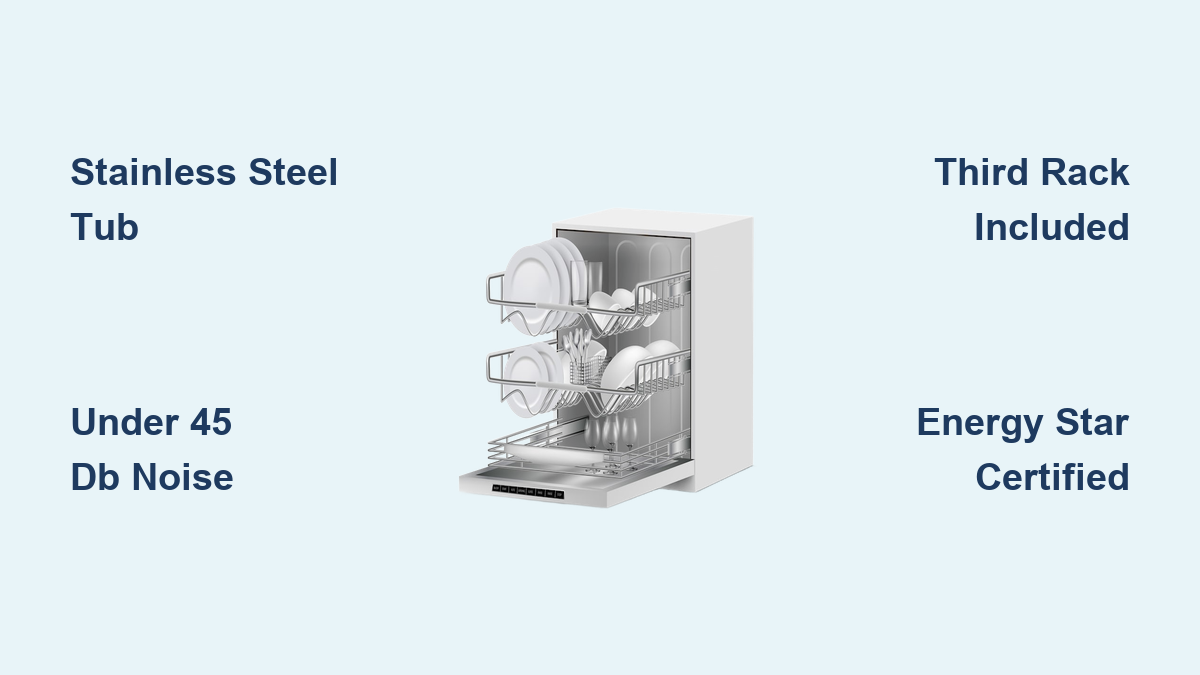
In this guide, you’ll learn exactly what to look for when buying a dishwasher based on real performance data, reliability ratings, and user needs. You’ll discover why noise levels under 45 dB matter in open-concept homes, why stainless steel tubs dry plastics better, and which brands consistently top reliability charts. Whether you’re replacing an old unit or upgrading for the first time, this guide gives you actionable insights to make a confident, informed decision.
Match Size to Your Kitchen Space
Confirm Standard Dimensions Fit
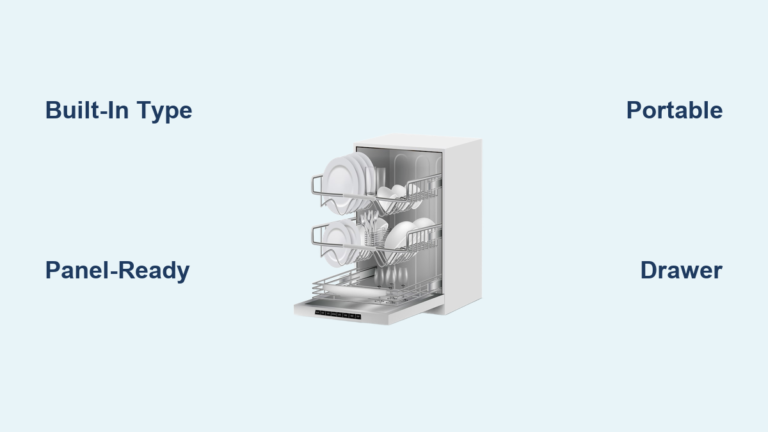
Most built-in dishwashers are designed to fit a standard 24-inch wide cabinet opening. The typical dimensions are 24 inches wide, 24 inches deep, and 35 inches tall. Before selecting any model, measure your existing cutout carefully, especially if you’re replacing an older unit. Some older models may be slightly deeper or taller, and newer units often have leveling legs that add height.
Also, account for plumbing and electrical clearance behind the unit. Even if the dishwasher fits width-wise, ensure there’s enough room for hoses and power cords without kinking. For tight spaces, consider ADA-compliant models, which are shorter around 32 to 34 inches tall and designed for lower countertops, offering better accessibility without sacrificing core functionality.
Choose Compact or Portable for Small Kitchens
If you have limited space like in an apartment, studio, or galley kitchen, an 18-inch wide dishwasher is a practical alternative. These compact units typically hold 8 to 10 place settings and fit into smaller cabinetry. While they sacrifice some capacity, they still offer key features like soil sensors and adjustable racks.
For renters or kitchens without permanent installation options, portable dishwashers are ideal. These roll-on units connect to your kitchen faucet and can be stored away when not in use. They offer similar cleaning performance to built-ins but may lack advanced drying tech and run slightly louder due to less insulation.
Ensure Proper Clearance and Installation Fit
Even if the dishwasher fits within your cabinet frame, improper clearance can cause installation issues. Leave space for leveling feet, usually adjustable up to 1 inch, and verify that the door can open fully without hitting countertops, islands, or adjacent appliances.
If you’re installing under a granite or thick countertop, confirm the unit won’t be pinched at the top. Some high-end models have top-mounted controls that require the door to open slightly for operation. This design enhances aesthetics but needs clearance above the unit. Always consult the manufacturer’s installation manual before purchasing to avoid costly surprises.
Prioritize Cleaning and Drying Performance
:strip_exif():no_upscale():format(webp):quality(58)/1698875701651/Bosch-new-dishwasher-spray-arm.jpeg)
Look for Advanced Spray Arm Systems
The heart of a dishwasher’s cleaning power lies in its spray arm configuration. Most models use three rotating arms to blast water across dishes. However, premium systems go further.
Bosch’s PrecisionWash uses sensors to detect soil levels and direct high-pressure jets where needed. Its PowerControl spray arm intensifies cleaning on the bottom rack, perfect for pots and pans regardless of placement. Other brands include strategically placed side jets that target hard-to-reach areas during heavy or turbo cycles.
When comparing models, check spray arm coverage. Units with multiple tiers and overlapping spray patterns clean more evenly. Avoid models with only one or two arms unless they’re specifically designed for compact loads.
Use Specialized Cycles for Specific Needs
Not all dishes are created equal, and your dishwasher shouldn’t treat them that way. Look for these essential cycles:
- Heavy Wash: For baked-on food and greasy pans, using hotter water and longer run times.
- Eco-Wash: Energy-efficient option with lower water and heat usage, ideal for daily use.
- Speed Wash or Express Wash: Cleans lightly soiled dishes in under an hour.
- China or Crystal Cycle: Gentle wash and cool rinse to protect delicate glassware.
- Steam Clean: Softens stuck-on food before washing, great for casserole dishes or baby bottles.
- NSF Certified Sanitizing Rinse: Heats final rinse to 150 degrees or higher, killing 99.9% of bacteria, crucial for homes with infants or immune-sensitive individuals.
Having multiple cycle options ensures you’re not overwashing delicate items or underwashing dirty cookware.
Fix Plastic Drying Problems with Smart Tech
One of the most common complaints? Plastic containers come out wet. That’s because plastic doesn’t retain heat like ceramic or metal, so it cools quickly and resists evaporation.
To solve this, look for advanced drying technologies. CrystalDry converts moisture into heat, drying plastics up to 60% better than standard models. AutoAir automatically opens the door at cycle end, releasing steam and letting fresh air circulate. Fan-assisted drying uses a built-in fan to speed up evaporation without extra heat. Condensation drying relies on the natural cooling of stainless steel tubs to draw moisture away, effective when paired with heat retention.
Avoid models that rely solely on heat-only drying, especially if you own many plastic storage containers.
Optimize Capacity and Loading Flexibility
Pick the Right Place Setting Capacity
Dishwasher capacity is measured in place settings, with each set including a dinner plate, salad plate, bowl, cup, glass, and cutlery. Eight to 12 place settings works best for singles, couples, or light users. Fourteen to 16 place settings is ideal for families of 3 to 4 or frequent entertainers. Large-capacity models offer extra space for pots, pans, and serving platters.
If you regularly host dinners or cook large meals, opt for 16-place models. For smaller households, a 12-setting unit may suffice, but consider future needs. Upgrading later can be costly.
Maximize Space with a Third Rack
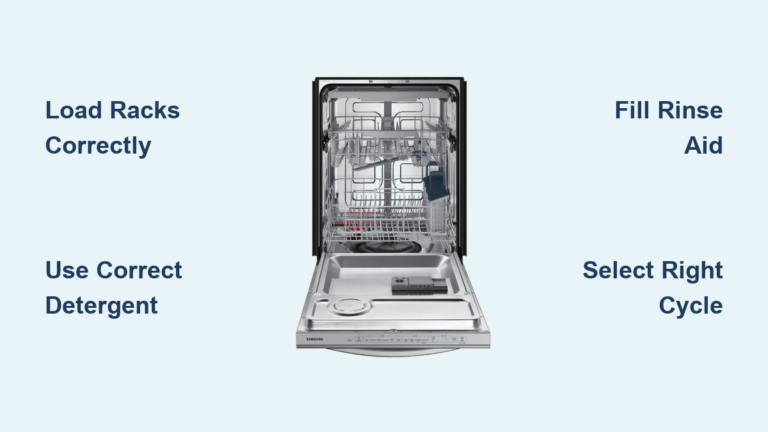
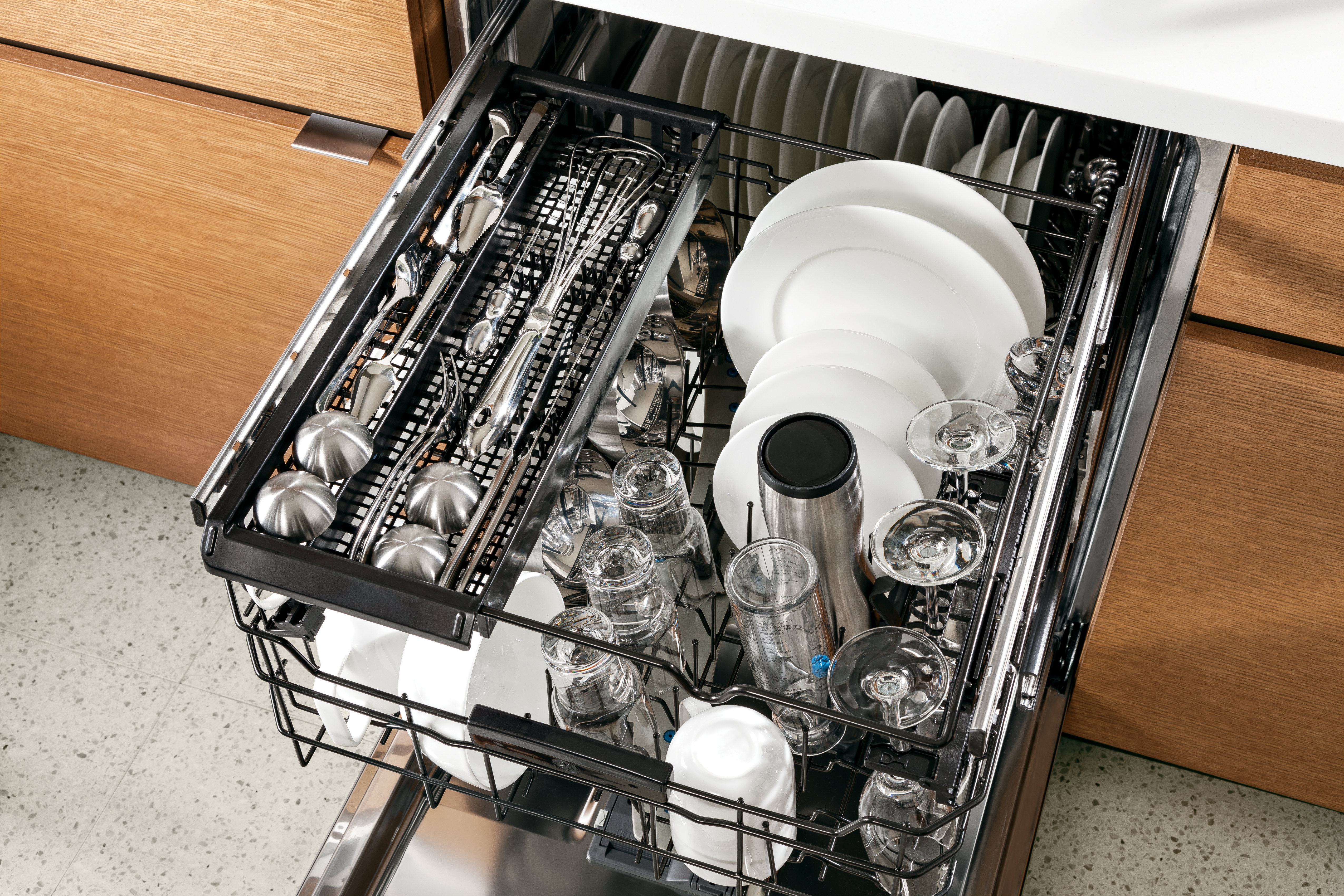
A third rack is a game-changer for loading flexibility. Positioned at the top, it holds utensils, whisks and tongs, espresso cups, baby bottle caps, and measuring spoons.
Bosch offers two types. The standard third rack is flatware-focused with a V-shaped design to protect stemware below. The flexible third rack features drop-down wings and adjustable tines, creating room for deeper items like ramekins or ladles. This design adds 30% more loading area than traditional two-rack models.
Third racks free up space in lower baskets, allowing better spray access and reducing the need to hand-wash odd-shaped tools.
Adjust Racks for Oversized Items
Loading tall wine glasses or large stockpots shouldn’t mean sacrificing other dishes. That’s where adjustable upper racks come in.
Bosch’s RackMatic system lets you raise or lower the middle rack by several inches with one hand. This accommodates tall glasses on the bottom rack or bulky mixing bowls on the top.
Look for additional features like fold-down tines that bend or collapse to fit large items. Movable silverware caddies reposition to balance load distribution. Some models include swivel spray arms that redirect water flow around obstructions. These small design details make a big difference in real-world usability.
Demand Quiet Operation Under 45 dB
Know What Decibel Levels Mean
Noise matters, especially in open-concept homes where the kitchen blends into living areas. Here’s how to interpret decibel ratings.
Under 40 dB is whisper-quiet, like a library. Forty to 45 dB is comparable to soft music and ideal for most homes. Forty-six to 50 dB is noticeable, similar to a quiet conversation. Above 50 dB is disruptive and may interfere with TV or conversation.
For peace of mind, choose a model rated 45 dB or lower. Premium dishwashers from Bosch, Miele, and Cove often operate between 38 and 42 dB, making them nearly unnoticeable during nighttime cycles.
Choose Sound-Reducing Features
Quiet dishwashers aren’t magic. They’re engineered. Key noise-reduction elements include thick insulation layers in door and sides, solid base construction to minimize vibration, low-vibration motors with fewer moving parts, and hidden top-mounted controls that reduce panel resonance.
Keep in mind that self-cleaning filter systems tend to be louder due to food pulverization. If silence is a priority, consider a manual-clean filter, which operates more quietly but requires monthly cleaning.
Invest in Energy and Water Efficiency
Choose ENERGY STAR Certified Models
Look for the ENERGY STAR label. It means the dishwasher meets strict efficiency standards set by the U.S. Environmental Protection Agency. These models use up to 50% less energy and water than hand washing, cost $50 or less per year to operate, and save up to 3,800 gallons of water over their lifetime. They also qualify for potential rebates in some states or utility programs.
Leverage Sensor-Based Efficiency
Modern dishwashers come with soil sensors that detect how dirty the water is during the cycle. If dishes are lightly soiled, the system adjusts water volume, cycle length, and temperature. This prevents overuse of resources and protects delicate items from unnecessary heat.
Pair this with half-load or upper-rack-only options, which activate only one spray arm for small loads, saving water and energy without compromising cleanliness.
Reduce Drying Energy Use
Drying accounts for a significant portion of energy consumption. To cut costs, use fan-assisted or air-dry settings instead of heat drying. Enable AutoAir or similar venting features. Disable heat dry if you’re okay with slightly damp dishes.
Many users don’t realize they can skip the heated dry cycle entirely, especially if they open the door slightly at the end to let steam escape.
Select a Stainless Steel Interior
Why Stainless Steel Beats Plastic
The material inside the tub has a major impact on performance. Stainless steel offers excellent heat retention that aids drying, resists chipping and lasts longer, provides high odor and mold resistance, and has a smooth non-porous surface that’s easy to clean. Plastic offers lower cost but poor heat retention causing dishes to stay wet, is prone to scratches and wear, can develop pink mold tint over time, and is harder to clean over time.
Stainless steel tubs heat up during the cycle and stay warm during drying, helping plastic containers dry faster. They also resist odors and are easier to wipe down after maintenance. While plastic tubs are cheaper, they compromise drying performance and longevity. For long-term value, always choose stainless steel.
Evaluate Controls, Filters, and Smart Features
Pick Control Style Based on Use
Two main control types exist. Front controls are visible on the front panel, easy to use and monitor, but less sleek. Top controls are hidden along the top edge of the door, providing a clean look and child safety, but harder to check cycle status without opening the door.
If you choose top controls, look for time-remaining displays or floor projection lights that shine a status indicator on the floor, so you don’t have to guess when it’s done.
Compare Filter Systems
Manual-clean filters require removing and rinsing every few weeks but offer quieter operation and better reliability. Self-cleaning hard food disposers grind food particles and flush them away, requiring no hands-on cleaning but are noisier and more complex mechanically.
While self-cleaning sounds convenient, many experts recommend manual filters for better long-term reliability and quieter operation.
Decide If Smart Features Are Worth It
Wi-Fi enabled models let you start or pause cycles remotely, get alerts when detergent runs low, and monitor cycle progress from your phone. These features are useful if you run cycles during off-peak hours, want to start a load while commuting home, or integrate appliances into a smart home system.
But if you’re not tech-inclined, skip the extra cost. Smart features don’t improve cleaning or drying performance.
Trust Reliable Brands and Value Tiers
Choose Top-Rated Brands for Longevity
Based on surveys of over 66,000 users, the most reliable brands are Bosch, Miele, Thermador, Beko, and Midea. These brands show the lowest predicted failure rates in the first five years. Miele units in particular can last 15 to 20 years with proper care, making them a smart long-term investment despite higher upfront cost.
Mid-tier brands like Whirlpool, Maytag, LG, and Hotpoint offer decent performance but slightly higher repair rates.
Know What to Expect by Price Range
At 300 to 500 dollars, you get basic cycles, plastic tubs, higher noise often above 48 dB, and limited flexibility. At 500 to 1,000 dollars, the best value range, you get stainless steel tub, soil sensors, third rack, quiet operation 40 to 45 dB, and better finishes. At 1,000 dollars or more, premium models offer CrystalDry, AutoAir, Wi-Fi, custom panel-ready options, ultra-quiet operation 38 to 40 dB, and luxury builds.
The 500 to 1,000 dollar range delivers the best balance of performance, reliability, and features. You’ll get most of what matters without paying for luxury extras.
Style and Finish: Blend With Your Kitchen
Match Finish to Your Design Theme
Your dishwasher should complement your kitchen, not clash with it. Stainless steel is timeless and modern but shows fingerprints unless it has a brushed finish. Black stainless steel is bold and contemporary, often including fingerprint-resistant coating. Black or white is classic and affordable, working in traditional or rental kitchens. Bisque matches vintage or older appliances. Panel-ready options accept a custom wood or material panel to match your cabinets, ideal for seamless high-end designs.
Create a Built-In Look
For a luxury appliance-invisible kitchen, choose panel-ready models. Pair with top-mounted hidden controls. Use recessed or pocket handles for clean lines. This setup integrates the dishwasher into your cabinetry, making it disappear when closed, perfect for modern minimalist or high-end remodels.
Know When to Replace Your Old Unit
Spot the Warning Signs
Replace your dishwasher if you notice dishes come out greasy, cloudy, or with food residue. Poor drying, especially on plastics, is another red flag. Leaks under the door or floor require immediate attention. Unusual noises like grinding or rattling indicate mechanical issues. Frequent repairs or an age over 10 years are clear signs it’s time for a new unit.
Older models use twice as much water and energy as modern efficient ones. Upgrading can save hundreds in utility bills over time.
Upgrade for Real Benefits
A new dishwasher delivers better cleaning and sanitizing, quieter operation, lower water and energy bills, more flexible loading options, and advanced features like steam and smart controls. Even if your old unit still works, a modern replacement pays for itself over time through efficiency and convenience.
Frequently Asked Questions About Choosing a Dishwasher
What size dishwasher do I need for a family of four?
For a family of four, a standard 24-inch dishwasher with 14 to 16 place settings is ideal. This capacity handles daily meals and occasional dinner parties without overcrowding. If you have limited space, an 18-inch compact model works but may require more frequent loads.
How quiet should a dishwasher be for an open kitchen?
For open-concept kitchens, choose a dishwasher rated 45 dB or lower. Models in the 40 to 45 dB range operate like soft music and won’t disrupt conversations or TV viewing. Bosch and Miele offer some of the quietest options at 38 to 42 dB.
Are stainless steel tub dishwashers worth the extra cost?
Yes. Stainless steel tubs retain heat better, resulting in drier dishes especially plastics, resist odors and mold, and last longer than plastic interiors. While initially more expensive, they deliver superior drying performance and durability that justifies the investment.
What features matter most for cleaning performance?
Look for multiple spray arm systems, soil sensors that adjust water usage, and specialized cycles like heavy wash for pots and NSF-certified sanitizing rinse for bacteria elimination. PrecisionWash and PowerControl spray arms found on Bosch models represent advanced cleaning technology worth considering.
Is the sweet spot price range really the best value?
Yes. The 500 to 1,000 dollar range offers the best balance of cleaning performance, reliability, and features. You’ll get stainless steel tubs, adjustable racks, third racks, quiet operation around 40 to 45 dB, and soil sensors. Premium models above 1,000 dollars add luxury features that don’t significantly improve core cleaning and drying.
Key Takeaways for Choosing Your Dishwasher
Choosing the right dishwasher comes down to matching performance, size, noise level, and reliability to your household’s needs. Focus on stainless steel interiors for better drying, low decibel ratings 45 dB or below for quiet operation, third racks for loading flexibility, and ENERGY STAR certification for efficiency. Stick to trusted brands like Bosch and Miele for long-term satisfaction, and aim for the 500 to 1,000 dollar sweet spot for the best value.
With the right model, your dishwasher becomes a silent efficient workhorse that makes daily life easier. Measure your space carefully, prioritize the features that matter most to your household, and invest in a unit that will serve you well for years to come.