How to Clean Hotpoint Dishwasher: Easy Steps
Is your Hotpoint dishwasher leaving dishes cloudy, smelling musty, or struggling to drain? A dirty dishwasher will not clean your dishes properly, no matter how good the cycle settings are. Over time, limescale, food debris, and grease build up inside, reducing performance and potentially causing costly damage. The good news? With just a few simple steps, you can restore your Hotpoint dishwasher to like-new condition.
This guide walks you through how to clean a Hotpoint dishwasher thoroughly, from filter and spray arms to seals, salt, and rinse aid systems, so you get spotless dishes, fresh odors, and long-term reliability.
Clean the Interior Regularly
A deep-cleaned interior keeps dishes sparkling and prevents foul smells from developing. Running a hot cleaning cycle every three months dissolves grease, sanitizes surfaces, and eliminates residues that cause odors.
Run a Hot Cleaning Cycle
Every three months, or when noticing cloudy glassware or lingering odors, run an empty hot cycle at 60°C or higher. Use one of these cleaning agents:
- White vinegar: Place 1 cup in a dishwasher-safe bowl on the top rack.
- Baking soda: Sprinkle 1 cup on the bottom of the tub. Never mix with vinegar.
- Commercial cleaner: Use a branded dishwasher cleaner like Finish or Calgon.
Let the cycle complete. The heat and cleaning agent will dissolve grease, sanitize surfaces, and eliminate residues.
Pro tip: After the cycle, wipe down the door and gasket with a damp cloth to remove any remaining residue.
Clean the Dishwasher Filter
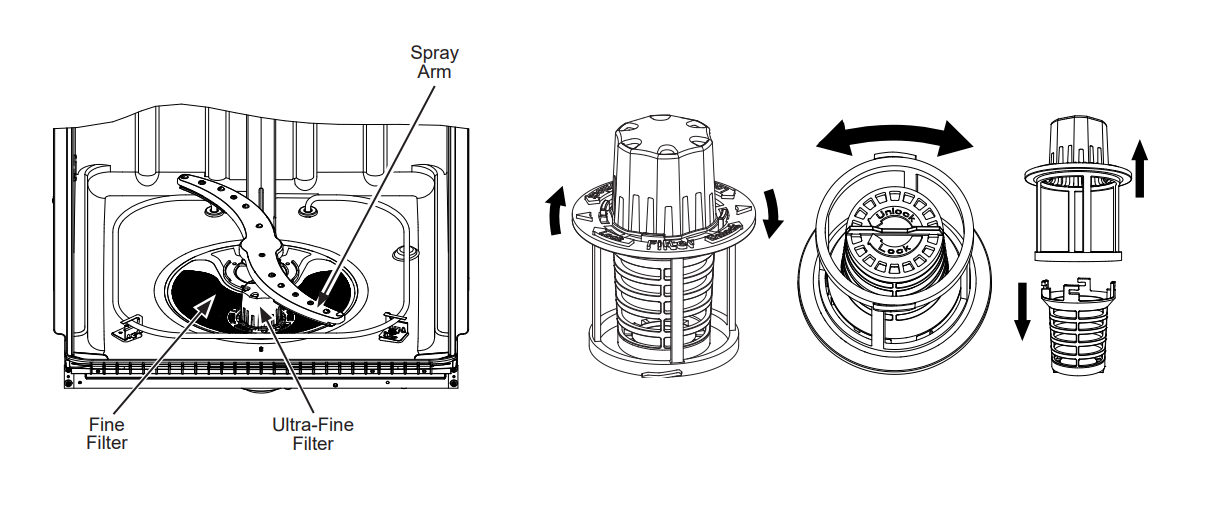
A clogged filter is the number one cause of poor cleaning and drainage issues in Hotpoint dishwashers. Regular filter maintenance prevents food debris from entering the pump and damaging internal components.
Remove and Disassemble the Filter
- Turn off power and open the dishwasher.
- Pull out the lower basket to access the filter at the tub base.
- Twist the coarse filter counterclockwise to remove.
- Lift out the fine mesh filter. Some models have a third layer; refer to your manual.
Wash All Filter Components
- Rinse under warm running water.
- Use a soft brush to remove stuck-on food.
- For tough buildup, soak in warm, soapy water or use a garden hose.
- Never use abrasive pads or harsh chemicals.
Reinstall Properly
- Place the fine filter first, then the coarse one.
- Twist the top filter clockwise until secure.
- Check that no water bubbles form under the filter after reinstallation.
- Run a quick rinse cycle to confirm no leaks.
Maintenance tip: Clean the filter every three months, or monthly if used daily.
Unclog the Spray Arms
Blocked spray arms mean poor water coverage and dirty dishes. When nozzles are clogged with limescale or food particles, cleaning effectiveness drops significantly.
Remove the Lower and Upper Spray Arms
- Lower arm: Unscrew the central nut or clip.
- Upper arm: Detach from the mounting ball or screw. This varies by model.
Clear the Spray Holes
- Inspect nozzles for limescale or food blockages.
- Use a toothbrush or pin to gently clear clogs.
- Soak in white vinegar for 15 to 30 minutes if limescale is visible.
Reinstall and Test Rotation
- Reattach securely.
- Manually spin each arm to ensure free, unobstructed movement.
Why it matters: Hotpoint models with 3D Zone Wash rely on full spray arm function for targeted cleaning.
Wipe the Door Seal
A grimy or damaged seal causes leaks, odors, and reduced efficiency. The rubber door seal prevents water leakage and maintains internal pressure during cycles.
Clean with Mild Solution
- Dampen a cloth with warm water and mild detergent.
- Wipe the entire rubber gasket, especially corners where mold hides.
- For disinfecting, use a 50/50 mix of water and white vinegar.
Avoid Harsh Cleaners
- No bleach or abrasive pads. They degrade rubber over time.
- Dry thoroughly after cleaning.
Inspect for Damage
Look for cracks, brittleness, or warping. Replace the seal if damaged. Visit hotpointservice.co.uk for genuine Hotpoint parts.
Descale the Dishwasher
Hard water leads to limescale, which harms heating elements and leaves spots on dishes. Regular descaling protects internal components and maintains cleaning efficiency.
Start a Hot Wash Cycle
- Run a 60°C or higher cycle for 30 minutes to loosen deposits.
- Pause and open the door carefully. Hot steam is present.
- Add a dishwasher descaler such as Finish, Calgon, or Hotpoint-approved product.
- Resume the cycle until complete.
Frequency Based on Water Hardness
- Soft water: Every six months
- Hard water: Every three months
Warning: Never use vinegar for descaling if your model has a stainless steel interior. Vinegar can cause pitting.
Add Dishwasher Salt Correctly

Salt prevents limescale and ensures crystal-clear glassware. The water softening system requires regular salt refills to function properly.
Locate the Salt Reservoir
- Found at the bottom of the tub, under the lower basket.
- Marked with a salt symbol or cap labeled “Regeneration Salt.”
Fill the Reservoir
- Wait for the salt indicator light to come on.
- Unscrew the cap. Some turn a quarter-turn; others fully unscrew.
- Pour in granular dishwasher salt only. Never use table salt.
- Fill to the top. The reservoir holds approximately 1 to 1.5 kg.
- Wipe away any spilled salt.
- Screw the cap back tightly.
Note: It is normal to see water in the reservoir. It is part of the softening system.
Refill Rinse Aid
Rinse aid boosts drying, reduces spots, and improves cleaning performance. It helps water sheet off dishes for spotless results.
Find the Rinse Aid Dispenser
- Located on the inside of the door, near the detergent drawer.
Refill the Reservoir
- Turn the knob to “Open” or “Refill.”
- Pour rinse aid until it reaches the fill line.
- Close and click the cap shut.
Adjust Dosage Settings
- Settings one to three: Soft water areas
- Settings four to six: Hard water areas
Refill when the rinse aid indicator light turns on.
Expert tip: Too little rinse aid causes water spots. Too much leaves a filmy residue.
Weekly Usage Keeps It Running
Running your dishwasher weekly prevents stagnation and motor issues. Even without dishes, regular use keeps internal components active.
Run an Empty Cycle
Even without dishes, run a short eco or rinse cycle once a week. This keeps seals lubricated, prevents pump seizure, and flushes out stagnant water.
Ideal time: Late evening or during off-peak hours.
Avoid Common Mistakes
Prevent damage with these simple do and do not guidelines. Proper usage extends your dishwasher lifespan significantly.
Do Not Overload the Dishwasher
Blocking spray arms reduces cleaning power. Follow rack loading guides in your manual.
Use the Right Detergent
Only use dishwasher-specific tablets, powder, or gel. Never use regular dish soap. It creates suds that flood the floor.
Check Water Temperature
Inlet water should be at least 12°C. In cold climates, connect to a hot water supply if possible.
Troubleshoot Common Problems
Fix issues fast with this quick-reference guide. Many problems stem from simple maintenance needs.
Dishes Come Out Dirty
Cause: Clogged filter or blocked spray arms. Fix: Clean both and check salt/rinse aid levels.
Cloudy Glasses
Cause: Limescale or low rinse aid. Fix: Descale and increase rinse aid setting.
Bad Smell
Cause: Food trapped in filter or stagnant water. Fix: Clean filter and run vinegar cycle.
Water Will Not Drain
Cause: Clogged filter or kinked drain hose. Fix: Clean filter and inspect hose for blockages.
Leaking from Door
Cause: Damaged or dirty door seal. Fix: Clean or replace the gasket.
Optimize Performance Features
Hotpoint dishwashers come with smart features. Keep them working right through regular maintenance.
3D Zone Wash Technology
This feature delivers high-pressure spray to heavily soiled zones. It requires clean, unobstructed spray arms to work effectively.
Auto-Sensor Wash
This adjusts cycle length based on dirt level. It works best with a clean filter and interior.
Eco and Quick Wash Modes
These save energy and time. They perform poorly in a dirty or scaled-up machine.
Bottom line: Regular cleaning ensures these features deliver as promised.
Maintain Warranty and Get Support
Proper care keeps your warranty valid and service easy. Neglecting maintenance may void your warranty.
Use Genuine Parts
Replace filters, seals, and components with official Hotpoint parts. Order from hotpointservice.co.uk.
Contact Customer Service If
- Pump or motor fails
- Error codes persist
- Drainage issues continue after cleaning
Key Takeaways for Maintaining Your Hotpoint Dishwasher
Cleaning your Hotpoint dishwasher is not just about freshness. It is about performance, efficiency, and longevity. By following this guide, cleaning the filter, spray arms, seal, and interior, descaling regularly, and refilling salt and rinse aid correctly, you ensure every cycle delivers spotless, dry dishes.
Stick to a simple schedule. Clean the filter every three months, run a vinegar cycle every three months, and refill salt and rinse aid as the indicator lights show. A few minutes of maintenance saves hours of frustration and hundreds in repairs.
Keep your Hotpoint running like new. Your dishes and your wallet will thank you.
Frequently Asked Questions About Cleaning a Hotpoint Dishwasher
How often should I clean my Hotpoint dishwasher filter?
Clean the filter every three months, or monthly if you use your dishwasher daily. A clogged filter reduces cleaning efficiency and can cause drainage problems.
Can I use vinegar to descale my Hotpoint dishwasher?
Only use vinegar for descaling if your model does not have a stainless steel interior. Vinegar can cause pitting on stainless steel. Use a commercial descaler instead for stainless steel interiors.
Why do my dishes still look dirty after running a cycle?
This usually indicates a clogged filter or blocked spray arms. Clean both components and check that salt and rinse aid levels are adequate.
Where is the rinse aid dispenser located on a Hotpoint dishwasher?
The rinse aid dispenser is located on the inside of the door, near the detergent drawer. Turn the knob to refill and adjust the dosage setting based on your water hardness.
How do I know if my dishwasher needs descaling?
Signs include cloudy glassware, visible limescale deposits on interior surfaces, and reduced cleaning performance. In hard water areas, descale every three months. In soft water areas, every six months is sufficient.