How to Clean GE Dishwasher: Easy Steps
If your GE dishwasher leaves dishes with residue, smells musty, or drains poorly, it is probably overdue for a deep clean. Over time, food debris, grease, limescale, and mold build up inside the filter, sump, spray arms, and seals, reducing cleaning power and shortening the appliance lifespan. The good news: regular maintenance can restore performance and extend your dishwasher life to 10 to 15 years. This guide walks you through every step, from safe disassembly to monthly upkeep, using proven methods from technicians and real user results.
Filter Cleaning: Remove Debris Safely

The filter is the heart of your dishwasher cleaning system. It traps large and fine particles to protect the pump and ensure water recirculates cleanly. A clogged filter causes poor drainage, odors, and reduced cleaning efficiency.
Identify Your Filter Type
Most GE models use a multi-part filtration system with several key components:
- Coarse filter screen catches big food chunks
- Fine mesh filter blocks small debris
- Sump reservoir houses the filter assembly
- Hub, cage, and pump screen protect the drain pump
Check your owner is manual to confirm whether your model has a removable or self-cleaning filter. Even self-cleaning filters need periodic manual cleaning.
Access the Filter Assembly
Remove both racks completely and place on a towel to avoid scratches. Then follow these steps:
- Remove the lower spray arm by locating the hex screw at the base. Use a hex tool to remove it. If no screw exists, find the plastic release tab at the rear center and gently pry backward with a flathead screwdriver.
- Detach the spray arm support by lifting small retaining tabs on the plastic nut with a flathead. If tabs are broken, unscrew the nut counterclockwise.
- Remove support screws using a quarter-inch socket wrench for the back and top screws.
- Lift out the support assembly by pressing rear tabs inward and pulling up.
- Extract the sump reservoir by squeezing the sides and wiggling upward.
- Remove hub and cage by unscrewing the hub counterclockwise, then compressing the cage inward from the top and lifting out.
A small white or gray drain ball sits inside the housing. This is not debris. It regulates water flow. Do not remove or discard it.
Clean All Filter Components
Soak all removable parts in warm, soapy water for 10 to 15 minutes. Use an old toothbrush or soft sponge to scrub the fine mesh filter, sump reservoir interior, hub and cage, coarse filter screen, and pump screen. Focus on the hole beneath the spray arm, which is the main water inlet. Ensure it is fully clear. Rinse each piece under running water and inspect for remaining grime. For stubborn buildup, apply a bleach-based cleaner, wait 5 to 10 minutes, then rinse thoroughly.
Reassemble Without Leaks or Jams
Incorrect reassembly causes leaks, poor spray arm rotation, and drainage issues. Follow this exact order to prevent problems.
Step-by-Step Reassembly
Insert the coarse filter first. Place the sump lid and plastic top piece back in position. Reattach the hub by turning clockwise until snug. Reinstall the cage and press it down until it locks. Reinsert the sump reservoir. Reconnect the support assembly and secure with screws. Reattach the lower spray arm by aligning properly and turning clockwise to lock, then reinstall the hex screw and tighten. Replace the racks and reinstall any missing end-track stoppers to prevent rack slippage.
Test Before Running
Manually spin the spray arm after reassembly. It should rotate freely. If resistance occurs, check for misalignment or trapped debris.
Eliminate Limescale and Odors Monthly
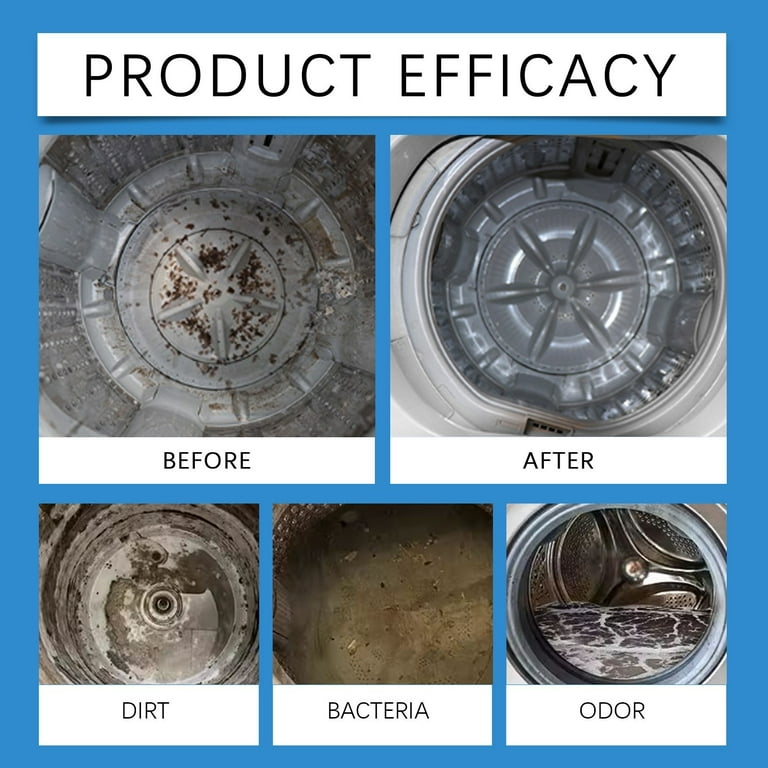
Hard water causes mineral buildup, white film on dishes, and clogged spray holes. Prevent this with monthly descaling using specialized products.
Use Afresh or Cascade Cleaner
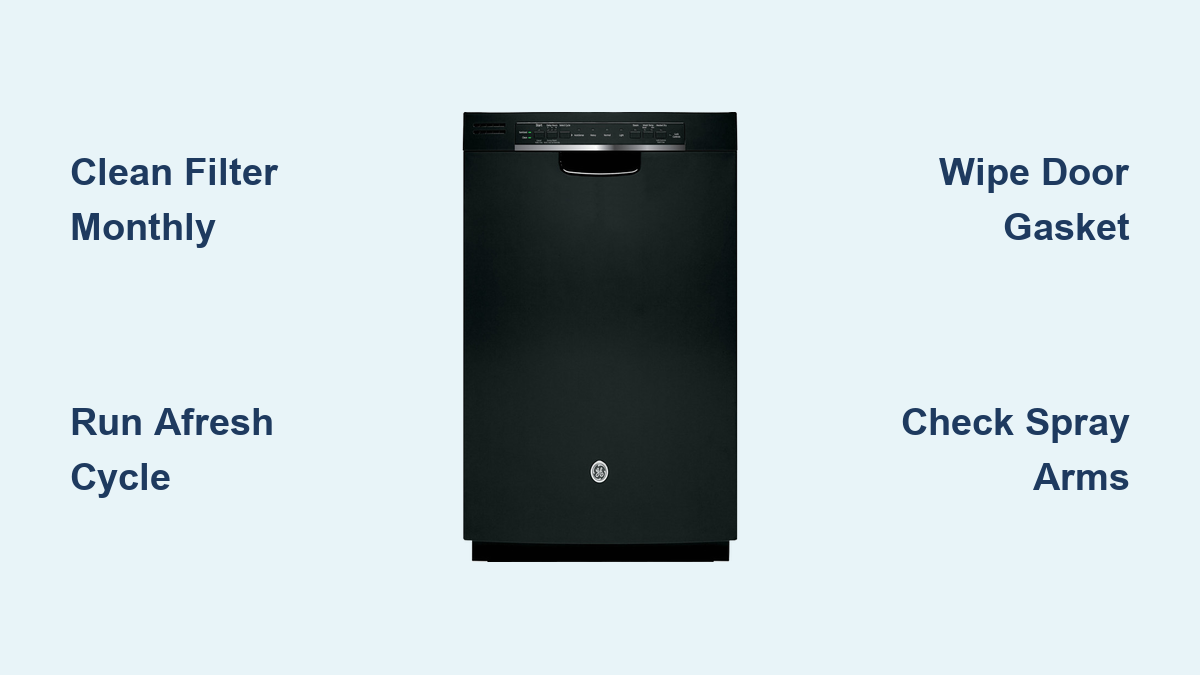
Afresh Dishwasher Cleaner is the recommended option. Place one tablet in the detergent dispenser. Optionally add a second tablet in a dishwasher-safe container on the bottom rack. Run a Hot Water or Pots and Pans cycle with no dishes inside. Afresh uses citric acid and baking soda to dissolve limescale without leaving a sour smell. Users report 92 percent improvement in odor and cleanliness after one use.
Cascade Dishwasher Cleaner comes in dose-pack format. Use one dose-pack per cycle. It runs a full cleaning cycle to remove grease, film, and buildup. This is effective for heavy residue in models like PDWT380V0055.
Run either product once per month for best results.
Vinegar as an Alternative
Place 2 to 3 cups of white vinegar in a large, stable container on the bottom rack. Run a Hot Water or Sanitize cycle. Ventilate the kitchen because vinegar fumes are strong.
Do not mix vinegar with bleach or other cleaners because this creates toxic fumes. Frequent use may degrade rubber seals over time. Many users prefer Afresh because vinegar leaves a lingering smell.
Sanitize for Maximum Hygiene
If you have infants, elderly family members, or immune concerns, use the Sanitize cycle weekly.
Activate the Sanitize Option
Check your control panel for a Sanitize button. Select it before starting a wash cycle. Pair with Heated Dry for optimal germ reduction. This cycle heats rinse water to 150 to 165 degrees Fahrenheit, killing 99.999 percent of bacteria certified to NSF/ANSI Standard 184.
Note that this cycle adds 20 to 30 minutes to cycle time and uses more energy. Use only when needed.
Wipe the Door Gasket Weekly
The black rubber seal around the door traps moisture and food particles, leading to mold and odors.
Prevent Mold Buildup
Wipe the gasket weekly with a damp microfiber cloth. Focus on crevices where grime hides. Inspect for cracks or tears and replace if damaged through GE Parts. A clean gasket ensures a tight seal, prevents leaks, and stops musty smells from transferring to dishes.
Maintain the Exterior Properly
A shiny finish keeps your kitchen looking clean without damaging the surface.
Clean Stainless Steel Safely
Use a non-abrasive cleaner or Cerama Bryte Stainless Steel Polish. Wipe in the direction of the grain. Buff with a dry microfiber cloth.
Avoid steel wool or abrasive pads. Avoid bleach or ammonia-based cleaners. Avoid excessive water near the control panel.
Troubleshoot Common Issues Fast

Use this quick-reference guide to fix problems before they worsen.
Musty Smell on Dishes
Causes include mold in gasket, stagnant water, or clogged filter. Clean the filter and pump screen. Run an Afresh cycle. Wipe the gasket weekly.
Standing Water After Cycle
Causes include clogged filter or pump screen. Remove and clean the entire filter assembly. Check for seeds, coffee grounds, or pits in the pump screen.
White Film on Dishes
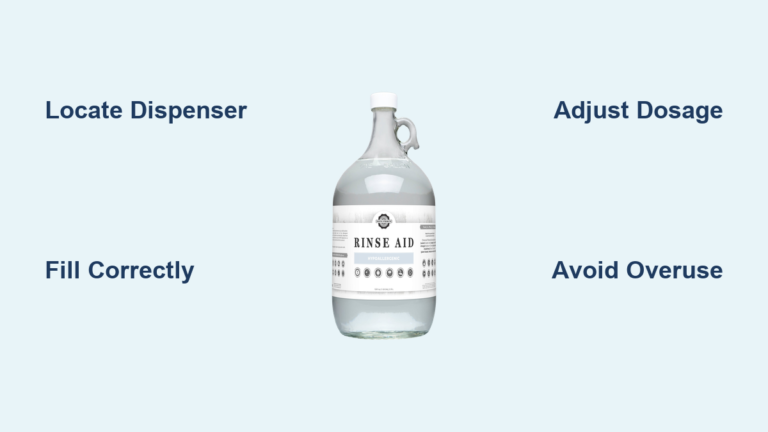
Causes include hard water minerals or detergent residue. Use rinse aid daily. Run a monthly cleaning cycle with Afresh. Install a water softener if hardness exceeds 7 gpg.
Spray Arm Not Spinning
Causes include clogged holes or misalignment. Remove the spray arm and rinse holes under running water. Clear obstructions with a toothpick. Reattach securely and test rotation.
Loud Noise During Wash
Causes include foreign object in pump screen. Remove the sump reservoir. Inspect and clean the pump screen thoroughly.
Detergent Not Dissolving
Causes include incoming water too cold below 120 degrees Fahrenheit. Run the hot tap at the sink until water is hot before starting the dishwasher. Test water temperature with a thermometer.
Follow a Simple Maintenance Schedule
Prevent issues before they start with consistent care.
Monthly Routine
Run Afresh or Cascade cleaner cycle. Rinse filter under tap if it appears clean. Wipe door gasket and edges.
Quarterly Deep Clean
Fully disassemble and clean the filter assembly, spray arm, and pump screen. Inspect for cracks or wear. Replace damaged parts.
For Hard Water Areas
Use rinse aid in every cycle. Clean monthly with Afresh. Consider a whole-home water softener if scaling is severe.
Model-Specific Tips for Common GE Units
GE PDWT28OPSS
This model has tight filter access. Average cleaning time is 25 to 40 minutes for first-timers. Tools needed include a flathead screwdriver and quarter-inch socket wrench. Be gentle with the plastic release tab because it breaks easily.
GE PDWT380V0055
This model is prone to interior film buildup from hard water and detergent residue. Run monthly Afresh cycles and wipe walls with a damp microfiber cloth.
GE GSD2100
The filter is secured by front bolt and rear tab. The spray arm removes via rear plastic tab with no screw. Standing water in the sump is normal. Do not dry it out.
Extend Appliance Life with Pro Tips
Never remove the drain ball in the filter housing because it is essential for water flow. Use a quarter-inch nut driver and flathead screwdriver as your go-to tools. Avoid excessive vinegar and opt for Afresh for better results and no odor. Inspect the pump screen if drainage slows or noise increases. Wipe the gasket weekly because it takes 30 seconds and prevents 80 percent of odor issues.
Frequently Asked Questions About Cleaning a GE Dishwasher
How often should I clean my GE dishwasher filter?
Clean the filter every 1 to 3 months, depending on usage frequency and water hardness. Heavy-use households or homes with hard water should clean monthly. Standard households can clean every 3 to 6 months.
What is the best cleaner for a GE dishwasher?
Afresh Dishwasher Cleaner is recommended because it uses citric acid and baking soda to dissolve limescale without leaving a vinegar smell. Cascade Cleaner is also effective. Both outperform vinegar in user tests.
Why does my GE dishwasher smell musty even after cleaning?
Musty smells usually come from mold in the door gasket, stagnant water in the sump, or a clogged filter. Wipe the gasket weekly, run a monthly Afresh cycle, and clean the filter assembly to eliminate odors.
Can I use vinegar to clean my GE dishwasher?
Yes, but sparingly. Place 2 to 3 cups in a container on the bottom rack and run a hot cycle. Do not mix with bleach. Vinegar can degrade rubber seals over time and leaves a lingering odor, which is why Afresh is preferred.
How do I know if my dishwasher needs descaling?
Signs include white film on dishes, visible mineral buildup on interior surfaces, reduced cleaning performance, or clogged spray holes. Monthly cleaning with Afresh or Cascade prevents scaling in hard water areas.
Why is my spray arm not spinning after cleaning?
The spray arm may be misaligned, not seated properly, or have clogged holes. Remove it, rinse all holes under running water, clear obstructions with a toothpick, and reattach securely. Test manual rotation before running a cycle.
Key Takeaways for Cleaning Your GE Dishwasher
Regular cleaning of your GE dishwasher is not optional maintenance. It is essential for protecting your investment and ensuring spotless dishes cycle after cycle. The filter assembly is the most critical component. Clean it every 1 to 3 months using the disassembly steps outlined above. Never remove the drain ball inside the housing because it regulates water flow. Monthly descaling with Afresh or Cascade prevents limescale buildup, especially in hard water areas exceeding 7 gpg. Wipe the door gasket weekly to prevent mold and musty odors from transferring to clean dishes. By following this maintenance schedule, your GE dishwasher will deliver 10 to 15 years of reliable performance while keeping your kitchen running smoothly.