How to Clean Whirlpool Dishwasher: Easy Steps
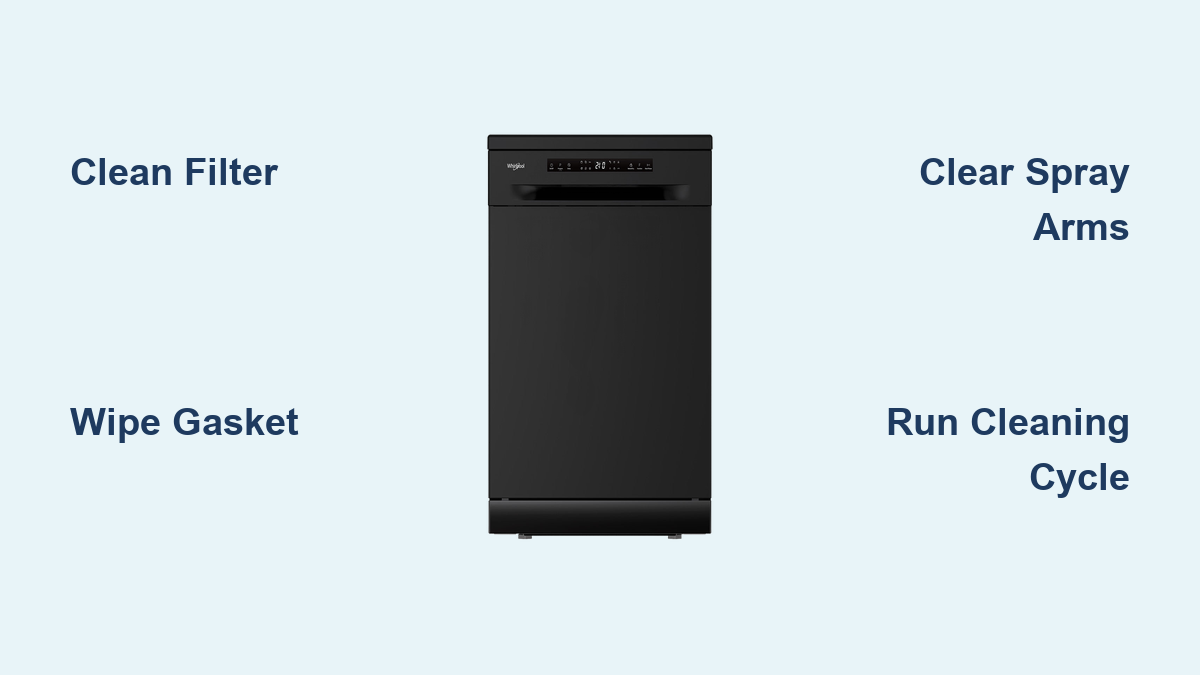
Is your Whirlpool dishwasher leaving dishes with a film, emitting a musty smell, or failing to drain properly? These are common signs that deep cleaning is overdue. Over time, food debris, grease, hard water minerals, and soap scum accumulate in hidden areas like the filter, spray arms, door seals, and internal drain system, reducing cleaning power and creating breeding grounds for mold. Regular maintenance keeps your appliance running efficiently and extends its lifespan. This guide provides the exact steps to clean your Whirlpool dishwasher, including model-specific tips, safe cleaning agents, and recommended cleaning frequency.
Remove and Clean the Whirlpool Dishwasher Filter

The filter is the most critical component to clean. Located at the bottom center of the tub beneath the lower spray arm, it traps food particles and prevents clogs. A dirty filter causes poor cleaning performance, odors, and drainage problems.
Locate the Filter Assembly
Open the dishwasher and look at the bottom center of the tub. On most Whirlpool models, you will see a round plastic assembly beneath the lower spray arm. This is the filter unit that requires regular attention.
Remove the Filter Safely
Press down slightly on the filter cap, then turn counter-clockwise about a quarter to half a turn. Lift the filter straight up to remove it. If your model has a screen mesh filter, pull it forward using the small lip to detach it from the upper section.
Clean All Filter Components
Hold each piece under warm running water. Use an old toothbrush and dish soap to scrub the fine filter mesh, the large strainer base, and any trapped gunk in crevices. Rinse thoroughly until water runs clear. Avoid steel wool or abrasive pads that can scratch plastic and reduce effectiveness.
Reinstall the Filter Properly
Slide the mesh screen back into place until both lips click. Insert the upper filter, press down, and turn clockwise to lock it in place. Ensure it is snug and does not wobble before replacing the bottom rack.
Warning: Never run the dishwasher without the filter installed. Doing so can damage the pump and cause severe clogs.
Wipe the Door Seal and Gasket
The rubber gasket around the door traps moisture and grime, leading to mold growth and unpleasant odors. Monthly cleaning prevents these issues and maintains a tight seal.
Clean the Rubber Gasket
Dampen a soft cloth or melamine sponge with warm water. Wipe the entire door seal, focusing on corners and folds where debris hides. For stubborn buildup, use a sponge dampened with white vinegar or baking soda paste. Finish with a dry cloth to prevent moisture damage.
Clean the Vent Cover for Better Drying
The vent, located on the inside of the door, releases steam during the drying cycle. When clogged, dishes remain wet and moisture builds up inside the appliance.
Remove and Scrub the Vent Cap
Turn the vent cover counter-clockwise to remove it. Some models may need a gentle pry with a flathead screwdriver. Wash the cap and housing with soapy water or vinegar. Use a toothbrush to remove mildew or crusty deposits. Reattach by turning clockwise until secure.
Result: Improved drying performance and reduced moisture buildup inside the dishwasher.
Clear Clogged Spray Arm Jets
Clogged spray arms mean poor water coverage and dirty dishes. Keeping the jets clear ensures thorough cleaning throughout the cycle.
Remove and Flush the Spray Arms
Unscrew or lift off the lower spray arm, depending on your model. Check the upper spray arm for blockages as well. Rinse both under running water. Use a toothpick or soft wire to clear any blocked holes. Avoid sharp tools that could damage the plastic nozzles.
Reattach Firmly
Ensure spray arms are fully seated and rotate freely without hitting dishes. Confirm proper attachment before running your next cycle.
Note: Not all Whirlpool models have removable spray arms. Consult your manual if unsure about your specific model.
Run a Deep Cleaning Cycle

After cleaning components, run a cleaning cycle to flush internal residue from pumps, hoses, and valves. Two main options work well for different purposes.
Use Vinegar for Descaling
Place one cup of white vinegar in a dishwasher-safe bowl on the top rack. Run a hot water cycle with no detergent. Select air-dry or energy-saving dry mode. Vinegar dissolves grease, mineral deposits, and odors in hard-to-reach areas.
Caution: Do not use vinegar monthly. Its acidity can degrade rubber seals and plastic components over time. Limit vinegar cycles to every two to three months.
Use affresh® for Monthly Maintenance
Drop one affresh® tablet into the empty tub with the wax side facing down. Run a heavy or clean cycle at the highest temperature. Do not add detergent or rinse aid. This specially formulated cleaner is safe for seals and prevents filming during regular use.
Pro Tip: Set a monthly reminder to use affresh® for routine maintenance. It is ideal for keeping the interior clean without risking seal damage.
Treat Stubborn Buildup with Baking Soda
Never mix vinegar and baking soda in the same cycle. Instead, run a vinegar cycle first, then sprinkle one cup of baking soda across the bottom of the tub. Run a short hot water cycle to remove stains, neutralize odors, and lift residue.
Wipe Down the Exterior
A clean exterior protects the finish and improves kitchen appearance. Regular wiping also prevents buildup around controls and handles.
Clean Stainless Steel Surfaces
Use a lint-free cloth dampened with water or stainless steel cleaner. Wipe in the direction of the grain to avoid scratches. Remove fingerprints, water spots, and smudges for a polished look.
Maintain the Control Panel
Dampen your cloth slightly rather than spraying directly on controls. Dry immediately to prevent moisture damage to electronic components.
Address Hard Water Issues
Hard water causes white film, spotting, and scale buildup that affects cleaning performance and shortens appliance life.
Install a Water Softener
Use a built-in or external water softener if your area has hard water above fifteen grains. This reduces mineral deposits and significantly extends your dishwasher lifespan.
Always Use Rinse Aid
Refill the rinse aid dispenser every one to two months. Rinse aid keeps dishes spot-free and improves drying by reducing water surface tension.
Tip: In hard water areas, choose detergents specifically formulated with water softeners for better results.
Troubleshooting Common Dishwasher Problems
Why Does My Dishwasher Smell
Trapped food, a dirty filter, or moldy seals cause unpleasant odors. Clean the filter, wipe the gasket thoroughly, and run an affresh® or vinegar cleaning cycle to eliminate the source.
Why Are Dishes Not Drying Properly
A clogged vent, empty rinse aid dispenser, or dirty filter prevents proper drying. Clean the vent cover, ensure rinse aid is filled, and verify the filter is clear.
Why Is Water Not Draining
A clogged filter or blocked drain prevents proper drainage. Remove and clean the filter thoroughly. Check for obstructions in the drain area.
Why Are Dishes Coming Out Dirty
Blocked spray arms, old detergent, or a dirty filter reduce cleaning effectiveness. Clear spray arm holes, use fresh detergent, and clean the filter before your next cycle.
Why Is There White Film on Glassware
Hard water, low water temperature, or insufficient rinse aid cause filming. Use rinse aid, switch to a high-quality detergent designed for your water type, and consider installing a water softener.
Frequently Asked Questions About Cleaning Whirlpool Dishwashers
How Often Should I Clean My Whirlpool Dishwasher?
Perform a full deep clean every one to three months, depending on usage frequency and water hardness. Rinse the filter monthly and wipe door seals monthly to prevent buildup.
Can I Use Vinegar in My Whirlpool Dishwasher?
Yes, white vinegar works well for occasional deep cleaning. Use one cup in a dishwasher-safe bowl on the top rack during a hot water cycle. Limit use to every two to three months to avoid damaging rubber seals.
What Is the Best Way to Clean the Filter?
Remove the filter and rinse it under warm running water. Scrub with an old toothbrush and dish soap to remove trapped debris. Avoid steel wool or abrasive cleaners that can scratch the plastic.
Why Does My Dishwasher Still Smell After Cleaning?
Odors may persist if the vent cover is dirty, the drain is blocked, or mold is hiding in unseen areas. Clean the vent thoroughly, check the drain for obstructions, and run a cleaning cycle with affresh®.
Is affresh® Better Than Vinegar for Regular Use?
Yes, affresh® is specifically formulated for dishwashers and is safe for monthly use. Vinegar is more acidic and can degrade rubber seals if used too frequently. Use affresh® for routine maintenance and vinegar for occasional deep cleaning.
Key Takeaways for Cleaning Your Whirlpool Dishwasher

Regular cleaning of your Whirlpool dishwasher prevents odors, improves cleaning and drying performance, and extends the appliance lifespan. Focus on the filter first, as it is the most critical component for proper function. Use affresh® monthly for safe routine maintenance, and reserve vinegar for deep cleaning every few months. Always wipe door seals monthly, clear spray arm jets regularly, and address hard water issues with rinse aid or a water softener. Following this routine ensures your dishwasher delivers spotless dishes and reliable performance for years to come.