How to Deodorize Dishwasher: Quick & Easy Tips
Is your dishwasher emitting a musty, sour, or rotten egg smell every time you open it? You’re not alone. Over time, even the cleanest-looking dishwasher can develop stubborn odors caused by trapped food, mold, hard water buildup, or a clogged filter. The good news: how to deodorize dishwasher effectively is simple, affordable, and requires only common household items like vinegar and baking soda.
Ignoring these smells does not just make your kitchen unpleasant. It can compromise the cleanliness of your dishes. Bacteria, mold, and biofilm thrive in damp, hidden areas like the door gasket and filter, spreading odors and potentially contaminating your plates and utensils. In this guide, you will learn a complete, step-by-step process to deep clean and deodorize your dishwasher, backed by science and expert maintenance tips.
Identify the Source of Dishwasher Odors
Before cleaning, pinpoint what is causing the smell. Different odors signal specific issues, and targeted fixes work best.
Food Residue in Hidden Areas
Decomposing food particles are the number one cause of dishwasher smells. They collect in the filter at the bottom of the tub, spray arm holes, the drain trap, and door gasket crevices. Even if you pre-scrape dishes, small bits escape and settle in hard-to-see spots. Left unchecked, they rot and feed odor-causing bacteria.
Musty Smell Indicates Mold
A damp, mildew-like odor means mold or mildew is growing, usually in the door seal or corners. The warm, wet environment after cycles creates a perfect breeding ground. Black or green spots on the rubber gasket indicate active mold that needs immediate cleaning.
Rotten Egg Smell Points to Drain Issues
A sulfur or sewage-like stench often points to a clogged drain line or standing water with trapped debris. This is common if the filter has not been cleaned in months.
White Buildup Means Hard Water
Chalky deposits on dishes or interior walls indicate limescale from hard water. These mineral layers trap grime and amplify odors over time.
Deep Clean with Vinegar and Baking Soda

This two-step method is the most effective way to deodorize dishwasher naturally. Vinegar dissolves grease and kills bacteria. Baking soda neutralizes odors and scrubs residue.
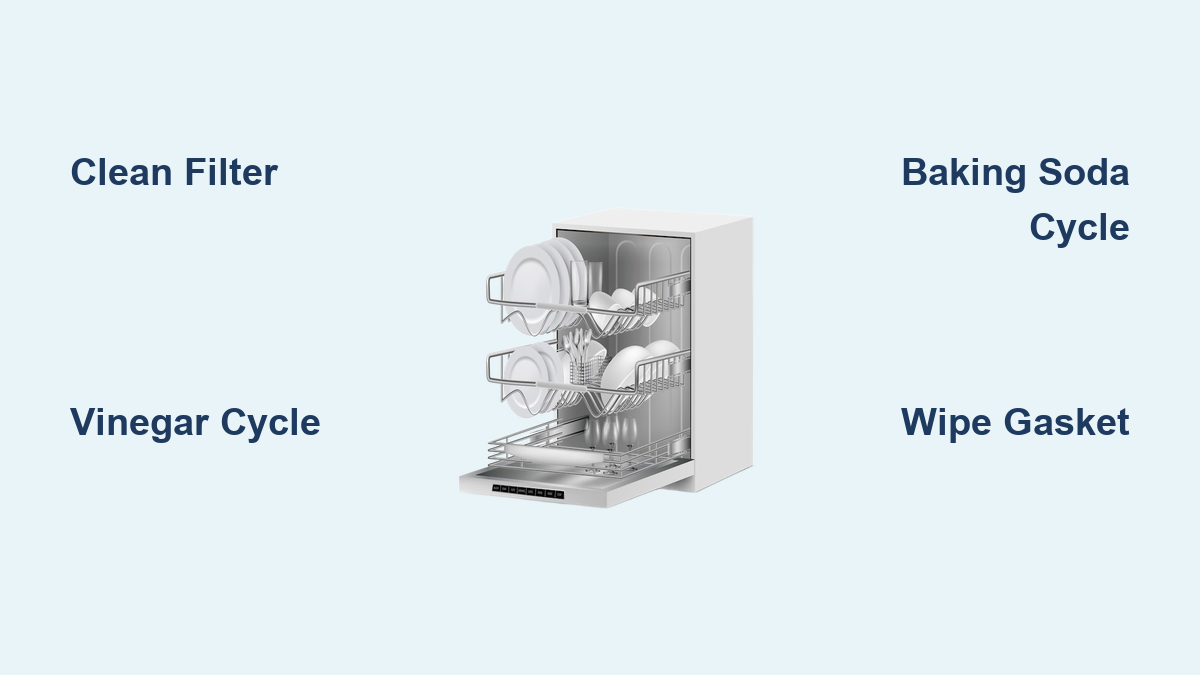
Remove and Clean the Filter
The filter traps food, but when clogged, it becomes a stink factory. Follow these steps:
- Locate the filter at the back of the dishwasher base.
- Twist counterclockwise and lift out.
- Rinse under warm water to remove loose debris.
- Soak in warm water plus one-half cup vinegar plus dish soap for 20 minutes.
- Scrub with a toothbrush, especially mesh areas.
- Optional deep clean: Apply baking soda paste (one-half cup plus one to two tablespoons water), rub, then rinse.
- Dry completely and reinsert by aligning arrows, then twist clockwise.
Clean the filter monthly to prevent backups and odors.
Unclog Spray Arm Holes

Clogged spray arms reduce cleaning power and trap food. Follow these steps:
- Remove lower and upper spray arms if detachable.
- Use a toothpick or thin wire to clear each hole.
- Rinse under running water to flush debris.
- Inspect for cracks and replace if damaged.
- Reinstall firmly.
Spin the arm by hand after reattaching. It should rotate freely.
Run a Vinegar Cycle
Vinegar cuts grease, dissolves limescale, and sanitizes. Follow these steps:
- Place one to two cups white vinegar in a dishwasher-safe bowl on the top rack.
- Do not add detergent or rinse aid.
- Run Hot Water or Heavy Duty cycle (avoid Heat Dry).
- Use Sanitize setting if available for deeper disinfection.
The acetic acid in vinegar kills 99 percent of bacteria like E. coli and Salmonella when combined with hot water.
Follow with Baking Soda Cycle
Now neutralize odors and scrub leftover residue. Follow these steps:
- Sprinkle one cup baking soda evenly across the bottom of the dishwasher.
- Run a short hot cycle (Quick Wash or Rinse Only).
- No detergent or rinse aid.
Baking soda neutralizes volatile sulfur compounds (the cause of rotten egg smells) and gently polishes surfaces.
Optional: Freshen with Citrus
For a clean, bright scent, pour one cup lemon juice into a container on the top rack and run a hot water cycle. Alternatively, use one to two tablespoons citric acid powder instead of vinegar if your model is sensitive. Lemon juice leaves glasses sparkling and odor-free.
Use Commercial Cleaners When Needed
If natural methods are not enough or you want consistent maintenance, try a commercial dishwasher cleaner.
Recommended Products
Affresh, Glisten, and Finish Dishwasher Cleaner are top-rated options.
How to Use Commercial Cleaners
- Place one tablet in the empty dishwasher.
- Run the hottest cycle available.
- No pre-wash or detergent needed.
These products are formulated to dissolve biofilm and limescale. They are safe for stainless steel interiors and often include odor-neutralizing agents. Use monthly for maintenance or in hard water areas.
Check compatibility before use. Some brands warn against use in stainless steel models. Verify with your manual.
Bleach: Use with Caution

Bleach sanitizes but can damage certain dishwashers.
Only Use Bleach If
Your dishwasher has a plastic tub (not stainless steel) and you have no other option and smell persists.
Safe Bleach Procedure
- Mix one-half cup bleach with one gallon of water.
- Dip a cloth in the solution. Do not pour bleach into the dishwasher.
- Wipe interior surfaces, avoiding rubber seals and metal.
- Rinse thoroughly with clean water.
- Ventilate the kitchen during and after.
Never mix bleach with vinegar or ammonia. This creates toxic chlorine gas. Never use bleach in stainless steel models. It causes pitting and corrosion.
Wipe Interior and Exterior Surfaces
After cleaning cycles, manually wipe down key areas.
Interior Areas to Clean
Wipe the door gasket by running your finger along the rubber seal and feeling for gunk or slime. Clean inner walls with a vinegar-dampened microfiber cloth. Scrub the detergent dispenser by popping it open and removing residue. Wipe door edges where food often splatters.
Exterior Care
Wipe stainless steel with hot soapy water or glass cleaner. Avoid spraying liquid near the control panel. Use a damp cloth instead. Remove fingerprints and grease.
Use vinegar on a cloth to remove hard water spots from the door.
Prevent Odors with Regular Maintenance
Deodorizing once is not enough. Prevent recurrence with simple habits.
Daily Habits
Scrape dishes before loading. Modern detergents need food enzymes to work properly. Avoid overnight loads where wet food breeds bacteria. Run hot water in the sink before starting the cycle to ensure hot inlet water.
Weekly Tasks
Inspect the filter for visible debris. Check spray arm holes with a toothpick. Wipe the gasket with a damp cloth.
Monthly Deep Clean
Run a vinegar plus baking soda cycle. Clean the detergent dispenser. Wipe all seals and corners.
Every One to Three Months
Deep clean the filter (soak and scrub). Check the drain line for clogs. Descale if you have hard water.
Best Practices for Odor Prevention
Follow these tips to keep your dishwasher smelling fresh between cleanings.
Leave Door Ajar After Each Cycle
Trapped moisture causes mold. After each use, open the door slightly to let air circulate. This speeds up drying and prevents dampness. One to two inches open overnight is ideal.
Use Rinse Aid
Rinse aid prevents water spots, improves drying, and reduces moisture that fosters mold. Dishwashers using rinse aid dry 30 percent faster, reducing mold risk.
Avoid Overloading
Packed dishes block water flow, leaving food behind. Ensure spray arms can rotate freely and no large items shield others.
Choose the Right Detergent
Use high-quality pods, gels, or powders. Match to your water hardness. Hard water users should consider a water softener or detergents with built-in water softeners.
Special Cases by Dishwasher Type
Stainless Steel Interior
Vinegar and baking soda are safe. Avoid bleach (causes corrosion). Some brands discourage frequent vinegar use. Limit to once per month.
Plastic Tub Models
These are more resistant to vinegar and mild bleach. Still avoid concentrated bleach.
Self-Cleaning or Auto-Filter Models
These may have grinders or self-cleaning filters. Still need manual checks of gasket, spray arms, and seals. Clean every two to three months unless heavy use demands more frequent attention.
When to Call a Professional
Try DIY first, but call a technician if odors return within days of cleaning, the drain is not working and water pools at the bottom, the pump is noisy or not draining, or error codes appear after cleaning.
The likely issue is a clogged drain line, faulty pump, or garbage disposal backup.
Complete Dishwasher Deodorizing Protocol
Follow this checklist to fully deodorize your dishwasher:
- Empty the dishwasher and remove all racks.
- Clean the filter by soaking in vinegar, scrubbing with a toothbrush, drying, and reinstalling.
- Unclog spray arms by clearing holes, rinsing, and reinstalling.
- Run a vinegar cycle with one to two cups in a bowl on the top rack using a hot cycle.
- Run a baking soda cycle with one cup on the bottom using a short hot cycle.
- Optional: Run a lemon juice cycle for fresh scent.
- Wipe the gasket, walls, dispenser, and exterior.
- Leave the door ajar to dry.
Final Tips for Long-Term Freshness
Clean monthly or every two to three weeks for heavy use. Use rinse aid daily. Scrape (do not rinse) dishes before loading. Install a water softener if you have hard water. Check the gasket every two weeks because mold grows fast.
A fresh-smelling dishwasher is not just about comfort. It is about hygiene. By following this guide, you will not only eliminate current odors but prevent them from returning, ensuring your dishes come out truly clean, not just wet.
Frequently Asked Questions About Deodorizing Dishwashers
Why does my dishwasher smell sour even after cleaning?
The sour smell usually means mold or mildew is growing in the door gasket or hidden corners. Wipe the gasket thoroughly with vinegar. If the smell persists, run a vinegar cycle without detergent. Food particles trapped in the filter can also cause this odor.
How often should I clean my dishwasher filter?
Clean the filter monthly. Heavy-use households or those with hard water may need cleaning every two to three weeks. A clogged filter is the number one cause of persistent dishwasher odors.
Can I use vinegar in a stainless steel dishwasher?
Yes, vinegar is safe for stainless steel interiors. However, some manufacturers recommend limiting vinegar use to once per month to avoid potential weld corrosion over time. Always check your manual for specific guidance.
What causes a rotten egg smell from the dishwasher?
A rotten egg smell indicates volatile sulfur compounds, usually from trapped food in the drain or filter. Run a baking soda cycle to neutralize these compounds. Deep clean the filter and check the drain line for clogs.
Is it normal for the dishwasher to smell after running a cycle?
No. A properly maintained dishwasher should not smell after a cycle. If it does, food debris is likely trapped somewhere. Check the filter, spray arm holes, and door gasket. Run a vinegar cycle to sanitize and eliminate bacteria.
Can I use lemon instead of vinegar to deodorize my dishwasher?
Yes. Lemon juice works well and leaves a fresh citrus scent. Pour one cup lemon juice into a dishwasher-safe container on the top rack and run a hot cycle. Citric acid powder (one to two tablespoons) is also an effective alternative.