How to Reset KitchenAid Dishwasher: Quick Steps
Is your KitchenAid dishwasher stuck mid-cycle, showing a flashing Clean light, or refusing to respond to button presses? These electronic glitches are common and usually resolved with a simple reset, no tools or technician required. This guide provides step-by-step instructions for soft resets, hard resets, and model-specific solutions to restore your dishwasher’s full function in minutes.
Perform a Soft Reset on Your KitchenAid Dishwasher
A soft reset works when the display is on but the control panel is unresponsive or the cycle is frozen.
Hold the Start/Cancel Button
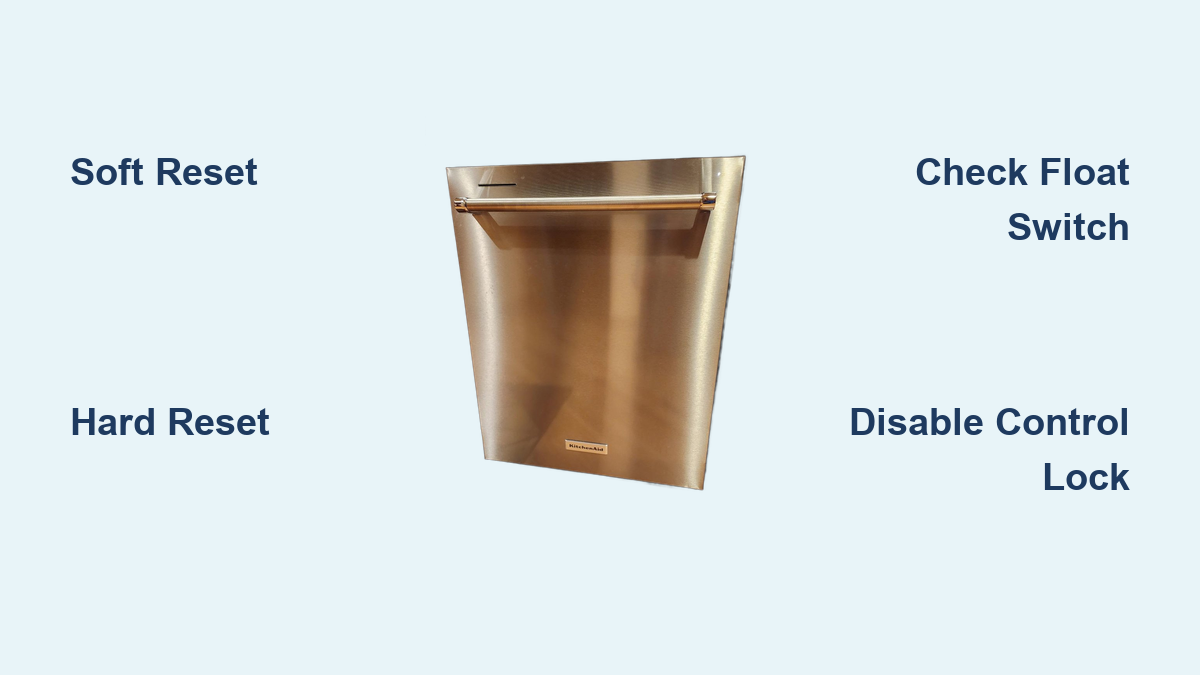
Press and hold the Start/Cancel button for 3 to 5 seconds. This cancels the current cycle and resets the control logic. On most models, this clears temporary faults like a flashing Clean light or frozen interface. Release the button and wait 10 to 15 seconds. The display may go dark briefly. Close the door firmly and select a new cycle. Press Start to confirm the reset worked.
Pro Tip: If the Clean light flashes after starting, the dishwasher did not complete a previous cycle due to a heating or drainage fault. Proceed to a hard reset for better results.
Check for Control Lock
If buttons do not respond, the Control Lock may be enabled. Look for a padlock icon on the display. To disable Control Lock on your KitchenAid dishwasher, locate the Control Lock button and press and hold it for 3 to 5 seconds. The padlock icon should disappear. On some models, holding Heated Dry for 4 seconds disables Control Lock. Refer to your manual if unsure about your specific model.
Execute a Hard Reset

A hard reset is the most effective fix for frozen displays, persistent error codes, or issues after a power outage.
Power Off the Dishwasher
First, press Cancel/Drain to stop any active cycle. Wait 2 to 3 minutes for the drain pump to empty the tub. Then disconnect power by unplugging the unit or turning off the circuit breaker labeled for the dishwasher.
Critical: Never skip the draining step. Powering off mid-drain can lock the control in a fault state and cause ongoing problems.
Wait 10 Minutes Before Restoring Power
Leave the power off for at least 1 minute, but 10 minutes is recommended, especially for models built after 2015. These use Whirlpool-based control boards with capacitors that retain memory. A short break may not fully reset the system. Models like the KDFE204KWHO require this full 10-minute disconnect to clear a latched Cancel/Drain state caused by relay or float switch issues.
Restore Power and Restart
Turn the breaker back on or plug in the unit. Wait 15 to 20 seconds for the control board to initialize. Close the door securely. Select Normal Wash and press Start. The dishwasher should begin a fresh cycle.
Visual Cue: If the Cancel/Drain LED stays lit after power-up, the float switch may be stuck or the control board damaged.
Fix a Flashing Clean Light

A blinking Clean light means the last cycle did not finish, commonly occurring after power loss or heating faults.
Clear the Error State
Press Cancel/Drain to stop the current mode. Perform a 10-minute hard reset. Restart with a Normal Wash cycle.
If the light flashes again, the error is more serious. Three flashes indicate a heating system failure, requiring inspection of the heating element or thermistor. Seven flashes signal a wash pump relay fault, which points to a control board issue.
Warning: Repeated flashing after reset suggests a hardware problem. Inspect the heating element or call a certified technician.
Resolve a Stuck Cancel/Drain Light

The Cancel/Drain light staying on often means the control thinks the unit is draining, even when it is not.
Always Drain Before Power Off
Always let the dishwasher fully drain before cutting power. A partial drain can trigger a latched state that persists through multiple reset attempts.
Check the Float Switch
The float, located at the tub base, must move freely. If debris jams it upward, the control assumes a flood and disables operation. Open the dishwasher and locate the plastic float in the center or front of the tub bottom. Lift and release it 3 to 4 times to ensure smooth motion. Remove any obstructions you find.
Pro Tip: Clean the sump area monthly to prevent float blockage and avoid this common reset scenario.
Test for Control Board Failure
If the Cancel/Drain light remains on after a 10-minute reset and float check, the drain pump relay may be welded shut. The pressure switch could be faulty, or the control board may need replacement. Signs of board failure include no display, unresponsive buttons, or a burning smell near the control panel.
Reset After a Power Outage
Power surges can corrupt the control memory, leaving the dishwasher in an error state.
Break the Circuit
Turn off the dishwasher’s circuit breaker. Wait 5 to 10 minutes. Restore power and wait for display initialization. Press Cancel/Drain to clear residual commands. Start a new cycle.
Note: Some models automatically resume the last cycle after power returns. Others require manual restart. Use these reset steps if your dishwasher is unresponsive.
Enter Diagnostic Mode
Use diagnostic mode to test internal components. This only works after a clean reset.
Activate Service Mode
Perform a 10-minute hard reset. Within 30 seconds of power restore, press and hold High Temp Wash and Heated Dry simultaneously for 3 seconds. The display may flash or show a code like “01”.
Caution: Diagnostic sequences vary significantly by model. Consult the tech sheet behind the toe kick or inside the door liner for exact codes specific to your unit.
Run Component Tests
Use button presses to cycle through tests for the motor, water inlet valve, drain pump, and heater function. If any test fails, the corresponding part may need replacement.
Troubleshoot When Reset Fails
If the dishwasher still will not respond, investigate these common causes.
Verify Power Supply
Confirm the breaker is on. Test the outlet with a lamp or voltage tester. Check if the power cord is damaged or loose at the junction box. For hardwired units, ensure the disconnect switch is engaged.
Inspect the Door Latch
A faulty latch prevents startup. Close the door firmly and listen for a distinct click. If it does not latch, clean debris from the strike plate. Test the latch switch with a multimeter if you have electrical experience.
Clear Drain Blockages
Even after reset, a clog can trigger error states. Remove the lower rack and take out the filter assembly. Clean it under running water. Check the drain hose under the sink for kinks. Ensure the garbage disposal inlet is clear by running the disposal before restarting the dishwasher.
Maintain Your KitchenAid Dishwasher to Prevent Issues
Regular care reduces the need for resets and extends the life of your appliance.
Clean the Filter Monthly
Remove the coarse filter and fine mesh filter from the tub base. Rinse under hot water to remove food debris. Reinstall fully seated, as misalignment causes poor drainage and error lights.
Inspect Spray Arms
Remove upper and lower arms. Check for clogged holes. Soak in vinegar if mineral buildup is visible. Clear any debris from the arm openings to ensure proper water distribution during cycles.
Use Rinse Aid and Run Vinegar Cycles
Always fill the rinse aid dispenser. It prevents spotting and improves drying, reducing moisture-related sensor errors. Once a month, place a cup of white vinegar on the top rack and run a Hot Wash cycle. This dissolves mineral deposits and clears sensors.
Frequently Asked Questions About Resetting KitchenAid Dishwashers
How do I reset my KitchenAid dishwasher?
Press and hold the Start/Cancel button for 3 to 5 seconds for a soft reset. For persistent issues, perform a hard reset by turning off the circuit breaker, waiting 10 minutes, and restoring power.
Why is my KitchenAid dishwasher stuck on Cancel/Drain?
This usually indicates the control thinks the unit is draining when it is not. Perform a hard reset and check the float switch for debris. If the light remains on after reset, the drain pump relay or control board may be faulty.
What does a flashing Clean light mean on my KitchenAid dishwasher?
A flashing Clean light means the last cycle did not complete. This often results from drainage issues, heating faults, or power interruptions. Press Cancel/Drain, perform a hard reset, and restart a Normal Wash cycle.
How do I disable Control Lock on my KitchenAid dishwasher?
Press and hold the Control Lock button for 3 to 5 seconds. On some models, holding Heated Dry for 4 seconds disables Control Lock. The padlock icon should disappear when disabled.
Why won’t my KitchenAid dishwasher start after a power outage?
Power outages can corrupt control memory. Turn off the circuit breaker, wait 5 to 10 minutes, then restore power. Press Cancel/Drain to clear residual commands before starting a new cycle.
When should I call a professional for my KitchenAid dishwasher?
Contact KitchenAid Customer Support or a certified technician if the dishwasher still does not respond after a 10-minute hard reset, persistent error lights remain, or you suspect control board, pump, or wiring failure.
Key Takeaways for Resetting Your KitchenAid Dishwasher
A hard reset is the most reliable method for resolving most electronic issues with your KitchenAid dishwasher. Always disconnect power for at least 10 minutes on modern models to fully discharge internal capacitors. The Cancel/Drain function must complete before powering down, or the control may remain stuck in a fault state. Control Lock is a common culprit when buttons seem unresponsive, so check for the padlock icon before attempting more complex resets. If these steps fail, inspect the float switch, door latch, and power supply for underlying issues. With proper maintenance, including monthly filter cleaning and periodic vinegar cycles, most reset scenarios can be avoided entirely. If problems persist after thorough troubleshooting, contact KitchenAid Customer Care or a Factory Certified Technician for professional assistance.