Bosch Dishwasher Use Guide: Quick Steps
You just installed a new Bosch dishwasher or finally decided to master your kitchen’s most efficient appliance. But with so many buttons, cycles, and settings, you might be wondering: how to use bosch dishwasher properly? The good news is that Bosch dishwashers, especially the popular 500 and 300 Series, are designed for smart, intuitive operation. With features like soil-sensing Auto cycles, ultra-quiet 44 dB performance, and condensation drying that leaves dishes spotless, they deliver restaurant-quality results when used correctly.
This guide cuts through the confusion. You’ll learn exactly how to power on, load, select cycles, add detergent, and maintain your Bosch dishwasher for peak performance. Whether you’re troubleshooting beeping sounds, optimizing drying results, or simply want to stop hand-washing glasses, we’ve got you covered.
Power On & Initial Setup
Press the On/Off button on the control panel to activate the unit. The display will illuminate, confirming power is on and the dishwasher is ready for cycle selection. If nothing lights up, check that the unit is plugged in or verify the circuit breaker hasn’t tripped.
Locate the Control Panel and Status Display
Some Bosch models feature a 1.5-inch status panel on the front top edge of the door. This panel displays cycle time remaining, progress percentage, and maintenance alerts like rinse aid low or filter cleaning reminders. Familiarize yourself with these indicators before your first load.
Pro Tip: Don’t skip the power-on step. Some users try to start cycles without pressing On/Off first, which causes confusion when nothing happens.
Choose the Right Wash Cycle
Bosch offers multiple wash programs tailored to different soil levels and urgency. Select your cycle using the buttons on the control panel.
Cycle Options and Best Uses
| Cycle | Best For | Approximate Time |
|---|---|---|
| Auto | Mixed loads with varying soil | ~2 hours 9 minutes |
| Heavy | Pots, pans, baked-on food | ~3 hours 35 minutes |
| Normal | Everyday dishes | Varies by model |
| Speed60 | Lightly soiled items | 60 minutes |
| 30-Minute Clean | Quick refreshes | 30 minutes |
| Rinse | Pre-rinse only | Short rinse |
Why Auto is best for beginners: The Auto cycle uses Precision Wash sensors to detect food residue and automatically adjusts water temperature, spray intensity, and cycle length for optimal cleaning.
Start the Cycle in 7 Steps
- Load dishes correctly using the rack system
- Add detergent to the main dispenser inside the door
- Close the door fully
- Press the On/Off button
- Select your desired cycle
- Enable optional settings like Delay Start or ExtraDry if desired
- Press Start and close the door quickly
A steady red light on the control panel confirms the cycle has started. If you hear a beep, the door wasn’t closed quickly enough. Simply shut the door and press Start again.
Use Advanced Settings Wisely
Not all settings work with every cycle, but when compatible, these options significantly boost performance.
Delay Start: Run During Off-Peak Hours
Delay Start delays the cycle start by 1 to 24 hours. This feature is ideal for taking advantage of lower electricity rates or waking up to clean dishes. Note that Delay Start is not available on Rinse or 30-Minute Clean cycles.
Half Load: Save Water and Energy
This setting washes only the upper or lower rack, reducing water usage by up to 30%. It’s perfect for small households or partial loads that don’t warrant a full cycle.
Sanitize: Kill 99.9% of Bacteria
The Sanitize setting heats the final rinse to 155°F (68°C). This is recommended for baby bottles, cutting boards, and reusable straws. The cycle time extends slightly to accommodate the higher temperature.
ExtraDry: Eliminate Moisture on Plastics
ExtraDry adds heat during the drying phase to prevent water pooling in plastic containers. This setting works best when the rinse aid reservoir is full.
ExtraScrub: Deep Clean Tough Residue
ExtraScrub boosts spray pressure in the lower rack. Pair this with Heavy or Auto cycles for caked-on lasagna pans or greasy skillets.
Warning: Avoid combining incompatible settings. For example, Delay Start plus Sanitize may not function together on some models.
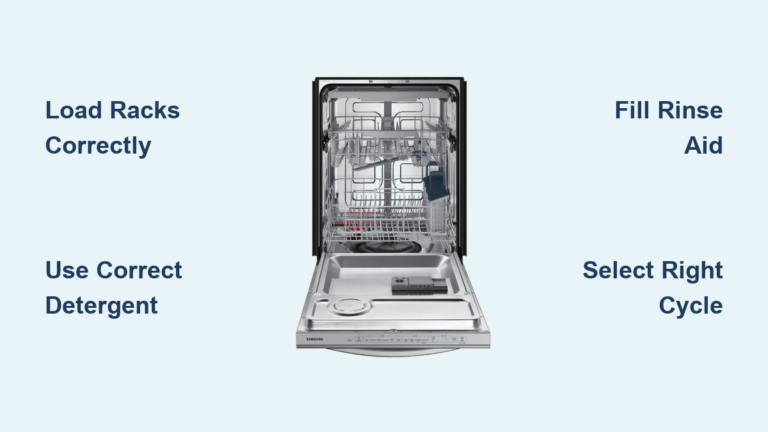
Load Dishes Like a Pro
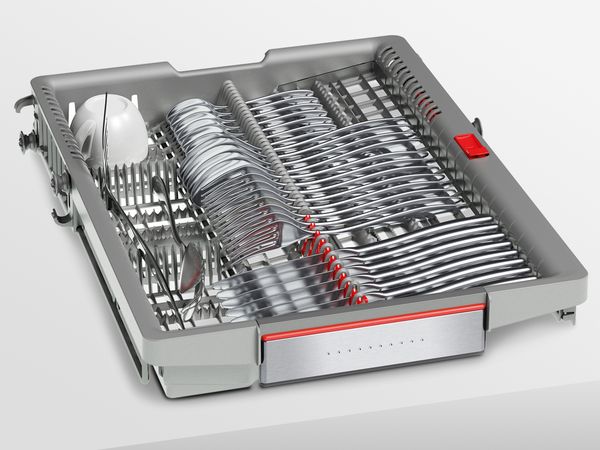
Proper loading ensures every dish gets cleaned and dried effectively.
Upper Rack Configuration
The upper rack has three height positions: low, mid, and high. To adjust, press the side levers on both sides of the rack, then lift or lower to the desired position. The hooks auto-latch into place.
Best practices for the upper rack include using the high position for wine glasses and tall tumblers, placing mugs at an angle to prevent water trapping, and folding down the folding tines for flatware or small bowls.
Lower Rack Best Practices
The lower rack is ideal for plates, pots, and pans. Load plates vertically, not nested, with dirty surfaces facing the center spray arm. Fold down the deep tines to fit baking sheets or cutting boards.
Visual cue: If you cannot see the spray arm, you are blocking it with dishes.
Silverware Basket Tips
The silverware basket’s top flips open for bulk loading. Distribute utensils evenly with forks and spoons handle-up and knives handle-down for safety. Alternate utensil directions to improve water flow and prevent nesting.
Common mistake: Overloading the silverware basket causes poor cleaning and tangled utensils.
Third Rack: Hidden Gem for Small Items
Available on 300 Series and select models, the third rack sits above the upper rack. It holds spatulas, lids, small utensils, and baby bottle parts, keeping them out of the main racks for better cleaning.
Side Racks and Adjustable Rails
Found on 500 Series models, side racks can be repositioned or folded to fit oversized items like cookie sheets and pot lids. Rotate large items diagonally for maximum clearance.
Add Detergent and Rinse Aid Correctly
Using the Right Detergent
Open the main detergent dispenser inside the door. Place one detergent tablet or add powder up to the max line, then close the lid firmly without forcing it.
Never use liquid dish soap: It creates excessive suds and can damage the pump.
If your model has a pre-wash compartment, add detergent only for heavily soiled loads. Most users can leave this compartment empty.
Pro Tip: Use Finish Quantum or Cascade Platinum tabs with built-in rinse aid and salt for fewer refills.
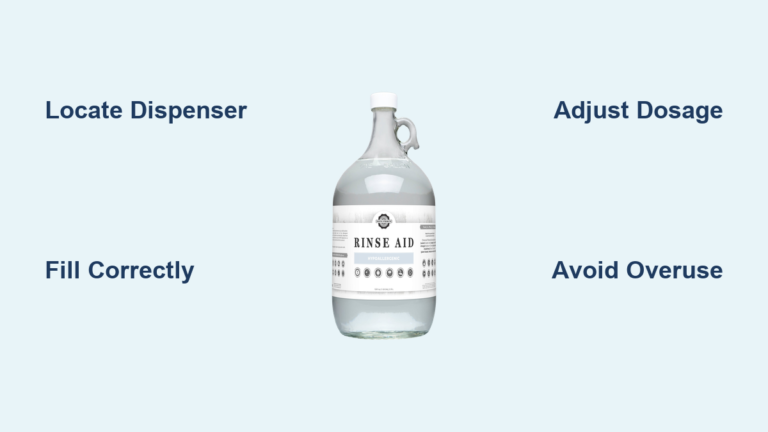
Refill Rinse Aid for Spot-Free Drying
The rinse aid reservoir is located on the right side of the tub near the door seal. To refill, turn the cap counterclockwise, fill to the max line (slight overflow is normal), and replace the cap tightly.
A red dot visible in the indicator window means rinse aid is low. Refill every 1 to 2 months depending on usage frequency. Without rinse aid, expect water spots, longer drying times, and potential cycle extensions.
Understand Key Bosch Technologies
Precision Wash: Sensor-Based Cleaning
Bosch’s Precision Wash uses soil sensors to detect food particles in the draining water. The system automatically adjusts wash duration, water temperature, spray intensity, and the number of rinses based on how dirty the water appears.
Condensation Drying: Energy-Efficient Approach
Unlike many brands, Bosch uses condensation drying instead of a heating element. The stainless steel tub retains heat from the final rinse, and moisture condenses on the cooler outer door and drains away. This method is energy-efficient, safer for plastics, and more hygienic since no fan pulls in kitchen air.
With full rinse aid, expect completely dry dishes even after extended use.
Leak Protection: Built-In Safety
Bosch dishwashers include sensors that detect overfill or leaks. If detected, the system automatically shuts off water intake, drains remaining water, and displays an error code like E15. This provides peace of mind for unattended operation.
Ultra-Quiet 44 dB Operation
At 44 decibels, Bosch dishwashers operate as quietly as a library whisper. This makes them ideal for open-concept kitchens, nighttime cycles, and apartments where noise matters.
Clean and Maintain Regularly

Filter Cleaning Schedule
Clean the filter every 1 to 3 months. Clogged filters cause poor cleaning, standing water, and odors.
- Remove the lower rack
- Twist the filter cover counterclockwise and lift
- Pull out the main filter assembly (fine mesh plus coarse strainer)
- Rinse under running water
- Reinstall by aligning and twisting clockwise until secure
Frequency tip: Clean monthly if you run daily cycles or have hard water.
Descale for Hard Water Areas
In hard water areas, mineral buildup reduces efficiency. Run an empty cycle monthly with a citric acid-based dishwasher cleaner like Finish Dishwasher Cleaner or Affresh. Avoid vinegar, as it can damage rubber seals and stainless steel over time.
Monthly Maintenance Tasks
Monthly, wipe the detergent dispenser, rinse aid cap, and the vent hole on the left interior side. Inspect the door gasket for mold or food debris and clean with a damp cloth.
Troubleshoot Common Issues
No Lights When Powered On
Check the power connection and reset the circuit breaker. Verify the unit is not in Child Lock mode if your model has this feature.
Beeping After Pressing Start
The door was not closed quickly enough. Close the door immediately and press Start again.
Dishes Not Drying
Check the rinse aid level and use the ExtraDry setting. Avoid overloading and leave the door slightly ajar after the cycle to vent moisture.
Water Left in Bottom
A clogged filter is the most likely cause. Clean the filter immediately and check spray arms for blockages.
Error Codes
Error codes like E15 (drain issues) or E25 (water inlet problems) require attention. Refer to your model-specific manual and restart the cycle. If the problem persists, contact Bosch support.
Pro Tips for Best Results
Follow These Best Practices
Run your Bosch dishwasher at night using Delay Start to save on electricity. Use combo detergent tabs to simplify maintenance. Place plastics on the top rack to prevent warping. Leave the door slightly open after the cycle ends to prevent odors. Rotate rack wheels occasionally to prevent sticking.
Avoid These Common Mistakes
Do not overload racks, as this blocks spray arms. Do not pre-rinse dishes, as this disables the soil sensors in Auto mode. Avoid washing non-dishwasher-safe items like wooden spoons, cast iron pans, sharp knives, and non-stick cookware.
Expert insight: Scrape your dishes but do not rinse them. Bosch sensors need food residue to calibrate the wash cycle properly.
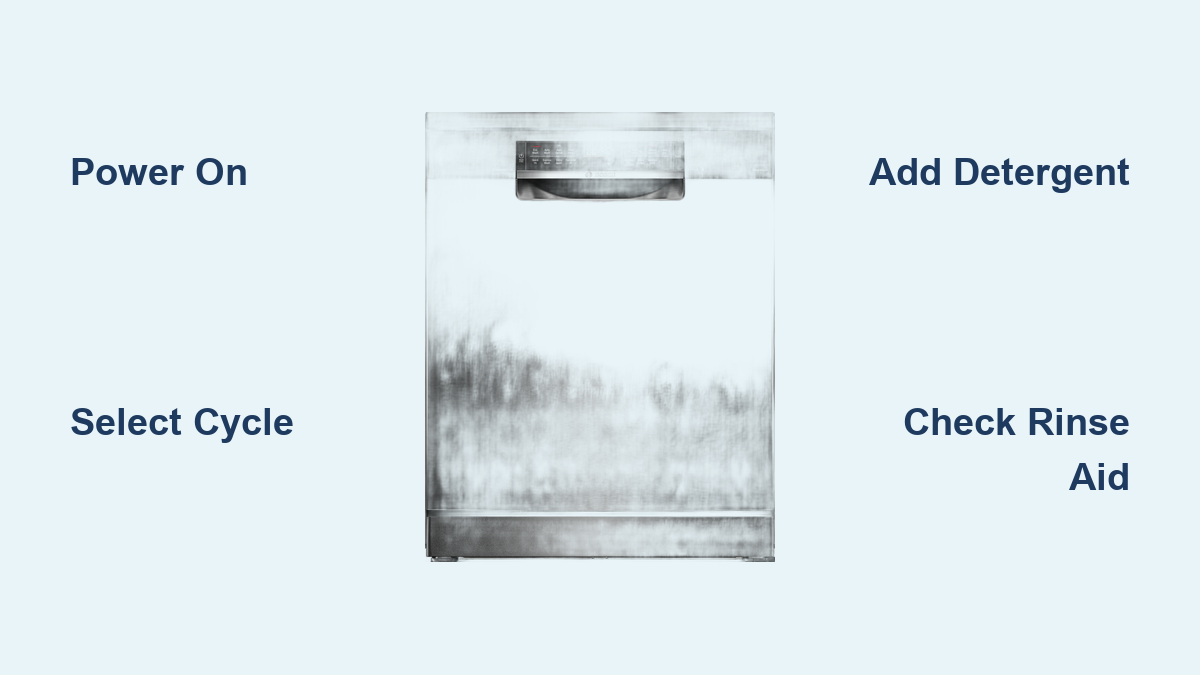
Quick Start: 9-Step Guide
- Power On: Press the On/Off button
- Load Dishes: Use proper rack configuration
- Add Detergent: Place one tablet in the main dispenser
- Check Rinse Aid: Refill if the red dot is visible
- Select Cycle: Choose Auto for best results
- Enable Options: Add Sanitize, ExtraDry, or Delay Start if desired
- Press Start: Then close the door quickly
- Watch for Red Light: Confirms the cycle is running
- Unload Fully Dry Dishes: Wait until the cycle completes
Key Takeaways for Mastering Your Bosch Dishwasher
Your Bosch dishwasher is built to last and perform at its best when used correctly. By following proper loading techniques, selecting the right cycles, and performing regular maintenance, you’ll enjoy spotless dishes, lower energy bills, and minimal repairs. Remember to scrape rather than pre-rinse, keep the rinse aid topped up, and clean the filter every one to three months. With these habits, your Bosch will run smoothly for over a decade.
Frequently Asked Questions About Using a Bosch Dishwasher
How do I start a Bosch dishwasher for the first time?
Press the On/Off button, load your dishes, add detergent to the main dispenser, select a cycle (Auto is recommended for beginners), and press Start. Close the door quickly to avoid the beeping warning.
Why are my Bosch dishwasher dishes not drying?
Low rinse aid is the most common cause of poor drying. Refill the rinse aid reservoir and enable the ExtraDry setting. Also, leave the door slightly ajar after the cycle ends to allow moisture to escape.
What does the red light mean on my Bosch dishwasher?
A steady red indicator light confirms that the cycle is running. A blinking or flashing red light may indicate an error or that the door was not closed properly.
Can I use regular dish soap in my Bosch dishwasher?
Never use liquid dish soap in a dishwasher. It creates excessive suds that can damage the pump and motor. Use only dishwasher-specific detergent tablets or powder.
How often should I clean the filter on my Bosch dishwasher?
Clean the filter every one to three months, depending on usage frequency and water hardness. Clean monthly if you run daily cycles or have hard water.
What is the best cycle for everyday dishes?
The Auto cycle is best for everyday mixed loads because it automatically adjusts wash time, water temperature, and spray intensity based on soil levels detected by sensors.