How to Use Dishwasher Tablets: Quick Guide
You just bought dishwasher tablets and are ready to get sparkling clean dishes with minimal effort. But are you using them the right way? Many people toss a tablet into the bottom of the dishwasher or unwrap coated tablets, mistakes that reduce cleaning power and can even cause long-term issues. Using dishwasher tablets correctly means understanding where to place them, how to handle coated varieties, and what supplements your machine still needs.
This guide walks you through every step, from loading the tablet properly to optimizing rinse aid and salt use, so you get spotless, dry dishes every time. Whether you own a Bosch, Samsung, or any other model, these best practices ensure peak performance.
Place Tablet in the Detergent Compartment
The detergent compartment is specifically engineered to hold and dispense the tablet at the optimal time during the wash cycle. This is the same receptacle used for liquid or powder detergents.
Why Floor Placement Reduces Cleaning Power
Putting the tablet directly on the dishwasher floor may seem convenient, but it defeats the purpose of timed release. The detergent compartment opens at the optimal moment, usually during the main wash phase. If the tablet dissolves too early, detergent gets washed away before heavy cleaning begins, leaving grease and stuck-on food uncleaned. While this won’t damage your appliance, early dissolution can reduce cleaning efficiency by up to 40 percent, especially on pots and pans.
Locating and Using the Detergent Dispenser
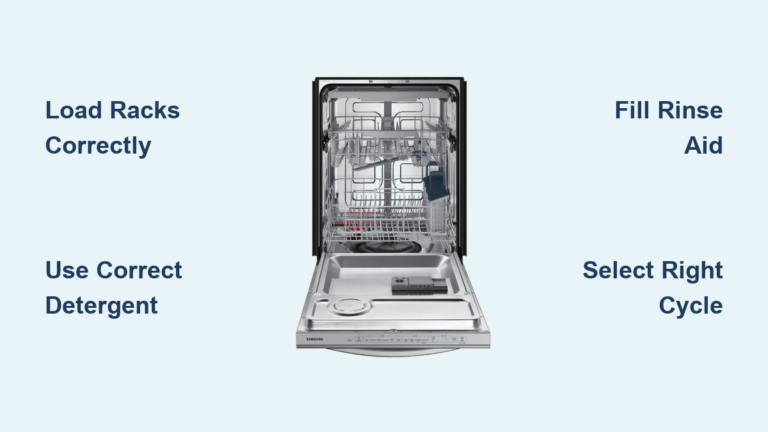
The detergent compartment is typically on the inside of the dishwasher door, marked with a symbol or labeled “Detergent.” It opens with a latch or spring mechanism. To use it correctly, open the flap before loading dishes, insert one tablet only (no need to break or unwrap if coated), and close securely so moisture does not trigger early release. Make sure no large utensils or dish edges block the dispenser from opening during the cycle.
Handle Coated Tablets Properly
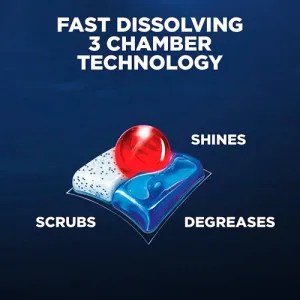
Many premium tablets like Finish Powerball and Finish Quantum come in a water-soluble film that protects the formula until the right moment. This coating prevents premature breakdown and keeps enzymes and cleaning agents separated until use.
Never Remove Dissolvable Coatings
The water-soluble coating on modern tablets dissolves automatically when water enters the dispenser. Never peel or cut open the coating. Doing so exposes sensitive ingredients to humidity, leading to clumping, reduced grease-cutting power, and inconsistent results. The film dissolves instantly during the wash cycle, so leaving it intact is essential for proper performance.
Remove Non-Dissolvable Wrappers
Some budget brands package tablets in plastic or foil that does not dissolve. If you see a non-clear wrapper, unwrap the tablet completely before placing it in the compartment and discard the packaging. Never leave non-dissolvable wrappers inside the dishwasher. Check the product label: “Do not remove wrapper” means it is water-soluble, while “Remove from packaging” indicates a non-dissolvable wrap.
Follow Correct Usage Steps
Using dishwasher tablets correctly takes just seconds. Follow these steps for guaranteed results.
Step-by-Step Loading Guide
- Unwrap only if necessary. Leave dissolvable films intact, but remove plastic or foil wrappers fully.
- Open the detergent dispenser located on the inner door.
- Insert one tablet exactly. Use exactly one per load, as overdosing causes excess suds and residue.
- Close the compartment securely. Ensure it clicks shut to prevent early water exposure.
- Load dishes properly. Angle plates toward spray arms and avoid blocking the detergent door.
- Select the right cycle. Use Normal for daily loads, Heavy for baked-on food, and Eco for lightly soiled items.
- Start the dishwasher and walk away.
This entire process takes under a minute, but skipping any step risks poor cleaning or film buildup.
Optimize Wash Cycle Performance
Dishwashers are engineered to release detergent at the ideal stage, typically after a pre-rinse and just before the main wash. The tablet dissolves gradually, releasing enzymes to break down proteins, alkalis to lift grease, bleach agents to remove stains, and rinse aids to prevent spotting.
Typical Cycle Durations
Cycle times vary by model and setting. Heavy Duty runs approximately 3 hours and works best for pots, pans, and dried-on food. Normal runs about 2 hours for mixed loads. Eco runs roughly 2.5 hours for energy-efficient cleaning. Express or Quick runs 60 to 90 minutes for lightly soiled dishes. Even short cycles activate full tablet dissolution, but heavily soiled items benefit from longer, hotter programs.
Wait After Cycle Ends
Opening the door immediately after the cycle finishes interrupts the drying phase. Residual heat helps evaporate moisture if you let it work.
Allow 20 to 30 Minutes Before Unloading
Waiting after the cycle ends improves drying, especially on plastic containers, prevents steam burns, and reduces water spots on glassware. After waiting, top-rack items like cups and bowls should be completely dry, while heavier bottom-rack dishes may have slight moisture but no droplets.
Check for Clean, Sparkling Results
Post-cycle signs of success include spotless mugs and dry silicone tools on the top rack, and pots and plates with a shiny, reflective finish on the bottom rack. No chalky film, cloudiness, or lingering odors should be present. If dishes are not drying well or look cloudy, revisit rinse aid and salt levels.
Adjust for Water Hardness
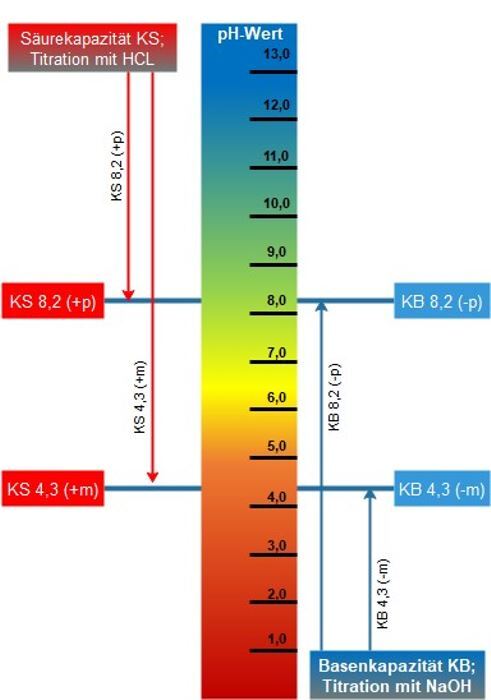
All-in-one tablets contain water softeners that work well in soft to moderately hard water. These built-in salts prevent limescale on heating elements, improve detergent solubility, and keep glassware clear.
When to Add Dishwasher Salt
In very hard water areas, the internal salt in tablets is not enough. If your water exceeds 21 dH on the German hardness scale, fill the dedicated salt reservoir at the bottom of the dishwasher. Use only granular dishwasher salt, not table or rock salt, and refill every 1 to 2 months depending on usage. Without added salt, you will see white residue on dishes, reduced cleaning efficiency, and potential long-term damage to the pump and heater.
Always Use Rinse Aid
Even with all-in-one tablets, rinse aid is essential. It lowers water surface tension for faster sheeting, prevents droplets from forming, and eliminates water spots and film on glassware.
Locating the Rinse Aid Compartment
The rinse aid dispenser is usually near the detergent compartment but separate and sealed. To refill, unscrew the cap, pour in liquid rinse aid until full, and wipe spills to avoid foaming. Never put a tablet in this compartment, as it is not designed for solids and can clog.
Monitoring and Refilling Regularly
Most dishwashers have a floating indicator showing when levels are low. Refill every 6 to 8 weeks with average use, or more often if you run daily cycles. Set a reminder or check monthly to avoid running out mid-cycle.
Compare Detergent Types

Dishwasher tablets win on ease of use. Benefits include pre-measured doses with no guesswork, multi-chamber formulas that separate enzymes, bleach, and rinse aid, and pop-and-go convenience ideal for busy households.
When Powder or Liquid Might Be Better
Despite their convenience, tablets are not always optimal. Powder detergent offers cost savings and environmental benefits but requires adding salt and rinse aid separately. Liquid detergent avoids residue concerns but is less effective on tea and coffee stains. For Bosch owners, using powder with separate additives often delivers better long-term value and control over cleaning chemistry.
Avoid Homemade Alternatives
Online recipes for homemade tablets using baking soda or citric acid may seem eco-friendly, but they pose real risks. These include corrosion from improper pH levels, damage to seals and sensors, voided warranties due to unauthorized chemicals, and incomplete cleaning leading to mold and odors. Commercial tablets are lab-tested for safety, solubility, and machine compatibility.
Stick to Trusted Brands
Use reputable brands like Finish, Cascade, Ecover, or Somat. These are formulated to work with modern dishwasher technology, including sensors, filters, and eco-modes.
Troubleshoot Common Problems
Tablet Did Not Dissolve Fully
This problem has several possible causes. Low water temperature below 50 degrees Celsius prevents proper dissolution. A clogged detergent dispenser blocks water from reaching the tablet. Overloaded dishes block water flow. Poor-quality tablets may not dissolve completely. To fix it, run hot water at the sink before starting the cycle, clean the dispenser monthly with vinegar, use name-brand tablets, and ensure proper loading around the door.
White Residue on Dishes
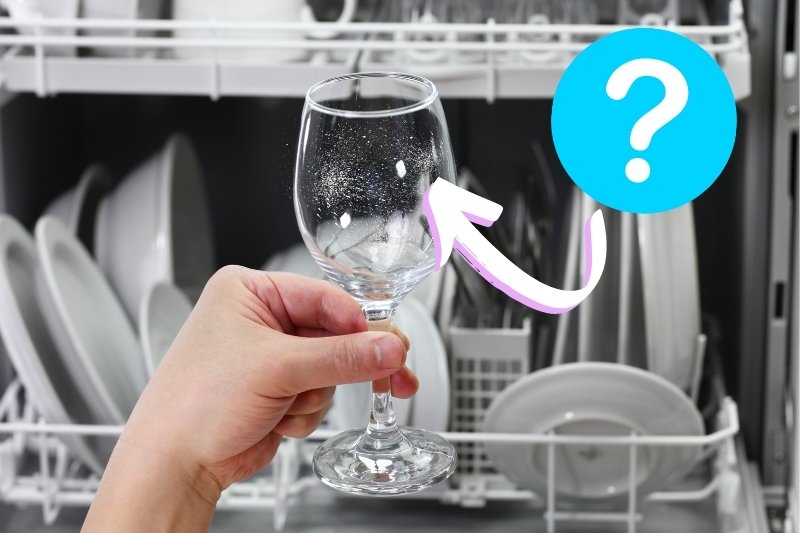
This film usually means hard water scale, which requires adding dishwasher salt. Insufficient drying means you should increase rinse aid. Low-quality detergent means you should switch brands. Test your water hardness and adjust settings accordingly.
Suds or Foam Inside the Machine
Never use hand dish soap in a dishwasher. Even a teaspoon can create suds that prevent proper washing, leak from the door, and damage internal components. If accidental suds occur, stop the cycle, wipe out excess foam, and run an empty cycle with 1 cup of white vinegar in a bowl on the top rack.
Maintain Your Dishwasher
Food particles collect in the bottom filter, reducing water pressure and causing odors. A clogged filter can mimic detergent failure, so clean it regularly.
Cleaning the Filter Weekly
To clean the filter, remove the lower rack, twist and lift out the filter assembly, rinse under warm water, and reinstall properly. This takes just a few minutes but significantly improves performance.
Monthly Maintenance Cycles
Every 30 days, place a bowl with 1 cup of vinegar on the top rack, or use a commercial dishwasher cleaner, and run a hot cycle with no dishes. This removes hidden grease, limescale, and bacteria from internal components.
Frequently Asked Questions About Dishwasher Tablets
Can I put a dishwasher tablet on the bottom of the machine?
While placing a tablet on the bottom will not damage your dishwasher, it is not recommended. The tablet may dissolve too early or too rapidly, reducing cleaning efficiency by up to 40 percent. Always use the designated detergent compartment for optimal results.
Do I need to unwrap dishwasher tablets?
It depends on the type. If the tablet has a clear, plastic-like water-soluble coating (like Finish Powerball), leave it intact. If it is wrapped in plastic or foil that does not dissolve, unwrap it completely before use. Check the product label for specific instructions.
Do I still need rinse aid if using all-in-one tablets?
Yes. Even with all-in-one tablets containing built-in rinse aid, using a separate rinse aid is strongly recommended. It significantly improves drying performance, prevents water spots, and enhances the shine on glassware.
How often should I add dishwasher salt?
Refill the salt reservoir every 1 to 2 months, depending on usage and water hardness. In very hard water areas, you may need to refill more frequently. Check your local water hardness report to determine the appropriate schedule.
What should I do if my dishwasher is foaming?
Stop the cycle immediately if you accidentally used hand dish soap. Wipe out the excess foam, then run an empty cycle with 1 cup of white vinegar placed in a bowl on the top rack to neutralize the soap and clear residue.
Key Takeaways for Using Dishwasher Tablets Correctly
Using dishwasher tablets correctly comes down to three essential practices. First, always place tablets in the detergent compartment, never on the bottom of the machine, to ensure proper timing of the cleaning agents. Second, keep dissolvable coatings intact and only unwrap non-dissolvable packaging. Third, supplement with rinse aid and dishwasher salt as needed based on your water hardness. Avoid common mistakes like using hand soap, overloading the machine near the door, or attempting homemade detergent alternatives. With these habits, you will enjoy consistently clean, dry, and sparkling dishes cycle after cycle.