Whirlpool Dishwasher Not Spinning? Fix It Fast
Your Whirlpool dishwasher fills, drains, and heats, but the spray arms refuse to rotate. Dishes come out dirty with food stuck and detergent residue. You are not alone. This Whirlpool dishwasher not spinning issue strikes models from under two years old to over a decade, with users reporting sudden failure despite normal operation in every other way.
This problem is not about the entire unit failing. It is a targeted breakdown in water circulation. The core symptom is no rotation, no spray sound, but all other functions work. In 85% of cases, the solution takes less than 15 minutes and costs nothing. But when it involves motor failure, you need to know exactly what to do next.
Check Spray Arm Blockage First
Before tearing anything apart, confirm the most common culprit: clogged spray arms. Food debris, mineral scale, or plastic fragments can block jet holes, killing the water pressure needed for spin.
Remove and Inspect Each Arm
Take out the bottom, middle, and top spray arms. Hold each under bright light and check every hole, especially the upward-facing jets on the lower arm. Use a toothpick or soft wire to clear obstructions. Avoid metal picks that scratch plastic.
Shake each arm after cleaning. A rattling sound means loose debris inside. Soak in warm water to flush it out completely before reinstalling.
Clean With Vinegar for Limescale
Hard water builds mineral deposits that reduce flow. Soak arms in white vinegar for 30 minutes. Rinse thoroughly under running water. Reinstall and ensure they snap securely onto the water feed below.
Test for Free Rotation
After cleaning, spin each arm by hand. It should turn smoothly without wobbling or rubbing against the tub. If stiff or cracked, replace the arm for $40 to $80.
Clean the Sump Filter Thoroughly
A dirty or misaligned sump filter is the second most common cause. Even if it looks clean, fine particles can block internal flow to the pump.
Locate and Remove the Filter
Pull out the lower rack. Rotate the filter assembly counter-clockwise to release. Lift out all components, as multi-stage filters may have 2 to 3 parts.
Scrub and Reinstall Properly
Rinse the filter under warm water. Use a soft brush to remove grease and food gunk. Check the area beneath the filter, which often hides corn kernels or coffee grounds. Reinstall in correct order and turn clockwise until snug.
A poorly seated filter restricts water flow and voids the seal. This causes poor cleaning and potential leaks.
Maintenance Schedule
Clean the filter every 1 to 2 months. Replace disposable filters every 6 to 12 months for $20 to $50.
Verify Water Fill Level
If the dishwasher does not fill enough, the pump cannot prime. Low water means no pressure to spin the arms.
Test During Cycle Start
Start any wash cycle. Wait 3 minutes, then open the door. Look at the metal heating element at the tub base. Water should touch or cover the element. If the element is dry, you have an inlet valve issue.
Replace Faulty Inlet Valve
Low fill usually means a failing water inlet valve. This is caused by a worn solenoid or clogged internal screen. Do not clean the screen, as this risks flooding due to seal damage. Replace the entire valve instead.
Replacement costs $31 to $130. Shut off the water supply, disconnect the inlet hose, remove mounting screws, and swap in the new valve.
Clear Pump and Impeller Debris
Foreign objects like toothpicks, seeds, or plastic shards can jam the impeller, stopping rotation even if the motor runs.
Access the Pump Assembly
Unplug the dishwasher and shut off water supply. Pull the unit away from the cabinet. Remove the lower kick panel. Lay the dishwasher on its back with padding for protection. Disconnect drain and fill hoses.
Remove and Inspect Impeller
Locate the circulation pump. Extract the impeller, which is held by magnetic coupling. Check for cracks or warping, debris lodged in blades, and free spinning motion.
Clean and Reassemble
Rinse housing and impeller under water. Reinstall the impeller and ensure it snaps firmly. Never pinch the pump gasket during reassembly, as this causes leaks.
A humming pump that does not circulate water often means a jammed impeller.
Diagnose Circulation Pump Failure
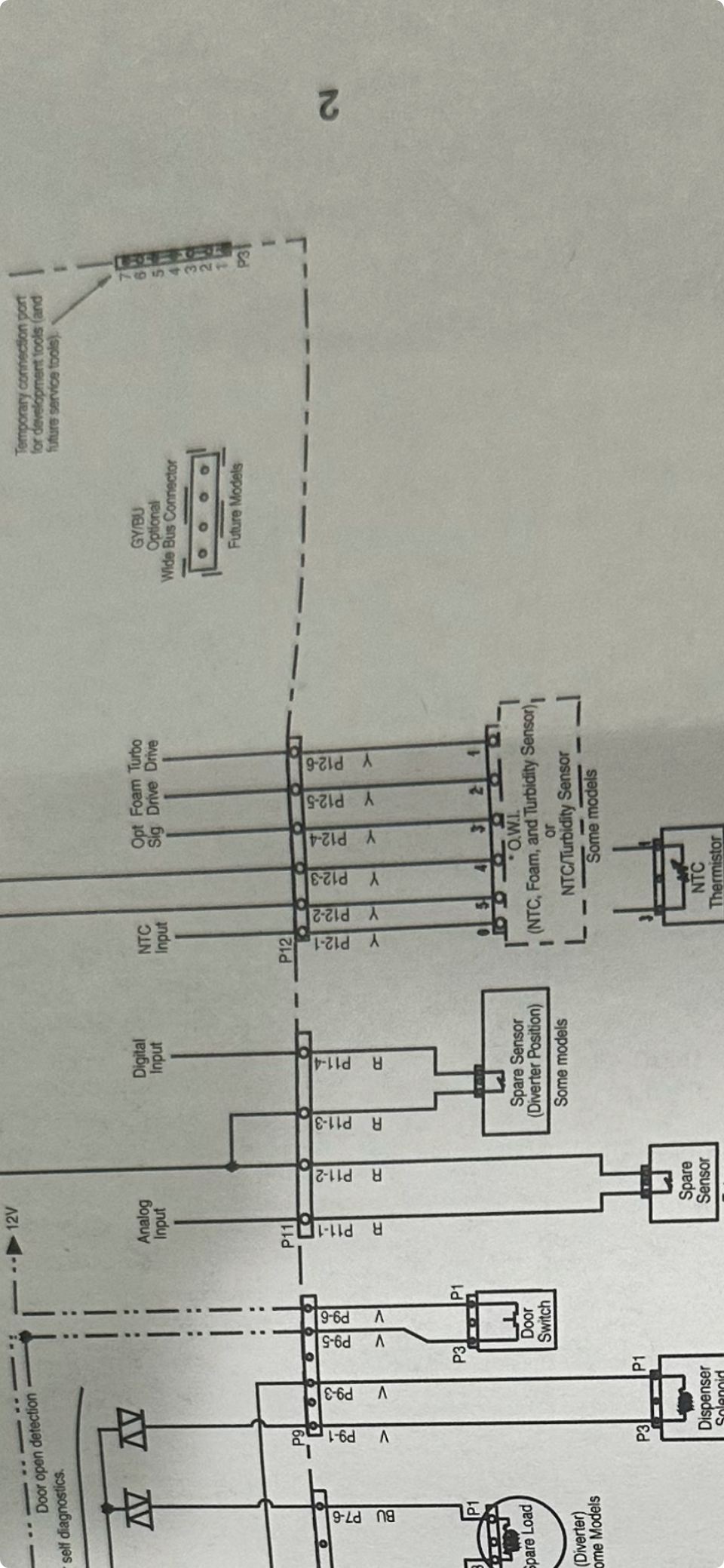
When the motor fails, the dishwasher fills and drains, but no spray occurs. This is common in newer Whirlpool models with PMSM motor technology.
Listen for These Sounds
Whooshing or rushing water means the pump is working. Humming or buzzing indicates a stalled motor or weak windings. Silence during the wash phase suggests electrical failure in the motor, board, or wiring.
Affected Models and Part Numbers
The WDT730PAHZ0 model shows humming with no spray and uses part W10805387. The WDF520PDM displays F4E3 error with a silent pump. The WDT540HAM shows F4E3 error after 15 to 18 months.
Replace the Wash Motor
Replacement costs $250 to $500. This is an advanced DIY or professional-level repair. It requires disassembly of the lower panel, hose removal, and electrical disconnect.
PMSM motors in Whirlpool units under 2 years have a known failure rate. Check if warranty extensions apply.
Test the Diverter System
On dual-spray models, a rotating diverter directs water between upper and lower arms. If stuck, only one level gets cleaned.
Check for F9 Error Code
F9 indicates diverter sensor or motor failure. This appears on models like WDT540HAM.
Diagnose Top-Rack-Only Failure
If the bottom arm spins but the top arm stays still and upper rack dishes are dirty, manually rotate the diverter. It should move freely. Clean around the shaft. Replace the diverter motor for $60 to $120 if unresponsive.
Replace the diverter only after confirming the wash motor works.
Rule Out Control Board Issues
The control board sends power to the pump. If it fails, the motor gets no signal, resulting in silence during wash.
When to Suspect the Board
All other systems check out. There is no hum and no spray, but fill and drain work. Error codes like F4E3, F9, or E1 appear.
Test With Multimeter
Set the multimeter to AC voltage. Start the wash cycle. Probe the pump wiring harness. Expect 120V during operation. No voltage means the board is not sending a signal. Voltage present means the pump is bad.
Never test with water in the tub or live power unless trained. Replacement costs $150 to $300. This is the final step after eliminating clogs, inlet valve, pump, and diverter.
Follow This Diagnostic Sequence
Use this priority order to avoid unnecessary repairs.
Step 1: Quick Visual Checks
Remove racks and check for loading interference. Spin arms by hand and confirm free movement. Inspect and clean jet holes. Remove and clean the sump filter. Re-run the cycle. This takes less than 15 minutes and costs nothing.
Step 2: Observe Operation
Run an empty cycle. Listen for spray sound or humming and silence. Pause mid-cycle and check if water covers the heating element.
Step 3: Test Fill Level
If water does not touch the element, replace the inlet valve.
Step 4: Inspect Pump and Impeller
Pull the unit, lay it on its back. Remove the impeller and check for debris, cracks, and free spin. Clean and reassemble.
Step 5: Replace Wash Motor
If the pump is silent or hums weakly, order the correct part and replace it.
Step 6: Replace Diverter
Only if motor replacement does not fix upper spray.
Step 7: Evaluate Control Board
Confirm no voltage to the pump with a multimeter. Replace the board if faulty.
Prevent Future Spinning Issues
Avoid repeat failures with simple maintenance. Clean the sump filter every 1 to 2 months. Inspect spray arm holes monthly. Run a cleaning cycle monthly using one Affresh tablet or one cup of vinegar. Use rinse aid with every load. Pre-rinse dishes lightly before loading. Run hot water at the sink before starting the cycle. Replace disposable filters every 6 to 12 months.
Running hot water at the sink first ensures faster fill and better cleaning performance.
Know When to Replace the Dishwasher
Consider replacement if the unit is over 8 years old. Consider replacement if repair cost exceeds $200. Consider replacement if multiple failures occur, such as motor replaced twice. Consider replacement if the F4E3 error keeps returning after repairs.
Newer models with PMSM motors have known early-life failures. Check for warranty extensions with Whirlpool.
Final Checklist: Did You Fix It?
After repair, verify success. Audible spray jets should occur during the cycle. Spray arms should be in different positions after the cycle. Dishes should be clean with no food or film. The detergent cup should be empty. There should be no leaks or strange noises.
If all boxes are checked, you have solved the Whirlpool dishwasher not spinning problem.
Parts and Where to Buy
Water inlet valves cost $31 to $130. Sump filters cost $20 to $50. Spray arms cost $40 to $80. Wash motors cost $250 to $500. Diverter motors cost $60 to $120. Control boards cost $150 to $300. Most parts ship same-day. Always confirm model compatibility before ordering.
Key Takeaways for Fixing Whirlpool Dishwasher Spray Arms

The Whirlpool dishwasher not spinning issue is usually simple to fix. Eighty-five percent of cases are resolved by cleaning spray arms and the sump filter. Low water fill points to a failed inlet valve, so replace it rather than cleaning. Humming or silence during wash indicates pump or motor failure, especially in models under 2 years with PMSM motors. Top rack not cleaning means checking the diverter system. Control board failure is rare, so diagnose it last.
Follow the step-by-step order, use model-specific part numbers, and maintain regularly. Most fixes cost under $130 and take under two hours. Save time, save money, and get your dishes clean again.
Frequently Asked Questions About Whirlpool Dishwasher Not Spinning
Why does my Whirlpool dishwasher fill but not spray?
This indicates the water fill and drain work, but the circulation system is failing. The spray arms may be clogged, the sump filter may be dirty, or the circulation pump may have failed. Start by cleaning the spray arms and filter.
How do I know if my dishwasher pump is bad?
Listen during the wash phase. A healthy pump makes a strong whooshing sound. A humming or buzzing noise means the motor is stalled. Silence suggests electrical failure. You can also check by opening the door mid-cycle to see if water sprays.
Can I fix a Whirlpool dishwasher spray arm myself?
Yes. Most causes are simple clogs or filter issues that take 15 minutes to fix with no tools. Pump and motor replacement requires advanced skills. Inlet valve and diverter replacement are intermediate-level repairs.
What does the F4E3 error mean on my Whirlpool dishwasher?
F4E3 indicates a circulation pump failure. This commonly appears on models like WDT540HAM and WDF520PDM, especially those under 2 years old with PMSM motors. The motor assembly usually needs replacement.
How much does it cost to repair a Whirlpool dishwasher spray arm issue?
Simple fixes like cleaning clogs cost nothing. Replacement parts range from $20 to $130 for filters, valves, and spray arms. Pump or motor replacement costs $250 to $500. Control board replacement costs $150 to $300.
Should I repair or replace my Whirlpool dishwasher?
Replace if the unit is over 8 years old and repair costs exceed $200. Replace if multiple major components have failed. Replace if the F4E3 error keeps returning after repairs. Newer models with PMSM motors may have warranty coverage for early failures.