How to Unclog a Whirlpool Dishwasher: Quick Fix Guide
Is your Whirlpool dishwasher leaving standing water after a cycle? You’re not alone. Clogs are one of the most common causes of poor drainage and cleaning performance in these appliances. When food debris, grease, or foreign objects block key components like the filter, pump, or drain hose, your dishwasher cannot function properly. The good news: most clogs can be cleared at home in under 30 minutes with basic tools and no special expertise.
This guide walks you through every step to diagnose and fix the blockage, from removing the filter to inspecting the drain hose and air gap. You’ll also learn how to prevent future clogs with simple maintenance habits that keep your Whirlpool running smoothly for years.
Disconnect Power and Prepare
Before accessing internal parts, safety comes first. Always disconnect power to avoid accidental startup or electrical hazards.
Turn Off Dishwasher Power
Unplug the unit or switch off the circuit breaker. Never work inside the dishwasher while it’s energized. Confirm power is off by checking that the control panel is dark.
Remove the Lower Rack
Slide out the bottom rack to expose the sump area at the tub base. This gives full access to the filter assembly and impeller, which are your primary clog inspection zones.
Remove and Clean the Filter Assembly
The filter traps food debris but can become clogged over time, restricting water flow and drainage.
Locate the Filter at Tub Base
Find the circular filter assembly in the center of the dishwasher floor. Most Whirlpool models use a multi-part system with upper (fine mesh) and lower (coarse) filters. Some newer models feature a three-part system.
Unlock and Lift Out Filters
Rotate the upper filter counterclockwise to release it, then lift it out. Next, pull up the lower filter straight off its housing. Remove each piece carefully, noting how they fit together for reassembly.
Rinse and Scrub Filter Components
Hold each filter under warm running water. Use a soft brush to clean stuck-on residue from mesh and crevices. Avoid harsh cleaners or dishwashers, as these can damage the filter material. Ensure all openings are fully clear before reinstallation.
Check the Pump and Impeller

A jammed impeller stops water from being pumped out, leading to standing water even if the filter is clean.
Inspect the Sump Area
With the filter removed, look into the sump, the recessed area beneath the filter. Shine a flashlight to spot trapped debris like toothpicks, paper bits, or plastic fragments.
Rotate the Impeller Manually
The impeller is a fan-like component in the sump. Gently spin it with your finger. It should turn freely. If it’s stuck, carefully remove any obstruction blocking its blades. Do not force it. Use tweezers or needle-nose pliers for precision.
Clear Debris Without Damaging Parts
Never use sharp tools that could scratch or crack the impeller housing. If the impeller won’t spin after debris removal, the pump motor may be faulty and require professional service.
Inspect the Drain Hose for Blockages
A kinked or clogged drain hose prevents water from exiting the dishwasher, especially near the garbage disposal or air gap.
Access the Kick Panel
Remove the screws from the front toe strip under the door. Gently pull the panel down and away to expose the drain hose and pump outlet.
Disconnect and Flush the Hose
Unclamp the drain hose from the pump. Hold it over a bucket and flush it with hot water. If water doesn’t flow freely, use a plumber’s snake or flexible wire to dislodge buildup.
Check for Kinks and Proper Loop
Reinstall the hose with a high loop secured to the underside of the countertop. This prevents sink water from backing into the dishwasher. Ensure no sharp bends pinch the hose.
Clean the Air Gap and Disposal Connection
Many clogs occur at the air gap or garbage disposal, not inside the dishwasher itself.
Remove and Clean the Air Gap
If your dishwasher connects through a chrome air gap on the sink, unscrew the cover. Extract the inner cylinder and clean all parts with a small brush. Flush the outlet tube with hot water to remove grease and mineral deposits.
Verify Disposal Inlet Is Open
If the dishwasher drains into a garbage disposal, confirm the knockout plug was removed during installation. Run the disposal to clear any debris, then run a hot water cycle to flush the line.
Reassemble and Test the Dishwasher
After clearing all potential clogs, reassemble the unit and verify proper drainage.
Reinstall Filters Correctly
Place the lower filter back into the sump, then lock the upper filter by rotating it clockwise until it clicks. Ensure all parts are seated fully. Misaligned filters cause leaks and poor performance.
Restore Power and Run Test Cycle
Plug in the dishwasher or turn the breaker back on. Select a short cycle like Rinse or Quick Wash. Let it complete and check that water drains fully at the end.
Confirm No Leaks or Errors
Inspect under the unit for leaks around the kick panel. If the dishwasher still won’t drain, check for error codes or listen for pump noise during the cycle.
Prevent Future Clogs With Regular Maintenance
Avoid repeat clogs with simple habits that keep your Whirlpool dishwasher running efficiently.
Clean Filter Weekly
Even if no issues appear, remove and rinse the filter every 7 to 10 days. Heavy users or households with frequent cooking should clean it more often.
Scrape Dishes Before Loading
Don’t rely on the dishwasher to handle large food scraps. Remove excess food, especially starchy items like pasta or potato peels, that can clog the filter.
Run Monthly Cleaning Cycles
Place a cup of white vinegar on the upper rack and run a hot water cycle monthly. This dissolves grease, mineral scale, and odors. For deeper cleaning, use a commercial dishwasher cleaner every 3 months.
Inspect Spray Arms Periodically
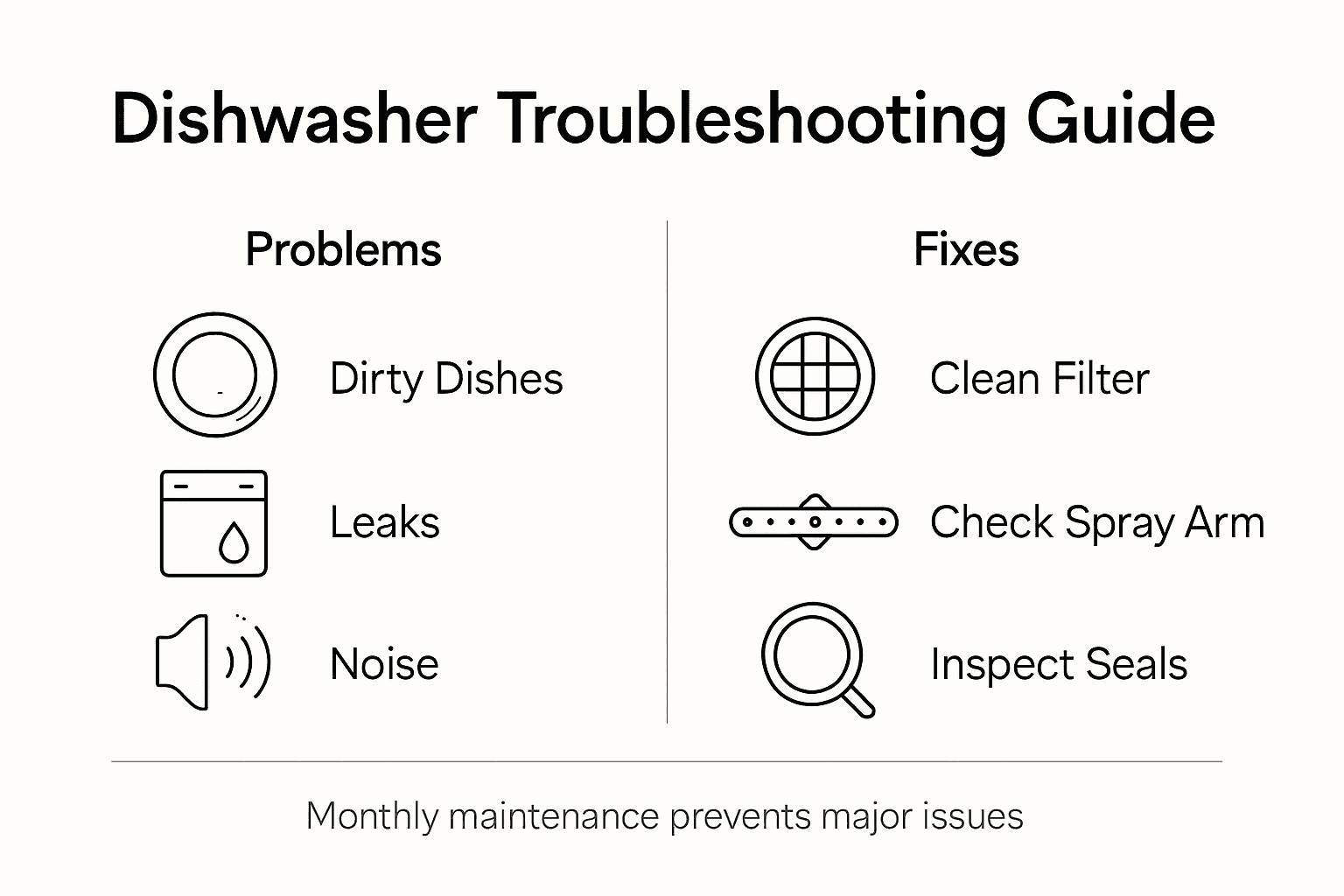
Remove spray arms and rinse out holes clogged with detergent residue or food. Clearing these improves water pressure and cleaning results.
Troubleshoot Persistent Drainage Problems
If water still remains after unclogging steps, investigate deeper mechanical or installation issues.
Listen for Pump Humming
During the drain phase, stand near the dishwasher. A humming sound means the pump is running. No noise could indicate a failed drain motor or electrical fault.
Check the Float Switch
Find the float, a plastic dome at the tub base. Lift and release it to ensure it moves freely. If stuck, it can prevent the drain cycle from starting.
Test the Check Valve
A faulty check valve allows water to flow back into the tub after draining. This small component is located near the pump and may need replacement if cracked or obstructed.
Consult Warranty and Service Options
Whirlpool dishwashers typically have a 1-year limited warranty. If the drain pump or control board is defective, professional repair may be required. Keep your model number (found on the inner door) handy when seeking support.
Key Takeaways for Unclogging Your Whirlpool Dishwasher
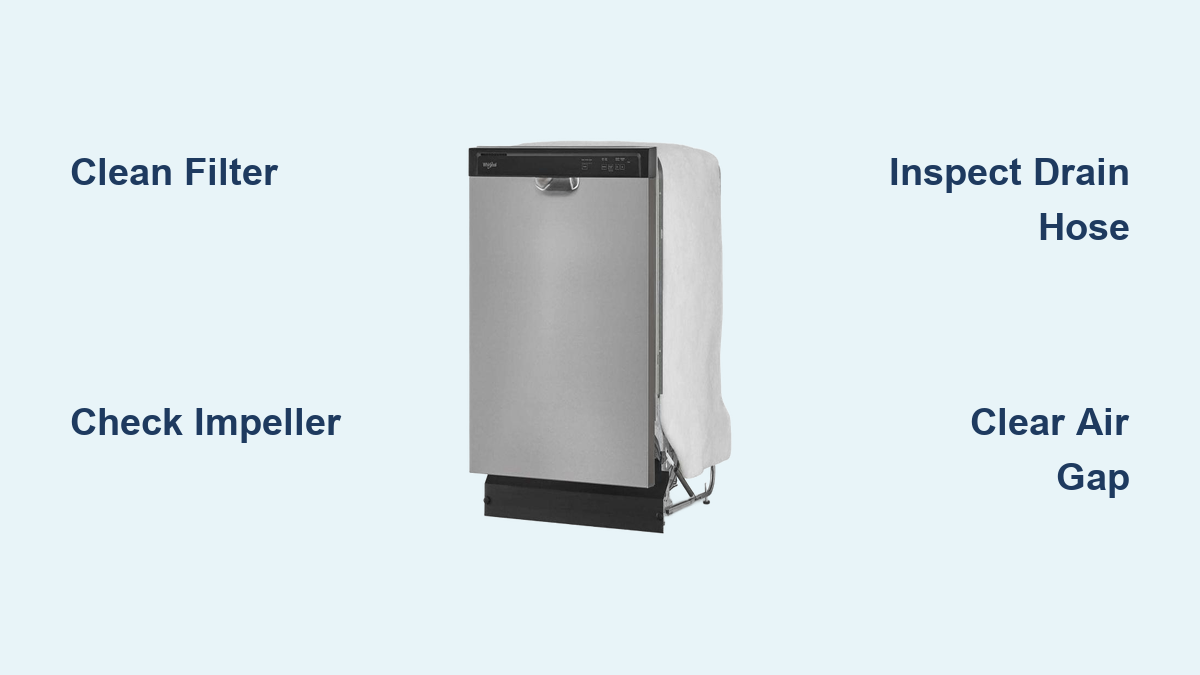
Clogs in Whirlpool dishwashers are usually simple to fix. Start with the filter, then check the impeller, drain hose, and air gap. Regular cleaning prevents most issues. If problems persist after working through these steps, suspect mechanical failure and consult Whirlpool support or a qualified technician. With proper care, your dishwasher can deliver reliable performance for over a decade.
Frequently Asked Questions About Unclogging a Whirlpool Dishwasher
Why is my Whirlpool dishwasher not draining even after cleaning the filter?
The filter is often the culprit, but standing water can also result from a clogged drain hose, jammed impeller, or blocked air gap. Work through each component systematically to identify the blockage.
How often should I clean my Whirlpool dishwasher filter?
Clean the filter every 7 to 10 days for optimal performance. Households that cook frequently or wash heavily soiled dishes may need to clean it more often.
Can I use vinegar to prevent clogs in my dishwasher?
Yes. Running a cup of white vinegar on the upper rack during a hot water cycle every 4 to 8 weeks dissolves grease, prevents mineral buildup, and keeps the drain lines clear.
What causes the impeller to jam in a dishwasher?
Small debris like paper fragments, plastic bits, food particles, or foreign objects can become lodged in the impeller blades, preventing it from spinning freely and blocking drainage.
Do newer Whirlpool dishwashers with self-cleaning filters still need manual maintenance?
Yes. Even models with self-cleaning or anti-clog technology require periodic manual inspection and cleaning. These systems reduce debris but do not eliminate the need for filter checks.