How to Unclog Dishwasher Drain Hose: Quick Fix
Is your dishwasher leaving behind standing water after every cycle? A clogged drain hose is one of the most common culprits, and you can often fix it yourself without calling a plumber. When food particles, grease, or mineral deposits block the hose, water cannot escape properly, leading to poor cleaning results, foul odors, and potential damage to your appliance. This guide walks you through every step from initial inspection to final testing, with pro tips for preventing future clogs.
Clean the Filter First
The filter catches large debris before it reaches the pump or drain hose, making it the first place to check when drainage problems arise.
Remove and Inspect the Filter
Pull out the lower dish rack to access the filter assembly at the bottom of the tub. On most models including Bosch and other major brands, the filter either unscrews or lifts out with a gentle twist. Check for trapped food, grime, or standing water beneath it. A clogged filter alone can stop proper drainage, so inspect it thoroughly before moving to the hose.
Scrub all parts of the filter using a soft brush or old toothbrush. Rinse under hot water until no debris remains. Some models have alignment marks, so make sure they match when reinstalling. Turn clockwise until snug, but avoid overtightening. This simple step resolves many drainage issues before you need to touch the hose.
Drain Standing Water Safely
Before any disassembly, you must remove standing water and cut power to prevent electrical hazards.
Turn Off Power and Remove Water
Shut off power at the circuit breaker or unplug the unit. Never handle electrical components with water present. Use towels, a sponge, or a small cup to remove as much standing water as possible. For faster results, a wet/dry vacuum works well. Just avoid submerging electrical parts. Also turn off power to the garbage disposal if your dishwasher connects to it. Confirm the dishwasher is completely de-energized before proceeding.
Disconnect the Drain Hose

With the area safe and dry, you can now access the drain hose connection under the sink.
Locate Hose Under the Sink
Pull the dishwasher out slightly or crawl under the sink to find where the drain hose connects. It typically attaches to the side of the garbage disposal or a standalone drain pipe. The hose is secured with a clamp, either a metal spring clamp or a screw-type hose clamp. Place a bucket or shallow tray under the connection to catch residual water.
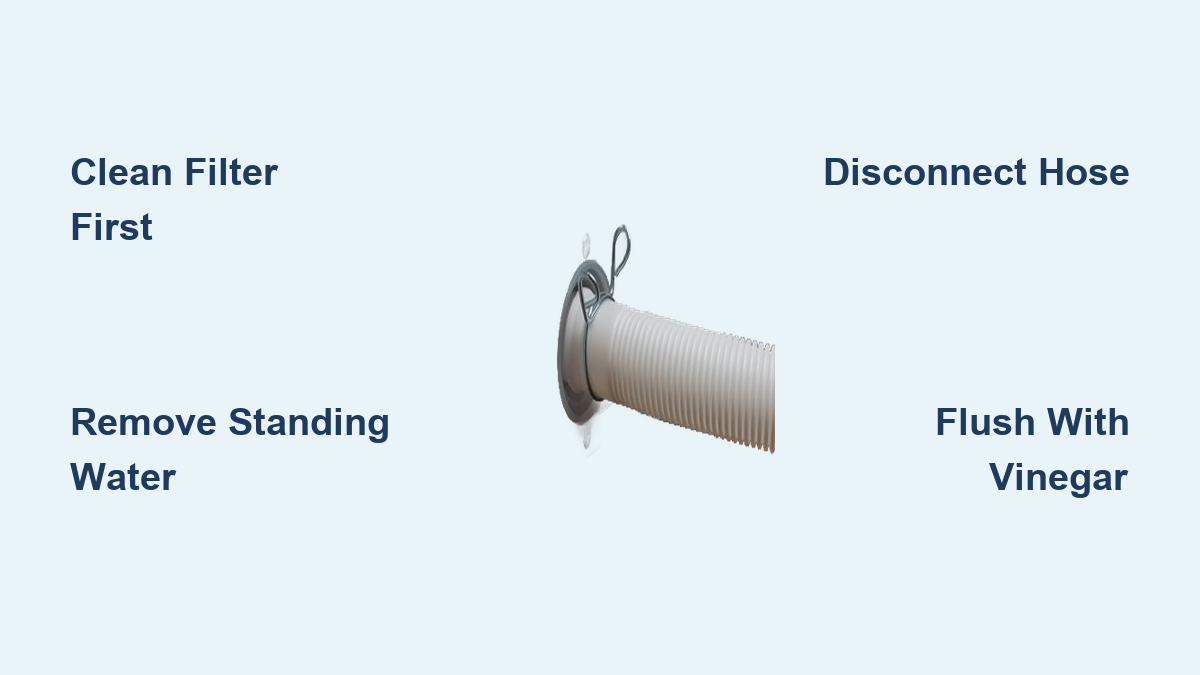
Loosen the clamp using pliers or a screwdriver, then gently pull the hose free. Be careful not to damage the fitting. Once disconnected, inspect both ends by shining a flashlight into the hose and the disposal inlet. Look for visible clogs such as gunk, grease plugs, or food chunks stuck at the connection point.
Clear Hose Blockages
With the hose disconnected, you can now physically remove the blockage using several methods.
Probe with a Coat Hanger
Straighten a wire coat hanger and bend a small hook into one end. Carefully insert it into the hose from both sides to dislodge compacted debris. Work slowly to avoid puncturing the hose. Push through stubborn clogs, twisting as needed to break up grease or food masses.
After probing, flush the hose with hot water from a pitcher or faucet sprayer. Hold it over a bucket and pour forcefully to wash out loosened material. For tougher residue, use a garden hose nozzle on low pressure. Never use high pressure, which can burst the hose.
If the hose smells bad or has organic buildup, soak it with white distilled vinegar. Pour 1 to 2 cups into the dishwasher tub (place in a bowl on the top rack), then run a hot cycle with the sanitize setting. Vinegar dissolves grease, biofilm, and mild limescale without damaging internal components. Never mix vinegar with bleach, as this creates toxic chlorine gas.
Check Pump and Impeller
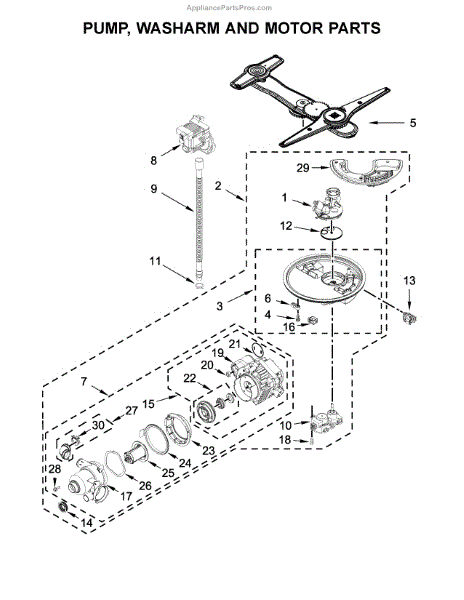
Sometimes the issue lies not in the hose but in the pump assembly itself.
Access the Pump Assembly
With water removed, locate the pump beneath the lower spray arm. You may need to remove a cover plate with two screws. On some models, pulling the dishwasher out gives better rear access. Look for the impeller, often yellow or white, with rotating blades.
Turn the impeller by hand. It should rotate freely. If it is stuck or wobbly, debris may be lodged around or behind it. Remove any visible obstructions with tweezers or needle-nose pliers. A blocked impeller mimics a clogged hose, so this check is essential.
Restore power and run a short cycle. Listen for the pump humming or pulsing during the drain phase. If it runs but water does not exit, the issue is likely downstream in the hose or disposal. If silent, the pump may be faulty and professional diagnosis may be needed.
Reconnect and Test
After clearing all blockages, reassemble everything and verify proper operation.
Reattach Hose Securely
Slide the hose back onto the disposal or drain pipe inlet. Push it fully on until snug. Reinstall the clamp and tighten securely, as loose connections cause leaks. Ensure the hose has a high loop under the sink, rising up before descending, to prevent backflow.
Check the entire hose path for sharp bends or pinches. A kinked hose restricts flow and causes recurring clogs. Reinstall the filter and lower rack, then restore power and run a rinse cycle.
At the end of the cycle, open the door and check the tub floor. Success means no standing water. Also inspect under the sink for leaks at the connection point. If water remains, repeat the hose flushing step or check the air gap. Run a second vinegar cycle to flush out any remaining debris and sanitize.
Prevent Future Clogs
Regular maintenance keeps your dishwasher draining properly for years to come.
Maintain a Cleaning Schedule
Clean the filter every few weeks if you run the dishwasher frequently, or monthly for light use. Scrape large food scraps off dishes before loading. Run a vinegar cycle monthly by placing 1 cup in a bowl on the top rack. Use a commercial dishwasher cleaner quarterly. Inspect the filter, hose, and connections annually.
In areas with hard water, minerals like calcium accumulate in the hose and pump. Use rinse aid daily to reduce spotting. Add a citric acid-based cleaner monthly to dissolve scale. For persistent issues, consider a whole-house water softener.
Leave the dishwasher door slightly open after use. This allows moisture to escape, preventing mold, mildew, and stagnant odors in the sump and hose.
Replace Damaged Hoses
Inspect the hose regularly for cracks, soft spots, or brittleness. Clear hoses may show internal gunk or biofilm even after cleaning. Persistent smells or frequent clogs despite maintenance signal it is time for a replacement.
Choose a new hose matching the original diameter, usually 5/8 inch or 19mm, and length. Route it with a high loop under the countertop to prevent sink water from siphoning back into the dishwasher. No need to fully remove the unit in most cases. Replace the hose every 5 to 7 years as part of routine maintenance.
When to Call a Pro
Some issues require professional expertise beyond basic DIY steps.
If the pump does not run, test power with a voltage meter. No voltage indicates an issue with the breaker, wiring, or control board. These tasks go beyond DIY for most homeowners. A humming sound with no drainage may mean a failing pump. If cleaning does not help and the impeller spins freely, internal motor or impeller damage could be the cause.
Improper air gap installation, incorrect disposal connection, or collapsed drain lines require plumbing expertise. If water backs up into the sink during draining, the issue may lie in shared household pipes. If three cleaning attempts fail, call a licensed technician.
Frequently Asked Questions About Unclogging Dishwasher Drain Hoses
Why does my dishwasher leave water at the bottom after cycling?
Standing water usually indicates a clog in the filter, drain hose, or pump. Food particles, grease, or mineral deposits block water from exiting. Start by cleaning the filter, then check the drain hose connection under the sink.
Can I use a drain snake on my dishwasher hose?
You can, but use caution. A small flexible drain snake works better than a standard pipe snake. Insert gently to avoid puncturing the hose. A coat hanger often works well for simpler clogs.
How often should I clean my dishwasher drain hose?
Inspect and clean the hose annually at minimum. If you notice slow drainage or odors, clean it immediately. Monthly vinegar cycles help prevent buildup without requiring disassembly.
What is the high loop and do I need one?
The high loop is a section of drain hose that rises up under the sink before descending to the disposal. It prevents sink water from flowing back into the dishwasher. Most dishwashers require this for proper drainage.
Is it safe to use bleach in my dishwasher?
Occasional bleach use is safe for deep cleaning. Pour 1 cup of unscented bleach into an empty dishwasher and run the hottest cycle. Never mix bleach with vinegar or commercial cleaners, as this creates toxic gases.
Why does my dishwasher smell even after cleaning?
Foul odors usually come from trapped food debris in the filter, hose, or sump. Vinegar cycles dissolve organic buildup. If odors persist, the hose may have internal biofilm that requires replacement.
Key Takeaways for Fixing Your Dishwasher Drain Hose
A clogged dishwasher drain hose is usually a simple fix, but skipping steps leads to recurring problems. Always start with the filter, as this resolves many drainage issues before you need to touch the hose. Clear standing water safely by turning off power first, then disconnect and flush the hose thoroughly using a coat hanger and hot water. Use vinegar regularly to prevent gunk buildup, and inspect the hose annually for signs of wear or damage.
Replace the drain hose every 5 to 7 years or sooner if you notice cracks, persistent odors, or frequent clogs despite maintenance. Ensure proper installation with a high loop to prevent backflow. With proper care, your dishwasher will drain cleanly for years.
If problems persist after cleaning the filter, flushing the hose, and checking the pump, consider professional help to rule out pump failure or plumbing issues.