How to Use Maytag Dishwasher: Quick Guide
You just installed your new Maytag dishwasher or finally decided to master the one you have had for years. Either way, you want clean, spot-free dishes without wasting time, energy, or money. The good news is that with the right loading technique, detergent choice, cycle setting, and maintenance routine, your Maytag will deliver consistent results every time.
Modern dishwashers like Maytag models are designed to be efficient and powerful, but they only work their best when used correctly. From avoiding cloudy glasses to ensuring pots come out grease-free, every step matters from how you load the racks to whether you are using rinse aid. This guide walks you through exactly how to use a Maytag dishwasher the right way, based on official instructions, expert tips, and real-world best practices.
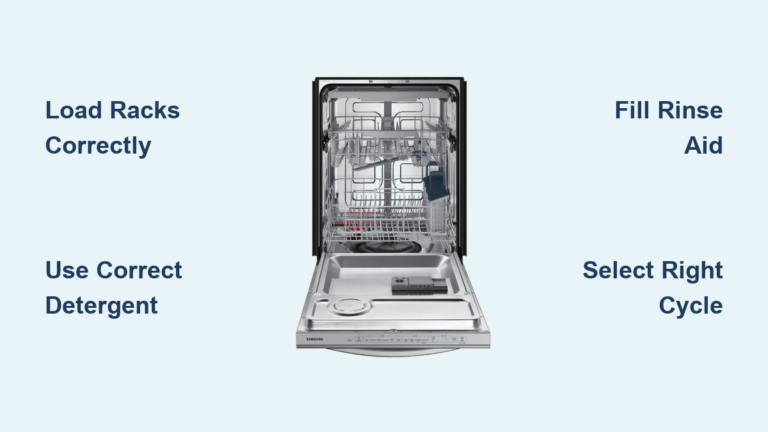
Load Dishes the Right Way

Proper loading is the foundation of a successful wash. Even the most advanced Maytag model cannot clean dishes if water and detergent cannot reach them.
Arrange Bottom Rack for Large Items
Place plates, bowls, pots, and pans on the bottom rack, facing the center spray arm. This ensures direct water contact. Angle deep bowls downward so water drains out instead of pooling. Always position large cookware like baking sheets or cutting boards along the sides, not in the middle, so they do not block the lower spray arm.
Never stack items or overload the rack. Leave space between dishes so water circulates freely. Pots and pans should go upside down unless their shape traps water. Overcrowding is a top reason for poor cleaning results.
Use Top Rack for Glasses and Delicates
The top rack holds lighter, fragile items. Place cups, mugs, and glasses upside down so water runs out during drying. Small bowls and plastic containers also go here, especially if they are heat-sensitive.
Keep tall items like long-handled utensils or large measuring cups away from the upper spray arm. If they touch or obstruct it, cleaning performance drops significantly.
Load Utensils Safely in the Basket
Use the silverware basket to organize forks, spoons, and knives. Alternate handles up and down to prevent nesting, which blocks water flow. For safety, place sharp knives handle-up so the tips are not exposed.
Avoid overfilling the basket. If utensils spill over or block the spray arm, redistribute them. Some models have removable sections for better organization. Use them to separate spoons from forks.
Check Spray Arm Clearance
Before closing the door, confirm both the lower and upper spray arms spin freely. A single misloaded pot or oversized pan can stop rotation, leaving half your dishes dirty. Spin them by hand to test. If they hit anything, reposition the item.
Also, never place items directly over the center of the spray arm or block the detergent dispenser with tall glasses.
Add Detergent Properly

Using the right detergent and adding it correctly makes a huge difference in cleaning power and long-term performance.
Choose the Best Detergent Type
Maytag dishwashers work well with three main types. Each has pros and cons.
Tablets are convenient and pre-measured. Most include rinse aid and enzymes. However, some do not dissolve fully in Quick Wash cycles. Use them in Normal or Heavy cycles unless labeled fast-dissolving.
Gel or liquid detergents dissolve quickly, even in cooler water. They are great for short cycles and adjustable by soil level. But over-pouring causes sudsing, which interferes with cleaning and may trigger leaks.
Powder detergents offer strong cleaning power, especially on baked-on food. They are cost-effective but can clump in humid conditions or fail to dissolve in cold water. Best for full-length cycles.
Pick based on your water hardness, load type, and cycle frequency.
Fill the Dispenser Correctly
Always place detergent in the main dispenser cup, not loose in the tub. Open the latch on the inside of the door, add one tablet or the recommended amount of powder or liquid, then close it securely.
Never pour detergent directly into the dishwasher basin. It releases too early, reducing effectiveness and potentially damaging internal components.
On newer models, the dispenser may have a sealed design to prevent moisture exposure. If your detergent cup looks different, consult your manual. But the rule remains: seal it before starting.
Avoid Common Detergent Mistakes
Using expired or damp detergent loses cleaning power. Overloading the dispenser leads to residue and poor wash. Skipping rinse aid causes spots and wet dishes. Using regular dish soap creates suds and can damage the pump. Fresh, high-quality detergent used in the correct dispenser is key.
Use Rinse Aid for Dry, Spot-Free Dishes
Rinse aid is not optional. It is essential for drying and shine. Skip it, and you will likely deal with water spots, film, and damp dishes.
Why Rinse Aid Matters
Rinse aid reduces water surface tension, helping it sheet off dishes instead of beading. This means better drying especially on plastics, fewer water spots on glassware, and cleaner appearance with less need for hand-drying.
Even with excellent washing, poor drying often traces back to missing or low rinse aid.
Refill the Rinse Aid Dispenser
Locate the rinse aid cap near the detergent compartment. Turn it counterclockwise to open. Fill until the indicator shows full. Do not overfill. Then twist it closed.
Most models have a low rinse aid indicator light on the control panel. Refill every four to six weeks depending on usage.
Adjust the Rinse Aid Setting
Many Maytag dishwashers let you adjust the dispenser level from one to six. Set higher for hard water areas, high humidity, or poor drying performance. Start at level four and increase if dishes stay wet. Lower settings are fine for soft water or dry climates.
Never run the dishwasher without rinse aid unless you are doing a cleaning cycle.
Select the Best Wash Cycle
Choosing the right cycle based on your load ensures efficiency and top cleaning results.
Match Cycle to Your Load
Use Normal cycle for mixed everyday loads with balanced cleaning and drying time. Use Heavy Wash for pots, pans, and baked-on food with longer, hotter wash and intense spray. Use Light or Econo cycle for lightly soiled dishes in a shorter, energy-saving mode. Use Quick Wash for fast cleanup in thirty to sixty minutes, but avoid using tablets with this cycle. Use Rinse Only for holding dirty dishes without detergent, just rinsing food off.
Use Specialty Cycles When Needed
Some models include advanced options. Steam Clean loosens stuck-on food with steam before washing. Sanitize heats water to 161 degrees Fahrenheit to kill bacteria, NSF certified. Auto Wash or Sensor Wash detects soil level and adjusts cycle automatically. Half Load or Upper Rack Only saves water when running a partial load.
Hi-Temp Wash boosts water temperature for better cleaning and sanitizing. Use it with Sanitize for maximum germ removal, but avoid it with delicate plastics.
Set Delay Start for Off-Peak Use
Use Delay Start to run the dishwasher during low electricity rate hours, such as overnight. Choose delays from one to twenty-four hours.
Once set, keep the door closed. Opening it cancels the delay. Ensure detergent is fresh, as older tablets may degrade if left damp for hours.
Start and Monitor the Cycle
Operating your Maytag dishwasher is simple once you know the steps.
Step-by-Step Operation
Load dishes properly and check spray arms are clear. Add detergent to the sealed dispenser. Confirm rinse aid is filled. Close the door firmly until it latches. Select cycle and options such as Heavy Wash plus Hi-Temp. Press Start.
The control panel will display estimated time remaining. Some models show cycle progress on an LED screen.
Understand Control Panel Features
Newer Maytag dishwashers include Child Lock to prevent accidental changes. Hold Heated Dry or Options button for three seconds to lock or unlock. Cycle Status Lights indicate when rinse aid is low or filter needs cleaning. End-of-Cycle Signal beeps when done and can be disabled in settings.
If the dishwasher does not start, check that the door is fully closed, control lock is off, delay start is not active, and power is on at the circuit breaker.
Maintain Your Dishwasher Monthly

Regular upkeep prevents issues and extends the life of your appliance.
Clean the Filter Weekly
The filter traps food debris at the bottom of the tub. A clogged filter causes poor cleaning and standing water.
Remove the lower rack and twist the filter assembly counterclockwise to lift it out. Rinse under warm water, scrubbing off stuck particles. Reinstall fully. Never run the dishwasher without the filter.
Check it weekly, especially if you run heavy loads.
Unclog Spray Arms Every Few Months
Remove spray arms by twisting or unscrewing, depending on model. Hold under running water and inspect spray holes. Use a toothpick or soft brush to clear clogs. Do not use metal tools.
Reattach securely and spin to confirm free movement.
Wipe Door Seal and Edges
Mold and grime build up on the door gasket. Wipe it monthly with a damp cloth. Look for cracks or tears. If the seal is damaged, replace it to prevent leaks.
Clean the door edges and frame to remove food residue.
Run an affresh Cleaning Cycle
Use affresh dishwasher cleaner once a month. Place one tablet in the empty tub with no dishes. Close the door. Run a Hot Water or Clean Cycle.
This removes limescale, grease, and odors from internal parts like the pump, hoses, and drain.
Buy affresh tablets online or at major retailers. Never use vinegar or bleach. They can damage rubber seals and sensors.
Fix Common Problems Fast
Even well-maintained dishwashers can have issues. Here is how to troubleshoot the most frequent ones.
Dishes Come Out Dirty
Causes include overloading or improper loading, blocked spray arms, clogged filter, cold inlet water below 120 degrees Fahrenheit, and old or wrong detergent.
Fix by re-loading following best practices, cleaning filter and spray arms, running hot water at the sink before starting, and using fresh detergent with Hi-Temp Wash enabled.
Cloudy Glasses or White Film
Causes include hard water minerals, too much detergent, low or no rinse aid, and wrong detergent type.
Fix by increasing rinse aid setting, switching to a hard-water detergent, running an affresh cleaning cycle, and avoiding overfilling the detergent cup.
Dishwasher Won not Start
Check that the door is fully closed, Child Lock is off, Delay Start is not active, the circuit breaker has not tripped, and the water supply valve is open.
If lights are off, check power at the outlet or junction box.
Water Stays in the Tub
A small amount, about half a cup, is normal. It keeps seals moist. But standing water over an inch high may mean clogged filter or drain hose, kinked air gap or blocked garbage disposal, or faulty drain pump.
Clean the filter first. If the problem persists, check the drain hose path and ensure the disposal baffle is removed if connected.
Maximize Performance with Pro Tips
Follow these expert-backed habits to get the most from your Maytag dishwasher.
Scrape, Do not Pre-Rinse
Modern detergents need food particles to activate enzymes. Just scrape off large chunks. No need to rinse. Pre-rinsing wastes water and reduces cleaning efficiency.
Load Plastics on the Top Rack
Heat from the bottom rack can warp plastic containers. Place them on the top rack, away from direct heat. Use Econo or Light cycle to reduce drying temperature.
Check Your Water Temperature
Ideal inlet water is 120 to 140 degrees Fahrenheit. Test it by running the sink hot water for thirty seconds, then measuring with a thermometer. If below 120 degrees, adjust your water heater.
Cold water prevents detergent from dissolving and reduces cleaning power.
Run the Dishwasher Weekly
Even if not full, run a short cycle once a week. This prevents seals from drying, motors from seizing, and drains from clogging.
Get Help When You Need It
If problems persist, Maytag offers support.
Contact Customer Service
Call 1-800-344-1274 for help with setup, error codes, or repairs. Support is available via phone, email, or live chat.
Schedule a Repair
Book service online by entering your model number. Choose a date and time. You will get confirmation and technician updates.
Find Manuals and Videos
Download your model-specific manual on the Maytag website. Watch instructional videos for water supply connection, door seal replacement, and using new control settings.
Always reference your model number for accurate guidance.
Frequently Asked Questions About Using a Maytag Dishwasher
How do I load dishes properly in my Maytag dishwasher?
Place large items like plates, pots, and pans on the bottom rack facing the center spray arm. Put glasses, cups, and delicate items on the top rack upside down. Load silverware in the basket with alternating handles up and down. Always ensure spray arms can rotate freely after loading.
What type of detergent should I use in my Maytag dishwasher?
You can use tablets, liquid gel, or powder detergents. Tablets offer convenience, liquids dissolve quickly for short cycles, and powders provide strong cleaning power for baked-on food. Choose based on your water type and cycle length.
How often should I add rinse aid to my Maytag dishwasher?
Refill rinse aid every four to six weeks depending on usage. Most models have a low rinse aid indicator light on the control panel. Adjust the setting higher for hard water or poor drying performance.
Why are my dishes still dirty after running the dishwasher?
Common causes include overloading, blocked spray arms, clogged filter, cold inlet water below 120 degrees Fahrenheit, or expired detergent. Clean the filter, ensure proper loading, run hot water at the sink before starting, and use fresh detergent.
Can I use regular dish soap in my Maytag dishwasher?
No. Regular dish soap creates excessive suds that can damage the pump and cause leaks. Always use detergent specifically designed for dishwashers.
How do I run a cleaning cycle on my Maytag dishwasher?
Place one affresh dishwasher cleaning tablet in the empty tub. Do not add any dishes or detergent. Close the door and run a Hot Water or Clean Cycle. Do this monthly to remove limescale, grease, and odors.
Key Takeaways for Using Your Maytag Dishwasher Effectively
Using a Maytag dishwasher effectively is not about complexity. It is about consistency. Load smart by placing large items on the bottom rack and delicates on top, ensuring spray arms can rotate freely. Use fresh, high-quality detergent in the proper dispenser, and never skip rinse aid for dry, spot-free results. Select the right cycle for your load type, whether Heavy Wash for pots or Quick Wash for lightly soiled dishes. Maintain monthly by cleaning the filter weekly, unclogging spray arms regularly, and running an affresh cleaning cycle. Do this, and you will enjoy clean, dry, spot-free dishes every time.