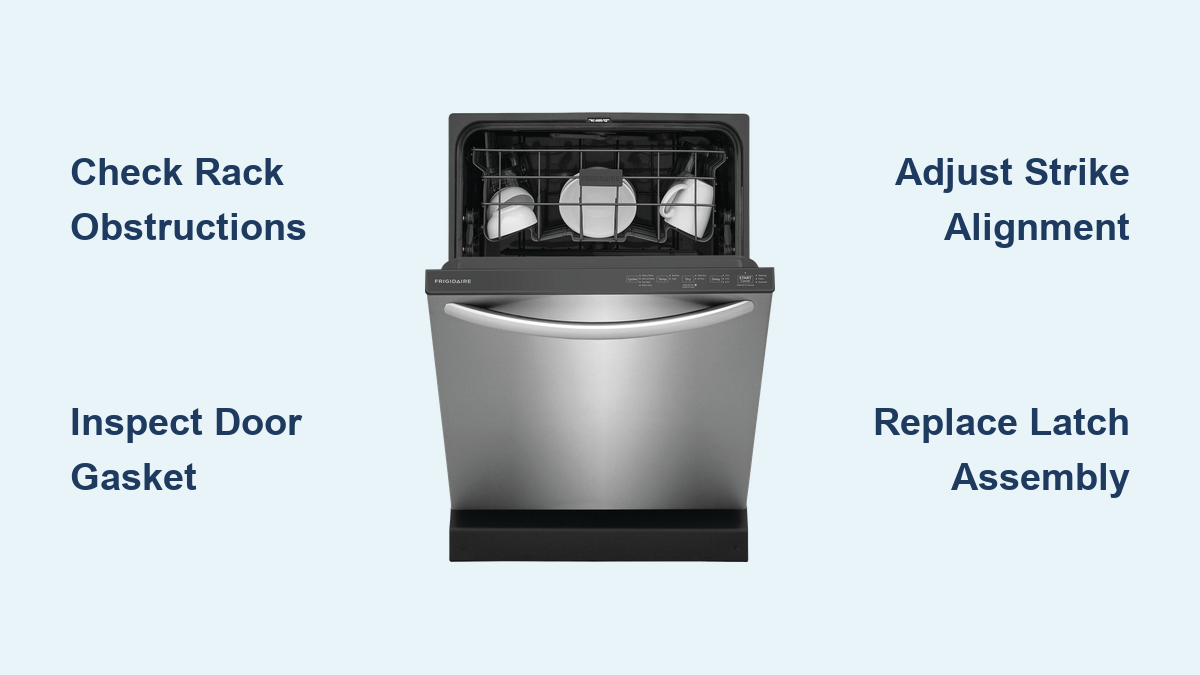
Frigidaire Dishwasher Not Latching? Fix It Fast
You’re not alone if your Frigidaire dishwasher won’t latch. A door that won’t click shut or fails to start the cycle is one of the most common complaints among Frigidaire owners, especially in models 3 to 8 years old. When the latch doesn’t engage, the dishwasher won’t run, leaving dirty dishes and frustration behind. The good news is most causes are simple to diagnose and fix at home with basic tools.
The frigidaire dishwasher not latching issue typically stems from a mix of mechanical wear, misalignment, or hidden obstructions. Plastic components degrade over time due to heat exposure, racks block closure, or the strike plate shifts out of position. In this guide, you’ll learn how to pinpoint the exact cause and fix it fast, often in under 30 minutes.
Check for Rack Obstructions First
Before disassembling any parts, rule out the most common cause: dishes blocking the door.
Upper Rack Is Pushing Against the Door
Even a single tall item can prevent full closure. The upper rack must slide completely inward. If a pot handle, baking sheet, or utensil holder protrudes into the upper rail zone, it stops the door from closing flush.
Quick test:
• Open the dishwasher
• Pull both racks halfway out and push them back in firmly
• Look for items near the front edge of the racks
• Remove anything taller than the lower rack’s side rails
Pro tip: Load large pots sideways or on the bottom rack to avoid interference.
Lower Rack Binding
A misaligned lower rack can also shift forward and block the door seal. Check that the rollers are intact, the rack glides smoothly, and no spray arm is caught underneath. After clearing obstructions, close the door slowly and listen for a distinct click. If you hear it, run a short cycle to confirm operation.
Inspect the Door Gasket and Seal
A damaged or dirty gasket can prevent proper latching by creating resistance during closure.
Clean the Gasket Thoroughly
Use warm, soapy water and a soft cloth to wipe the entire rubber seal around the door. Pay attention to corners where mold builds up, areas near the latch, and the bottom of the seal where food debris collects. Rinse and dry completely.
Look for Gasket Damage
Check for cracks or splits, flattened sections indicating loss of spring, and brittleness or crumbling. If the gasket is cracked or compressed, replace it. A worn seal alters door alignment under pressure, making latching unreliable.
Replacement cost ranges from $20 to $35, and time required is about 20 minutes.
Verify Appliance Leveling
An unlevel dishwasher shifts door geometry, preventing the latch from engaging properly.
Use a Bubble Level
Place a level across the top front edge of the closed door. The bubble should be centered.
Adjust Front Leveling Feet
Located at the bottom front corners, these threaded legs raise or lower the unit.
Steps:
• Open the door and pull out the lower rack
• Turn each foot clockwise to raise, counterclockwise to lower
• Recheck level side to side and front to back
• Aim for no more than 1/8 inch deviation
Even slight tilting can throw off latch alignment. After leveling, test the door closure.
Test Latch and Strike Alignment
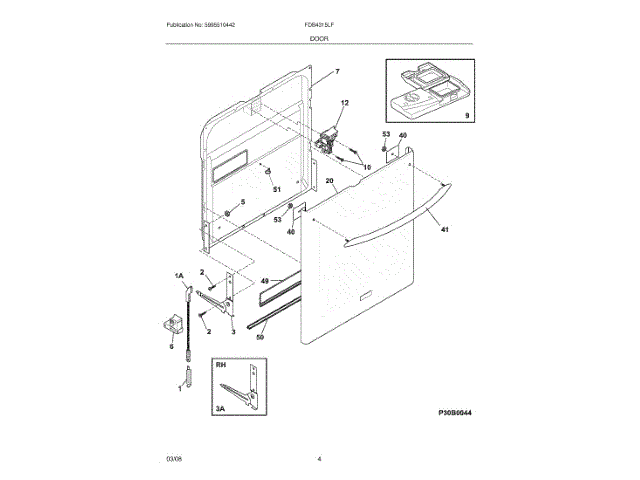
Misalignment between the latch on the door and the strike on the tub is a top cause of failure.
Look for the Click When Closing
Close the door slowly. No audible click means the strike isn’t depressing the latch lever.
Visually Inspect the Strike Plate
Pull the dishwasher forward after disconnecting power and check the metal or plastic strike mounted on the tub frame.
Common issues include:
• Bent or twisted striker
• Loose mounting screws
• Horizontal or vertical misalignment
Adjust the Strike Position
The striker has slotted screw holes for fine-tuning.
Steps:
• Loosen the two mounting screws slightly
• Reposition the striker so it aligns directly with the latch opening
• Push the door closed to test engagement
• Retighten screws once aligned
The striker should slide smoothly into the latch and depress the lever fully.
Diagnose the Door Latch Assembly
If the door still won’t latch, the internal mechanism may be worn or broken.
Wiggle the Latch Lever
Open the door and gently move the latch lever at the center top of the door. Excessive play or stiffness indicates internal damage.
Listen for Internal Cracking
Some Frigidaire latches, especially in the FFCD2413US 4A, develop hairline cracks in the plastic housing. The outer door looks fine, but the internal tab breaks or pops out of socket.
Symptoms include:
• Door feels loose
• No resistance when closing
• Latch moves but doesn’t lock
Replace the Latch Assembly
For units over 3 years old, replacing the latch solves 95% of persistent issues.
Tools needed:
• T20 Torx screwdriver
• Phillips #2 screwdriver
• Multimeter (optional)
Step by step replacement:
1. Disconnect power at the breaker
2. Remove inner door panel by unscrewing six screws (four T20, one Phillips center, one hidden near handle) and carefully pull panel away
3. Disconnect wiring harness, noting wire colors (usually red, black, white) and unclip connectors gently
4. Remove old latch by unscrewing 2 to 4 mounting screws and sliding out the assembly
5. Install new latch by inserting into bracket, securing with screws, and reconnecting wires in the same order
6. Reassemble door panel and restore power
Time required is 20 to 45 minutes, cost is $25 to $45, and success rate exceeds 95% when using the correct model-specific part.
Pro tip: Order a Rev C or updated version if available. These have reinforced plastic and better alignment.
Check the Mounting Bracket
A loose dishwasher can shift forward, throwing off latch alignment.
Locate the Top Mounting Bracket
Pull the unit forward and look at the top front edge. A metal bracket connects the dishwasher frame to the underside of the countertop.
Re-Secure with Wood Screws
If the bracket is loose, align the dishwasher flush with the cabinets, drive two wood screws through the bracket into the countertop, then push the unit back in and test the door. This stabilizes the entire appliance and restores consistent latching.
Test the Latch Switch Electrically

Even if the latch clicks mechanically, a failed switch can block cycle start.
Use a Multimeter to Test Continuity
Steps:
1. Disconnect power
2. Access the latch assembly by removing the inner door panel
3. Set multimeter to Rx1 (Ohms)
4. Disconnect wiring harness
5. Touch probes to switch terminals
6. Press the latch lever
A reading of 0 to 2 ohms means the circuit is good (closed). A reading of OL (infinite resistance) means the circuit is open (not latching). If there’s no continuity when pressed, the internal switch is faulty and the entire latch must be replaced.
Bypass Test for Electrical Faults
This advanced test confirms if the latch switch is blocking operation.
For Models Like Electrolux GLD2250RDC4
- Power off the dishwasher
- Access the latch switch terminals
- Identify wires (typically two black and two white)
- Create a jumper by connecting black to black and white to white
- Restore power and try to start a cycle
If the dishwasher runs, the latch switch is faulty. If nothing happens, the problem may be with the control board or wiring.
Warning: This bypasses safety interlock. Never operate with the door open.
Replace Worn Hinges or Springs

If the door sags or drops suddenly, mechanical wear may be the root cause.
Door Hinges Are Worn
Check for one side of the door lower than the other, binding or scraping during closure, and squeaking when opening. Replace hinges in pairs. Cost ranges from $30 to $50.
Door Springs Are Weak or Broken
Springs counterbalance the door. If one fails, the door closes unevenly.
Signs include door drops quickly, uneven tension, and latch engages only when closed forcefully. Replace both springs and cables as a set. Cost ranges from $15 to $25.
Prevent Future Latching Issues
Avoid repeat problems with these simple habits.
Close the Door Gently
Slamming stresses plastic latches. Close with firm, even pressure.
Clean the Gasket Monthly
Prevent buildup that resists closure.
Check Leveling Annually
Homes settle. Recheck appliance level every year.
Replace Parts Early
At the first sign of wear (cracks, looseness, slow latching), replace the latch or strike.
Verify Model Number Before Ordering
Always check the serial tag inside the door to ensure compatibility.
Frequently Asked Questions About Frigidaire Dishwasher Not Latching
Why won’t my Frigidaire dishwasher door latch even though it appears closed?
The most common reasons are rack obstructions preventing full closure, a worn latch assembly, or misalignment between the latch and strike plate. Start by checking that dishes aren’t blocking the door, then inspect the latch mechanism and strike alignment.
How much does it cost to replace a Frigidaire dishwasher latch?
Replacement latch assemblies cost $25 to $45 for the part, plus 20 to 45 minutes of your time for DIY installation. Professional repair would add labor costs typically ranging from $80 to $150.
Can I use my dishwasher if the door doesn’t latch properly?
No. A door that won’t latch properly is a safety hazard. The dishwasher will not start a cycle, and water could leak during operation. Avoid using the appliance until the issue is resolved.
How do I know if the latch switch is faulty?
Use a multimeter to test continuity. With the latch pressed, you should get a reading of 0 to 2 ohms. If the reading shows OL (infinite resistance), the switch is faulty and needs replacement.
Do all Frigidaire dishwasher models use the same latch?
No. Latch designs vary by model. Always verify your model number using the serial tag inside the door before ordering a replacement part. Some models have revision upgrades (like Rev C) with improved durability.
How long does a Frigidaire dishwasher latch typically last?
The latch assembly typically lasts 7 to 10 years, but in units exposed to high heat from drying cycles, failure can occur as early as 3 to 5 years. Regular maintenance and gentle door handling can extend its lifespan.
Key Takeaways for Fixing Your Frigidaire Dishwasher Not Latching
Most frigidaire dishwasher not latching issues are fixable without professional help. Start with checking for rack obstructions, then verify alignment between the latch and strike plate. If those don’t work, inspect the door gasket and appliance leveling. The latch assembly itself is the number one solution for persistent issues, with over 95% success rates when using the correct model-specific part.
With the right part and about 30 minutes, you can restore full function and avoid costly service calls. Always verify your model number before ordering replacement parts, and consider upgrading to a Rev C latch version if available for improved durability. Regular maintenance, including gentle door closure and annual leveling checks, will keep your Frigidaire dishwasher latching reliably for years to come.