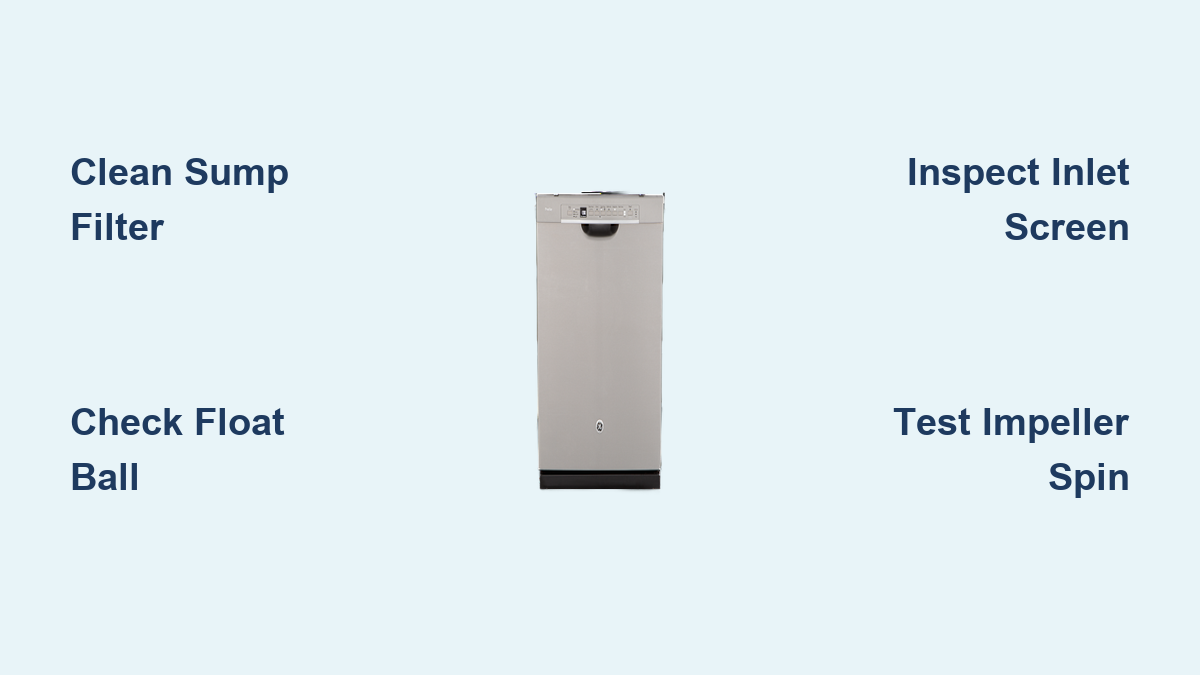
How to Fix GE Profile Dishwasher Water Not Spinning
You load your GE Profile dishwasher, press start, and return to find dishes still dirty and water sitting stagnant in the tub. The spray arms never spun. This is a frustratingly common issue, but the good news is that over 90% of cases stem from easily fixable causes like clogged filters, stuck components, or simple blockages. This guide walks you through every potential cause, ranked by likelihood, with step-by-step fixes you can do at home without calling a technician.
By the end, you will know exactly how to diagnose the problem, repair your dishwasher, and prevent it from happening again—all while saving yourself the cost of a service call.
Check Spray Arm Rotation by Hand
Before diving into repairs, confirm the symptom by testing spray arm movement manually.
Spin Test the Lower and Upper Arms
Open the dishwasher mid-cycle after the wash phase has started and perform these checks. Can you manually spin both the lower and upper spray arms freely, or do they jam, wobble, or hit dishes? Look for utensils, pot handles, or tall glasses blocking the arms. Check for cracked or warped arms and misaligned upper rack supports. Even a single spoon blocking the arm can stop rotation entirely.
Pro Tip: Place a dry paper towel near the spray arm during a test run. If it stays dry after 2 minutes, no water is reaching the arm at all.
Rearrange the load to clear any obstructions and retest.
Clean the Sump Filter and Chopper Blade

A clogged sump filter is the number two cause of poor water circulation in GE Profile dishwashers.
Remove and Inspect the Filter Assembly
Pull out the lower rack and locate the circular sump cover beneath the spray arm. Twist counterclockwise or use a screwdriver to lift it out. Remove the coarse filter from the top layer, the fine filter from the middle, the screen filter from the bottom, and the orange filter ball if your model has one. Check the chopper blade, which is the star-shaped plastic impeller above the drain. It should spin freely when you touch it.
Clean All Filters Thoroughly
Rinse all parts under warm running water. Use a soft brush and mild dish soap to scrub off grease and food buildup. Soak in vinegar or a dishwasher cleaner like Glisten if you see heavy grease accumulation. Ensure the orange filter ball moves freely since it traps grease and must float to work properly. Never use sharp tools during cleaning because you could puncture the screen or damage the chopper blade.
Reinstall all components securely and run a quick rinse cycle to verify improvement.
Test Water Fill Level
Low water means low pressure, which equals no spray arm spin.
Verify Proper Water Height
After the fill cycle completes, which takes the first 1 to 2 minutes, open the door and check the water level. Water should sit just below the heating element. If it is far below the heating element, the tub is not filling with enough water.
Add Water to Test for Fill Issues
Pour 1 to 2 quarts of water directly into the tub before starting a cycle. If the spray arms spin after this, the problem is inadequate water fill. The root cause is likely a clogged inlet screen or a failing water inlet valve.
Clean the Inlet Valve Screen

A tiny mesh screen inside the inlet valve can block water flow and cause fill problems.
Locate and Access the Inlet Valve
The inlet valve is found under the dishwasher, usually on the left side, where the water supply line connects to the unit.
Drain and Remove the Valve
Turn off the water supply at the valve. Place a shallow pan under the connection to catch residual water. Loosen the supply line slightly to drain any remaining water. Unscrew and remove the inlet valve from its housing.
Extract and Clean the Screen
Inside the valve inlet port is a small mesh screen. Pull it out carefully and rinse it under clean water. Use a toothbrush to remove sediment and inspect for cracks or mineral buildup. Never operate the dishwasher without this screen because debris could enter the system and cause flooding.
Reinstall the valve and test. If water still does not fill properly, replace the entire inlet valve assembly.
Diagnose the Circulation Pump
The circulation pump drives water to the spray arms. If it fails, nothing spins.
Listen for Humming Sounds
Start a cycle and listen carefully. A humming sound means the pump is receiving power but may be mechanically blocked. Silence suggests possible electrical failure or a control board issue.
Manually Rotate the Impeller
Turn off power at the breaker first. Remove the toe-kick panel under the door and pull the dishwasher out slightly for access. Locate the circulation pump near the base. Use a screwdriver to gently turn the impeller. If it won’t spin, something is jammed, such as glass, red tape, or plastic debris. If it spins freely, the pump may be electrically faulty.
A documented case showed a glass shard wedged between the impeller and housing stopping all flow completely. Cleaning restored full function.
Inspect the Float-Ball Diverter
GE Profile dishwashers use a mechanical float-ball system, not an electronic one, to switch water between upper and lower spray arms.
Locate the Float Ball
Look for a white or translucent plastic ball in a vertical tube near the spray valve. This component alternates water flow between the upper and lower arms based on pump pressure.
Test for Sticking
Gently wiggle the float ball with a flathead screwdriver. If it feels stiff or stuck, it is likely clogged with lime scale or rust. If it moves freely, the mechanism is functional. Work the screwdriver around the seat to break up deposits without prying hard, as plastic parts can crack easily.
One user reported that after four years, their lower arm stopped spinning. Wiggling the float ball with a screwdriver fixed it in seconds.
Examine Spray Arm Supports
These stationary nozzles deliver water to the spinning spray arms and can cause problems if damaged.
Check Lower and Upper Supports
Inspect both the lower support attached to the sump and the upper or center support under the upper rack. Look for cracks, misalignment, and clogs in the outlet holes. Remove and reinstall spray arms by twisting counterclockwise to remove, flushing under water, then reattaching by twisting clockwise until it clicks. Test spin by hand to ensure smooth rotation.
Replace supports if you find cracks.
Rule Out Electrical Failures
If all mechanical checks pass, suspect electrical issues.
Test the Control Board
The control board sends power to the pump and valves. Signs of failure include no water fill, no pump engagement, and error codes on the display. Use a multimeter to test for 120 volts at the pump terminals during the wash cycle. No voltage means the board may not be sending a signal. Control boards cost 150 to 250 dollars, so never replace one first since mechanical issues are far more common.
Check the Water Inlet Valve Electrically
Use a multimeter to test the solenoid. Disconnect power, remove wires from the valve, set the multimeter to ohms, and probe the terminals. Infinite resistance means the coil is open and you need to replace the valve. Low resistance between 200 and 500 ohms indicates the valve is electrically sound.
Prevent Future Failures
Avoid repeat issues with simple maintenance.
Monthly Maintenance Routine
Remove and rinse filters. Inspect spray arm holes for clogs. Check the sump for debris. Verify the float ball moves freely by giving it a gentle wiggle each month.
Biannual Deep Clean
Place a Glisten or Affresh dishwasher cleaner upside-down in the upper rack. Run a Heavy or Pots and Pans cycle. Enable Sanitize or Heat Dry for maximum temperature, which should reach 140 degrees or higher. This dissolves mineral buildup, clears hidden clogs, and restores water flow. Do not over-clean monthly because this can degrade rubber seals.
Loading Best Practices
Never block spray arms with dishes or utensils. Angle large pots to avoid obstruction. Use rinse aid to prevent hard water scaling. Skip pre-rinsing since modern detergents need food particles to work effectively.
When to Replace vs. Repair
Consider your dishwasher age before investing in repairs.
| Dishwasher Age | Issue | Recommended Action |
|---|---|---|
| Less than 5 years | Clogged pump or filter | DIY clean or replace pump for about 100 dollars |
| Less than 5 years | Failed inlet valve | Replace valve for 30 to 60 dollars |
| 5 to 7 years | Control board failure | Weigh cost versus buying a new dishwasher |
| More than 7 years | Major component failure | Consider replacement |
DIY repairs save 150 to 400 dollars on labor alone.
Final Quick-Fix Checklist
Use this checklist to troubleshoot in order. Clear obstructions in the tub and spray arms. Clean the sump filter and chopper blade. Verify water fill level by adding 1 to 2 quarts to test. Clean the inlet valve screen. Check the float-ball diverter movement. Manually spin the impeller to test for blockage. Run a descaling cycle with Glisten. Test the pump with direct power only if you are skilled with electrical work. Inspect electrical connections and the control board. Replace faulty parts only after completing all mechanical checks.
Frequently Asked Questions About GE Profile Dishwasher Water Not Spinning
Why does my GE Profile dishwasher have water but the spray arms won’t spin?
The most common causes are a clogged sump filter, a stuck float-ball diverter, or a blocked inlet valve screen. Start by cleaning the filters and checking the float ball movement before moving to more complex repairs.
How do I know if my circulation pump is bad?
Listen for a humming sound when the cycle starts. A hum means the pump is getting power but may be blocked mechanically. Silence suggests an electrical problem. You can also manually try to spin the impeller with a screwdriver to check for obstructions.
Can a clogged inlet valve cause spray arm problems?
Yes. A partially clogged inlet screen reduces water fill volume, which leads to insufficient pressure for spray arm rotation. Clean the screen or replace the valve if cleaning does not resolve the issue.
Is the float-ball diverter really that important?
Absolutely. GE uses a mechanical float-ball system to alternate water flow between upper and lower spray arms. If this ball sticks due to lime scale or rust, only one arm will receive water while the other remains stationary.
How often should I clean my dishwasher filters?
Clean filters monthly in high-use households or homes with hard water. Clean every 1 to 3 months otherwise. Regular cleaning prevents most spray arm non-spinning issues.
When should I replace my dishwasher instead of repairing it?
If your dishwasher is over 7 years old and needs major component replacement like a control board, consider replacement. For units under 5 years, most repairs are cost-effective, especially for pumps or valves.
Key Takeaways for Fixing Your GE Profile Dishwasher
A GE Profile dishwasher with water not spinning is rarely a death sentence. Most fixes are simple, low-cost, and completely DIY-friendly. Start with the filter, inlet screen, and float ball because these three components are the most overlooked yet critical parts of the spray system. With regular maintenance, your dishwasher can run strong for a decade or more. Always rule out mechanical issues like clogs and obstructions before considering expensive electrical component replacements like control boards.