How to Clean Dishwasher: Easy Steps
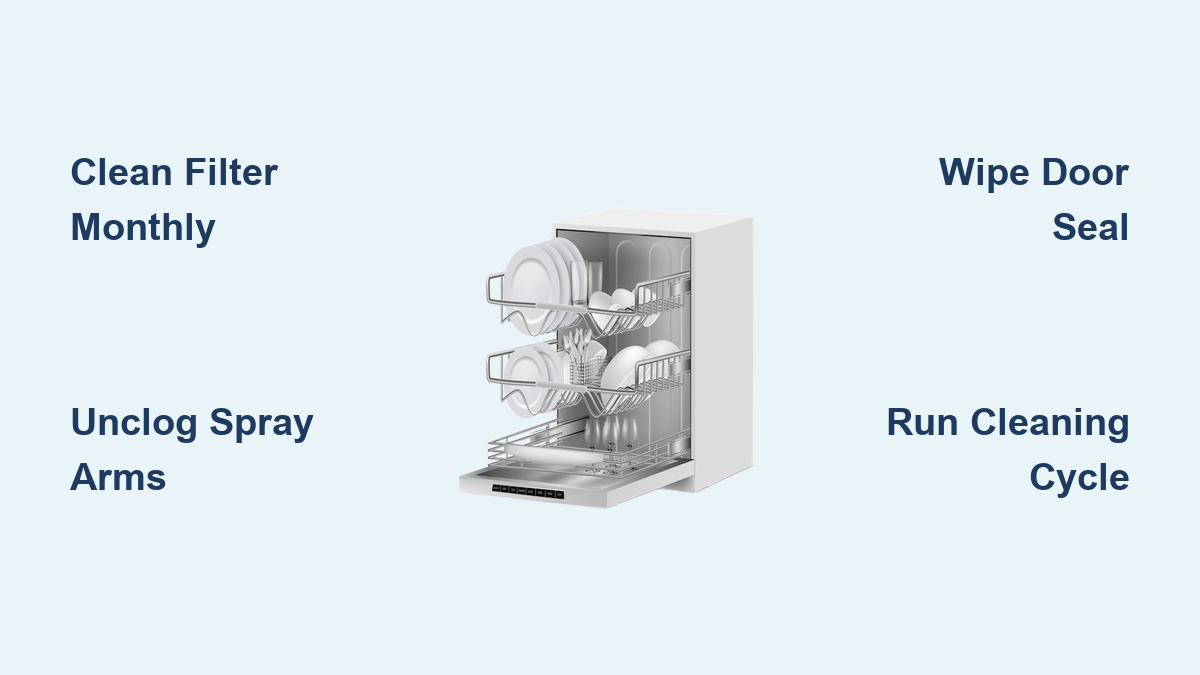
Your dishwasher works hard to keep your dishes spotless, but over time it collects food gunk, hard water scale, and mold. If your dishes come out cloudy, there’s a musty smell, or water pools at the bottom, your machine isn’t doing its job properly. The truth is that dishwashers do not clean themselves. Without regular maintenance, performance drops, odors develop, and parts wear out faster. This guide shows you how to clean a dishwasher the right way, step by step, with safe methods that work on all major brands.
Clean the Exterior Weekly
A clean exterior prevents grime buildup and protects sensitive controls.
Wipe Stainless Steel Safely
For stainless steel models, spray a microfiber cloth with ammonia-free cleaner. Wipe with the grain to avoid streaks and scratches. Buff dry for a shine. Never spray liquid directly on the appliance, as moisture can seep into electronics.
Handle Plastic and Painted Surfaces
For non-stainless finishes, mix a few drops of dish soap with hot water. Dampen a soft cloth, wipe down the door, handle, and control panel. Rinse with a clean damp cloth and dry immediately.
Avoid Common Mistakes
Never use bleach wipes, which damage the finish. Avoid steel wool or scrub pads that scratch surfaces. Keep excess water away from the control panel to prevent short-circuiting.
Pro Tip: Make it a habit. Wipe the front every time you unload dishes.
Remove Mold from the Door Seal
The rubber gasket traps moisture and food, leading to mold and foul smells. Clean this area monthly to prevent problems.
Scrub the Gasket Monthly
Open the door fully and inspect the entire rubber seal for black spots or slimy residue. Dip a soft cloth or old toothbrush in warm soapy water. Gently scrub all folds and crevices. For mold, use equal parts white vinegar and water. Wipe dry with a clean towel.
Warning: Do not use bleach unless your manual says it is safe. Over time, it breaks down rubber.
Clean the Filter Every 1 to 2 Months
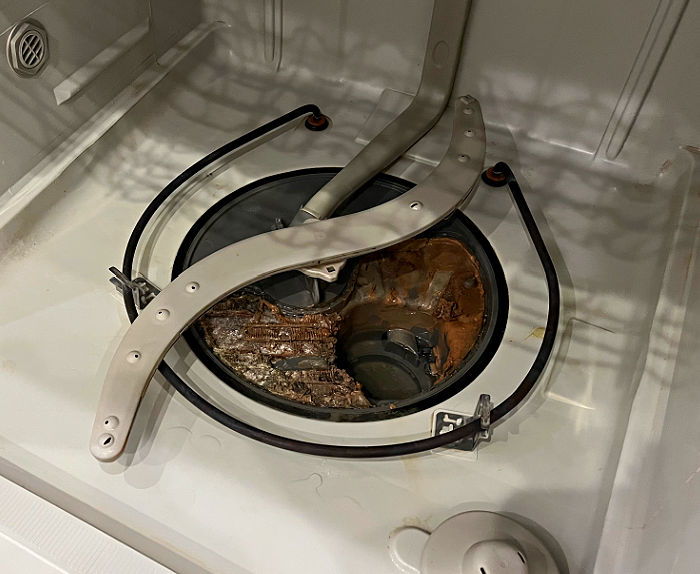
A clogged filter causes poor cleaning, standing water, and bad odors. This is one of the most important maintenance tasks.
Locate and Remove the Filter
The filter is found at the bottom of the tub, usually under the lower spray arm. Remove the lower rack for access. Twist or lift out the filter assembly. Check your manual if the design is unclear.
Wash Thoroughly
Rinse the filter under warm running water. Use a soft brush to scrub away food and grease. Soak in soapy water for 10 to 15 minutes if buildup is heavy. Reinstall securely, making sure it clicks or locks into place.
Never run the dishwasher without the filter. It can damage the pump.
Unclog Spray Arms for Better Cleaning
Clogged nozzles mean weak water pressure and dirty dishes. Keep spray arms clear for optimal performance.
Remove and Flush Spray Arms
Take out the top and bottom racks. Unscrew or unclip the spray arms. Hold under running water while rotating to flush debris. Check each nozzle for blockages.
Clear Holes Without Damage
Use a toothpick or wooden skewer to gently clear clogs. Never use metal tools, as they scratch or enlarge holes. Look for a secondary inlet hole near the base and clean it if clogged.
Note: Some spray arms are not removable. Skip removal and flush in place if yours will not come off.
Deep Clean the Interior Monthly

Run a cleaning cycle to dissolve grease, limescale, and bacteria. This monthly task keeps your dishwasher performing at its best.
Use a Citric-Acid Based Cleaner
Best options include Finish Dishwasher Cleaner, Affresh, and KitchenAid Appliance Cleaner. These are safer and more effective than vinegar. They break down limescale without damaging rubber seals or adhesives.
Run the Cleaning Cycle
Empty the dishwasher completely, with no dishes, racks, or detergent. Clean the filter and seal first to remove large debris. For tablets, place in the main detergent cup. For liquid cleaners, keep the cap on and place upside down in the bottom rack. Select a hot cycle with heated dry enabled. Let the cycle finish with no extra soap or rinse aid.
Hard water areas: Use a descaling cleaner every 2 to 3 weeks.
Clean the Garbage Disposal Weekly
A dirty disposal sends odors and gunk back into the dishwasher. Address this connected system regularly.
Flush the Drain
Fill the sink halfway with water. Pull the plug while running cold water and turning on the disposal. Flush for 15 to 20 seconds to clear debris.
Freshen the Disposal
Remove the rubber splash guard. Scrub the inside with a long-handled brush. Turn off power first. Replace the guard, then drop in ice cubes and citrus peels. Run with cold water for 30 seconds.
No disposal: Pour one-half cup baking soda and one cup vinegar down the drain. Wait 15 minutes, then flush with hot water.
DIY Methods: Use With Caution
Household items can help, but only occasionally. Do not rely on these as your primary cleaning method.
White Vinegar Deep Clean
Place 2 cups white vinegar in a dishwasher-safe bowl on the bottom rack. Run a hot cycle with no detergent. This works well for odors and light scale. Use no more than once per month, as vinegar damages rubber seals over time.
Baking Soda Freshener
Sprinkle 1 cup baking soda on the floor of the dishwasher. Run a short hot cycle. Follow with vinegar if needed, but never mix both in one cycle. They neutralize each other.
Not a deep clean: Baking soda works best for light maintenance and odor neutralization only.
Adjust Cleaning for Your Situation
Different households need different cleaning schedules. Match your routine to your situation.
Large Families or Daily Use
Clean the filter weekly. Run a cleaning cycle every 4 to 6 weeks. Use rinse aid to prevent mineral buildup.
Hard Water Areas
Watch for white film on glasses and clogged spray arms. Add vinegar to the rinse aid dispenser. Use descaling cleaner every 2 to 3 weeks. Consider a water softener for the whole house.
Rare Use
Still run a clean cycle monthly. This prevents stagnant water and biofilm. Leave the door ajar after use to dry the interior.
Older Models
Clean every 2 to 3 weeks. Inspect hoses and seals for cracks. Replace spray arms if jets are blocked.
Spot Problems Early
Watch for these warning signs and address them quickly.
| Symptom | Likely Cause | Fix |
|---|---|---|
| Musty smell | Mold in seal or food in filter | Clean seal and filter |
| Cloudy dishes | Hard water scale | Run descaling cycle |
| Poor cleaning | Clogged spray arms | Clear nozzles |
| Standing water | Clogged filter or drain | Clean filter and check hose |
| Black spots | Mold in gasket | Scrub with vinegar solution |
Act fast: Small issues become big repairs.
Best Cleaners: Commercial vs DIY

Commercial citric-acid cleaners outperform DIY options. Finish Dishwasher Cleaner removes 99% of limescale and is safe for seals. White vinegar is cheap and deodorizes but damages rubber over time. Baking soda is safe and neutralizes odors but has weak cleaning power. Never use bleach, as it corrodes metal and harms hoses.
Plumbers and labs agree: Citric-acid cleaners like Finish outperform DIY options.
Monthly Maintenance Checklist
Set a phone reminder for the first of each month. This takes under 30 minutes.
- Flush garbage disposal with cold water, ice, and citrus
- Remove and clean filter under running water
- Inspect and unclog spray arms
- Scrub door seal with vinegar-soaked cloth
- Run cleaning cycle with Finish or Affresh
- Wipe exterior with soapy microfiber cloth
Daily Habits for Long-Term Health
Scrape, do not rinse, dishes before loading. Modern detergents need food enzymes to work. Run hot water at the sink before starting the dishwasher. This ensures hot water from cycle start. Refill rinse aid regularly to prevent spots and scale. Leave the door open after the cycle to let the interior dry and prevent mold.
One user said: “I did not know how bad the smell was until I cleaned the filter. The gunk was disgusting, but the fix took 10 minutes.”
Frequently Asked Questions About Cleaning a Dishwasher
How often should I clean my dishwasher?
You should wipe the exterior weekly, clean the door seal monthly, and run a deep cleaning cycle monthly. Clean the filter every 1 to 2 months, or weekly for heavy use.
Can I use vinegar to clean my dishwasher?
Yes, but only occasionally. Place 2 cups white vinegar on the bottom rack and run a hot cycle with no detergent. Do not exceed once per month, as vinegar damages rubber seals over time.
Why do my dishes still come out dirty after cleaning?
Clogged spray arms or a dirty filter are likely culprits. Remove and clean the spray arm nozzles with a toothpick. Clean the filter under running water. Run a cleaning cycle with a citric-acid-based cleaner.
What is the best cleaner fordishwashers?
Finish Dishwasher Cleaner and Affresh are top-rated. Both are citric-acid based and safe for all components. They remove limescale, grease, and odors better than DIY methods.
How do I clean a smelly dishwasher?
Start by cleaning the filter and door seal. Run a cleaning cycle with a commercial cleaner. Flush the garbage disposal weekly. Leave the door ajar after use to prevent moisture buildup.
Can I use bleach in my dishwasher?
No. Never use bleach. It corrodes metal, degrades hoses, and damages internal parts. Stick to citric-acid-based cleaners specifically designed for dishwashers.
Final Thoughts on Keeping Your Dishwasher Clean
A clean dishwasher runs better, lasts longer, and keeps your dishes truly clean. Skip the vinegar myths for deep cleaning. Use a citric-acid cleaner monthly, clean the filter regularly, and wipe the seal to prevent mold. In less than an hour a month, you will avoid costly repairs and enjoy spotless results every time. Set a monthly reminder, gather your supplies, and give your dishwasher the maintenance it deserves.