How to Use Miele Dishwasher: Quick Guide
If you just purchased a Miele dishwasher or are learning how to use one, you want to get the most from your investment. Miele appliances are built to last up to 20 years, but achieving that longevity requires correct setup and proper daily use. This guide walks you through everything from installing the Power Disk and configuring the water softener to loading dishes, selecting cycles, and performing monthly maintenance. Whether you own a Miele G 7000, Miele 5006, or another model, these steps will help you achieve spotless, dry dishes every time.
Install Power Disk and Activate Your Miele Dishwasher
Before running your first wash cycle, you must activate the cleaning system using the Power Disk. This small round disc primes the detergent release mechanism, and skipping this step leads to poor cleaning results.
Insert the Power Disk Correctly
Open the detergent compartment on the door and remove the cardboard insert. Press the round Power Disk firmly into the designated slot until it clicks into place. Close the compartment securely before proceeding.
This step is required before first use. Without it, the detergent dispensing system may not work properly.
Power On and Set Language
Press the power button once to turn on the dishwasher. On some models like the Miele 5006, you may need to press twice. Use the setup menu to select your preferred language, then set the correct time and date. These settings enable delayed start features and help you track wash cycles.
Set Up the Water Softener and Salt System

Hard water causes limescale buildup, spots on glassware, and poor drying performance. Miele’s built-in water softener prevents these issues, but only when configured correctly.
Fill the Salt Reservoir
Pull out the bottom basket to access the salt tank at the base of the dishwasher. Unscrew the cap (water inside is normal from factory testing). Pour 2 liters of clean water into the reservoir first, then use the included funnel to add 2 kg of dishwasher-specific salt. Wipe any spills and tighten the cap securely.
Use only regenerated granular salt designed for dishwashers. Table salt or rock salt damages the softener permanently.
Set Water Hardness Level
Use the test strip included in your manual. Dip it in tap water and match the color to the chart. Enter the result via the control panel. Soft water ranges from 1 to 7 °dH, medium from 8 to 14 °dH, hard from 15 to 21 °dH, and very hard is 22 °dH and above. Incorrect settings cause film on glassware or waste salt.
Fill Rinse Aid and Run Initial Flush Cycle
Rinse aid helps water sheet off dishes for spot-free drying. Without it, you may notice water spots on glasses and poor overall results.
Load Rinse Aid Reservoir
Press the yellow tab to open the rinse aid cap, located near the detergent compartment. Fill to the max line, approximately 120 to 150 ml. Wipe away any spills to prevent foaming during the wash cycle. Close the cap tightly.
Refill every 1 to 2 months or when the indicator light appears on your model.
Run First Cleaning Cycle
Do not load any dishes. Do not add detergent. Select either Rinse & Hold or a 75 °C wash program and start the cycle. This flushes out factory residues and excess salt from the system, preparing it for daily use.
Load Dishes Properly for Best Cleaning Results
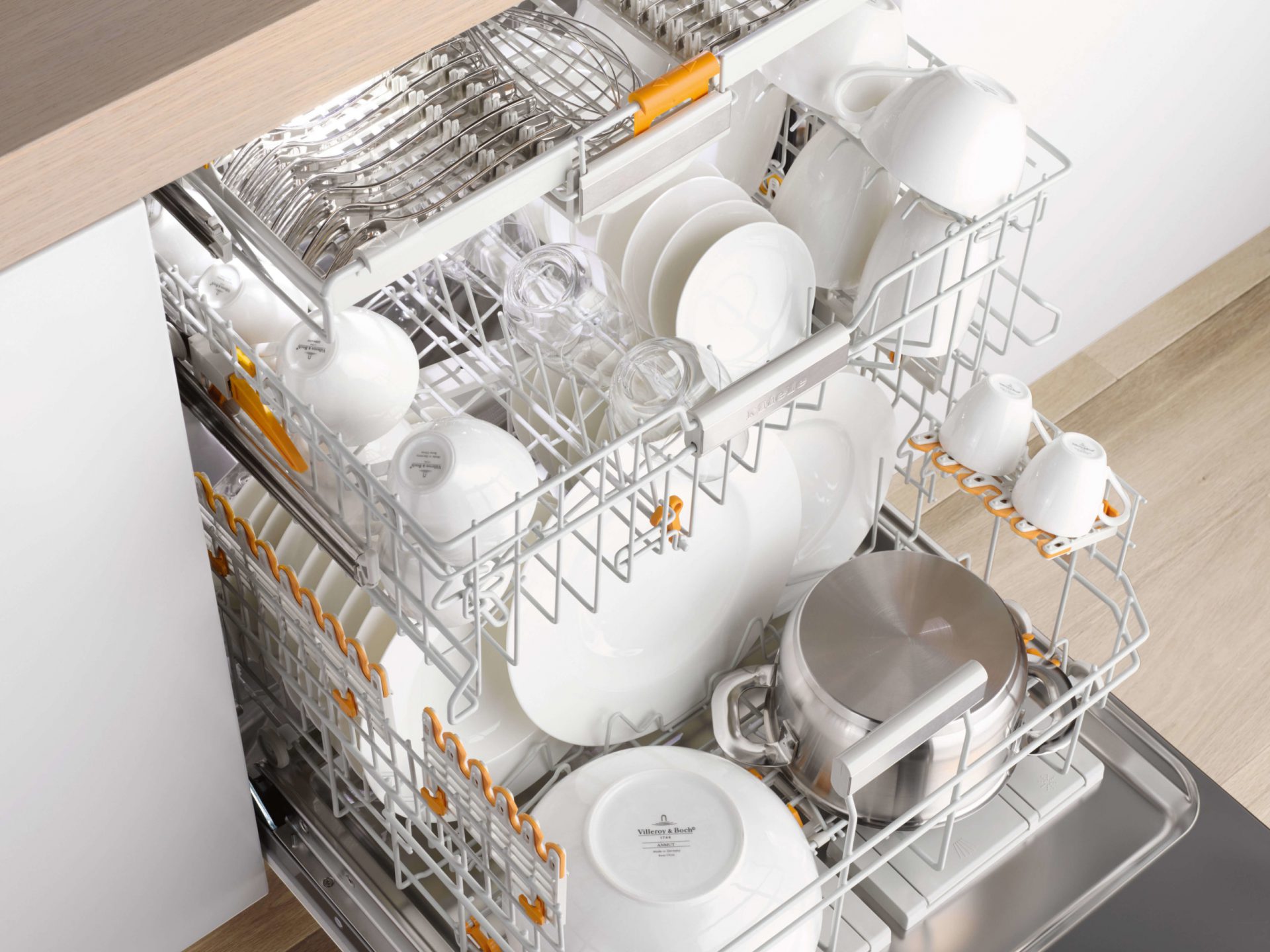
How you load the dishwasher directly impacts cleaning performance. Poor loading blocks water spray and leaves dishes dirty.
Adjust Upper Basket Position
If the upper basket hits the cutlery tray, locate the two yellow levers on the basket rails. Pull them outward to unlock, then slide the basket left or right to reposition. Push back until it clicks into place. This prevents blocking the lower spray arm and improves water circulation.
Load Lower and Upper Baskets Correctly
Place plates, bowls, pots, and pans in the lower basket, facing the center. Load glasses, mugs, lids, and small items in the upper basket, securing them between the prongs. Never overload or block the spray arms. Check that they rotate freely when the door is closed.
Use Cutlery Tray Properly
Place the cutlery tray in the lower basket. Alternate handles up and down to prevent nesting. Keep sharp knives handle-up for safety. Overcrowding prevents water from reaching all surfaces.
Add Detergent and Select the Right Wash Program
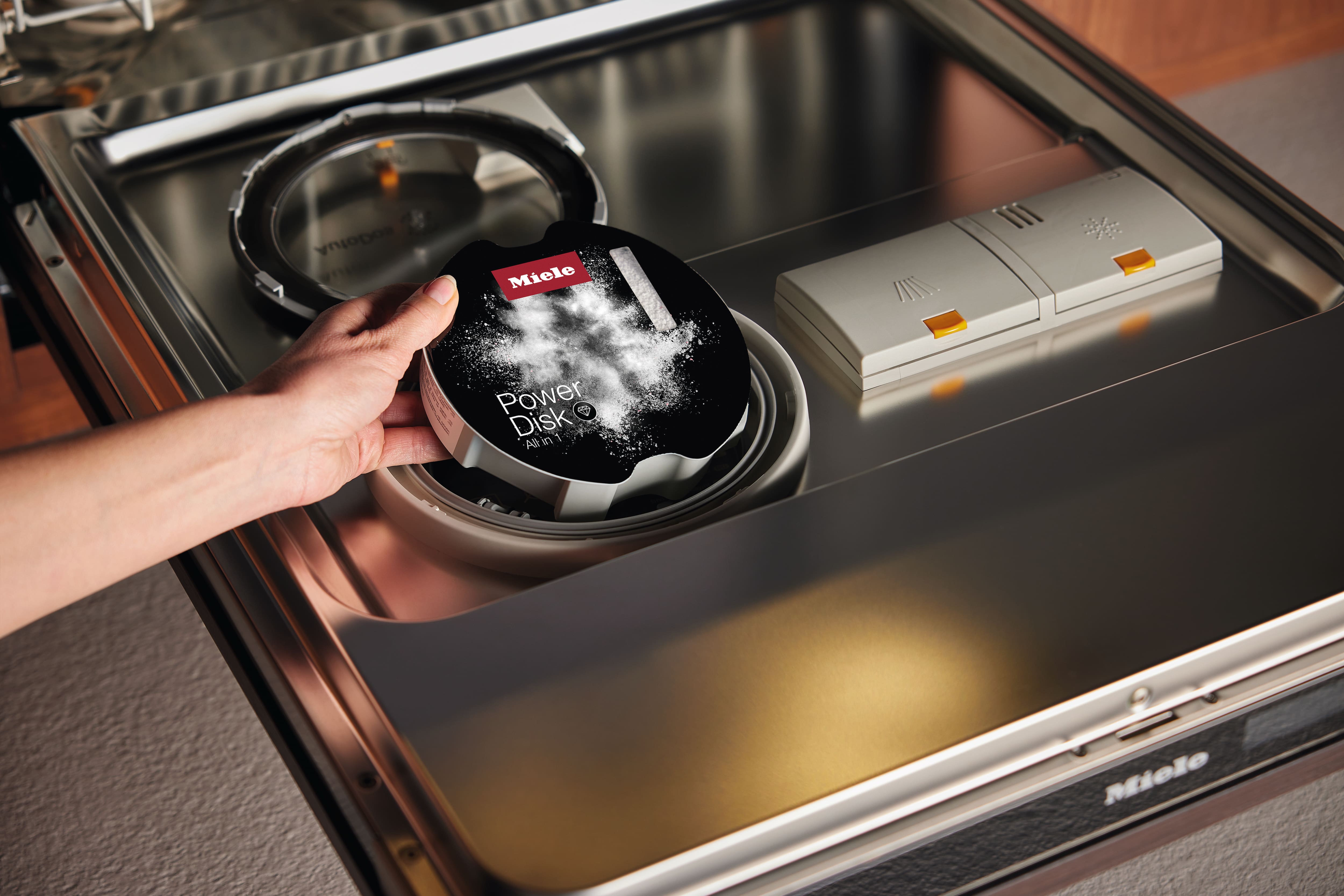
Using the right detergent and program ensures thorough cleaning and proper drying.
Load Detergent Compartment
Open the detergent dispenser by pressing the latch. Insert one tablet only. Do not break or stack tablets. Keep your hands dry when handling detergent, as moisture dissolves the tablet prematurely. Close the dispenser firmly until it clicks. An open latch stops detergent release entirely.
AutoDos models automatically dispense liquid detergent from a sealed cartridge, so no manual loading is required.
Choose the Right Wash Program
Miele offers several programs for different needs. Quick Intense Wash runs about 60 minutes at 65 °C and works well for daily loads. Normal program takes 120 to 150 minutes for mixed loads. Pot Program reaches 75 °C and handles heavily soiled cookware in about 180 minutes. Eco Mode saves energy but takes around 210 minutes. Sani or Hygiene program sanitizes baby bottles and cutting boards at 70 °C or higher. Rinse & Hold holds dirty dishes for 15 minutes with a cold rinse.
The Quick Intense Wash uses high pressure and multi-phase rinsing, often outperforming longer cycles.
Start Your Miele Dishwasher Correctly
Ensure the door is fully closed before starting. Press the blinking Start button (hold for 2 seconds on some models). The display shows remaining time, and the cycle begins immediately.
Opening the door pauses the cycle. Close it fully to resume.
Maintain Your Miele Dishwasher Monthly
Regular maintenance prevents odors, clogs, and performance decline. These steps keep your dishwasher running like new.
Clean the Filter System
Access the filter at the tub bottom. Remove in order: coarse filter, fine filter, and micro filter. Rinse all three under warm water and remove debris. Reinstall in the correct order. Misalignment causes drainage problems. Clean every 2 to 4 weeks depending on use.
Inspect and Clean Spray Arms
Remove upper and lower spray arms monthly. Rinse nozzles under running water and use a toothpick to clear any clogs. Ensure arms spin freely when reinstalled.
Wipe Door Seal and Gasket
Use a damp cloth to clean the rubber door seal. Remove mold, food, or mineral buildup. Check for cracks or warping that could cause leaks.
Troubleshoot Common Miele Dishwasher Problems
Even with proper care, issues can arise. These solutions address the most frequent problems.
Dishes Not Drying
Low rinse aid, a blocked vent, or incorrect settings cause poor drying. Refill rinse aid, enable the Heat Dry or Extra Dry setting, and ensure the door seals properly.
White Film on Glassware
Hard water, old detergent, or low rinse aid create film. Recheck your water hardness setting, increase rinse aid, and use fresh detergent.
Poor Cleaning Results
Clogged filters, overloaded racks, or blocked spray arms reduce performance. Clean the filters, redistribute the load, and verify the spray arms spin freely.
Error Code Displayed
Sensor faults, water inlet blockages, or drain issues trigger error codes. Turn off power, check hoses, and consult your manual for the specific code meaning.
Salt Reservoir Overflowing
Overfilling or a loose cap causes overflow. Drain spilled water, refill carefully, and tighten the cap fully. Never ignore salt issues, as they damage the water softener permanently.
Quick Start Checklist for First-Time Setup
Use this checklist for perfect first-time setup. Install the Power Disk in the detergent compartment. Fill the rinse aid reservoir to the max line. Add 2 liters of water and 2 kg of salt to the softener tank. Power on and set language, time, and water hardness. Enable Auto-Dose if your model has it. Run a 75 °C or Rinse & Hold cycle with no dishes loaded. Load dishes properly in both baskets. Insert one detergent tablet and close the dispenser securely. Select Quick Intense Wash and press Start.
Key Takeaways for Using Your Miele Dishwasher Effectively
Miele dishwashers deliver exceptional performance when set up and maintained correctly. The Power Disk activation, proper salt and rinse aid setup, and accurate water hardness configuration form the foundation of good results. Loading dishes properly prevents blocking spray arms, and selecting the right program for your load type maximizes cleaning efficiency. Monthly maintenance, including filter cleaning and spray arm inspection, extends the lifespan of your appliance and prevents common issues like poor drying or odors. By following these steps consistently, you protect your investment and enjoy spotless, dry dishes for years to come. Keep this guide handy for reference, and consult your model-specific manual for any unique features or requirements.
Frequently Asked Questions About Using a Miele Dishwasher
How do I activate my Miele dishwasher for the first time?
Install the Power Disk in the detergent compartment, fill the salt reservoir with 2 liters of water and 2 kg of salt, fill rinse aid, and power on to set language, time, and water hardness. Run an empty Rinse & Hold or 75 °C cycle before first use.
What is the best Miele dishwasher program for everyday dishes?
The Quick Intense Wash program works best for daily loads. It runs about 60 minutes at 65 °C and uses high-pressure cleaning that often outperforms longer cycles.
How often should I clean the filter in my Miele dishwasher?
Clean the filter every 2 to 4 weeks, depending on how frequently you use the dishwasher. Remove the coarse, fine, and micro filters, rinse under warm water, and reinstall in the correct order.
Why are my dishes not drying in the Miele dishwasher?
Low rinse aid, a blocked vent, or disabled drying settings cause poor drying. Refill rinse aid, enable Heat Dry or Extra Dry, and ensure the door seal is clean and secure.
Can I use regular table salt in my Miele dishwasher?
No. Only use regenerated granular salt specifically designed for dishwashers. Table salt and rock salt contain impurities that damage the water softener permanently.