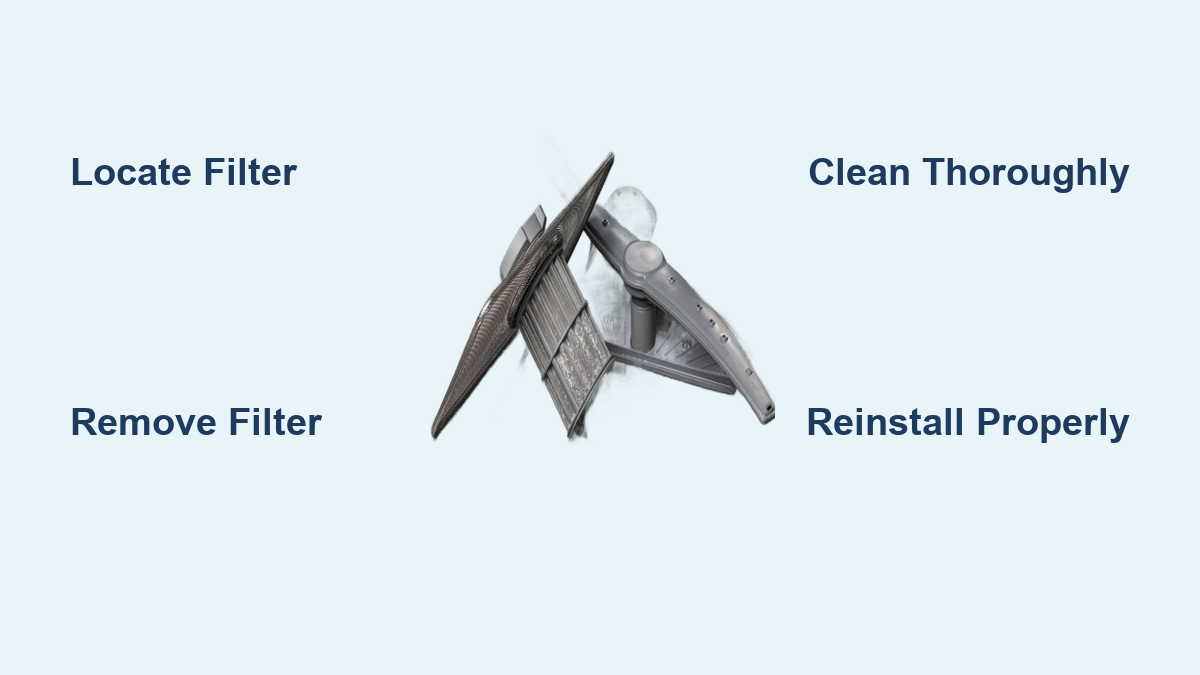
How to Clean Dishwasher Filter: Easy Steps
A clogged dishwasher filter is one of the most common causes of poor cleaning performance, foul odors, and standing water in your dishwasher. If your dishes come out with food bits stuck to them or your kitchen smells like a wet garbage bin, it is likely time to clean the dishwasher filter. This essential maintenance task takes just 10 to 15 minutes and can dramatically improve your appliance efficiency.
Despite its importance, many homeowners overlook the filter. Some do not even know it exists. But regular cleaning prevents long-term damage, reduces energy use, and keeps your dishes truly clean. In this guide, you will learn how to locate, remove, clean, and reinstall your dishwasher filter correctly, no matter what brand you own.
Locate Your Dishwasher Filter
Find the Filter at the Tub Bottom
The dishwasher filter sits at the bottom of the tub, usually in the back corner or center, beneath the lower spray arm. It often looks like a cylindrical or dome-shaped component with small mesh openings. Most modern models use manual removable filters, while older units may have self-cleaning grinders.
If you cannot spot it immediately, remove the lower rack for full visibility. Look for a twistable or lift-out part near the spray arm base. Check for alignment arrows or release marks on the component.
Pro tip: Search your dishwasher model number online if you are unsure. Results will show exact filter location and removal method for your specific unit.
Identify Your Filter Type
Self-Cleaning vs Manual Filters
Not all filters require disassembly. Knowing your type prevents unnecessary effort or damage to your appliance.
Self-Cleaning Grinder Filters
These filters are found in older dishwasher models, typically those manufactured before 2010. They use a grinding mechanism to pulverize food particles. You can identify them by a plastic grid or perforated cover at the base. No removal is needed for cleaning.
Maintenance for these models involves running a monthly cycle with vinegar, baking soda, or commercial cleaners like Affresh or Glisten. No disassembly is required.
Manual Removable Filters
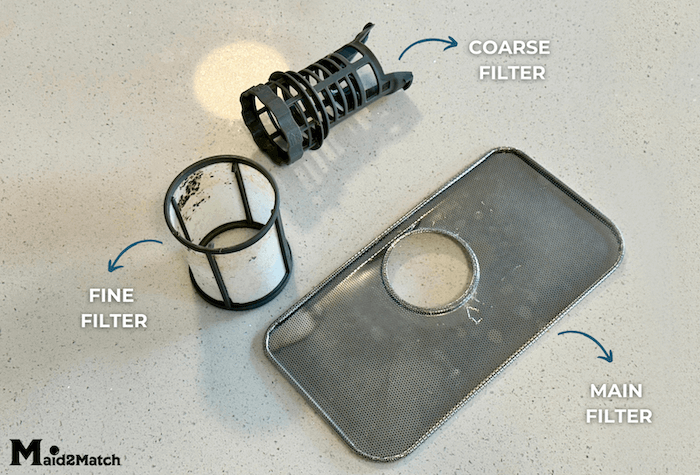
Manual filters are standard in modern dishwashers from brands like Bosch, Whirlpool, KitchenAid, and Frigidaire. They feature fine mesh screens that trap tiny debris. These must be removed and rinsed regularly to maintain performance.
If you can twist or lift a component from the bottom of the tub, you have a manual filter. Some models include dual filters with both a coarse pre-filter and a micro-filter. Clean both sections for best results.
Gather Cleaning Supplies
Essential Tools for Effective Cleaning
Before starting, prepare these items to ensure a thorough cleaning process.
Rubber gloves protect your hands from bacteria and grease. A soft-bristle toothbrush or small brush safely scrubs mesh without damage. Warm to hot water helps dissolve grime effectively.
Dish soap such as Dawn Powerwash cuts through oils and stuck-on residue. White distilled vinegar serves as a natural degreaser and deodorizer. Baking soda provides gentle abrasive power for tough buildup.
Have a bucket or sink available for soaking the filter. A shop-vac is optional but useful for removing excess water before reassembly.
Avoid steel wool or sharp tools, as they can damage the filter screen permanently.
Remove the Dishwasher Filter
Twist, Lift, or Unlatch Safely
Follow these steps to remove your filter without causing damage.
First, ensure the dishwasher is off and completely cool before starting. Pull out the bottom rack to gain full access to the filter assembly at the tub base.
Locate the filter assembly and twist counter-clockwise until the arrow aligns with the unlock symbol. Lift straight up after twisting. Do not yank or tilt the filter during removal.
Some models, like certain Frigidaire Gallery units, require aligning black arrows first before removal. Others may have a snap-on cover that lifts before the filter can be taken out.
Warning: Forcing the filter can break tabs or seals. If the filter feels stuck, refer to your owner is manual rather than applying pressure.
Clean the Filter Thoroughly
Remove Grease, Gunk, and Odors
Once removed, clean both the filter and any secondary screens using this method.
Step 1: Rinse Off Loose Debris
Hold the filter under warm running water. Shake gently to clear large particles before scrubbing.
Step 2: Deep Clean Based on Buildup
For light residue, scrub with dish soap and a soft brush. For stubborn grease, soak in equal parts water and white vinegar for at least 30 minutes. Add one to two tablespoons of baking soda for extra cleaning power. Spray Dawn Powerwash directly on particularly greasy spots.
Scrub all sides of the filter, paying special attention to the mesh pores where small debris collects.
Step 3: Final Rinse
Rinse thoroughly under hot water until the runoff appears completely clear. Inspect for remaining debris and repeat the process if necessary.
Clean the Filter Housing
Do Not Skip the Hidden Areas
With the filter removed, take time to clean the surrounding space to prevent recontamination.
Wipe the housing, sump, and spray arm base with a vinegar-dampened cloth. Remove visible food chunks using a paper towel or soft cloth. Check the drain area for any blockages that could cause drainage problems.
Use a toothpick or pipe cleaner to unclog spray arm holes if rotation seems slow or restricted. This step improves water flow and wash performance.
Reinstall the Filter Correctly
Align, Twist, and Lock
Proper reinstallation ensures optimal performance and prevents leaks.
Insert the lower screen or pre-filter first if your model has one. Place the main filter into position and align the arrows or markers correctly. Push down firmly and twist clockwise until it clicks or locks into place.
Do not overtighten the filter, as this can crack plastic components. Replace the bottom rack after confirming the filter is secure.
Critical: Never run the dishwasher without the filter installed. This can damage the pump and circulate debris back onto your clean dishes.
How Often to Clean the Filter
Set a Maintenance Schedule
Cleaning frequency depends on how often you use your dishwasher and what types of food particles you typically wash.
Clean every one to three months for most households. Clean every few months if you have light dishwasher use. Clean immediately if you notice food on clean dishes, standing water, musty smells, or poor drying results.
Check the filter monthly for early signs of clogging to prevent major issues from developing.
Prevent Future Buildup
Smart Habits for Long-Term Performance
Extend the time between cleanings with these preventive habits.
Run a vinegar rinse monthly by placing one cup of white vinegar on the top rack and running a hot cycle with no dishes. Use a commercial dishwasher cleaner quarterly, such as Affresh, Glisten, or Finish Cleaner.
Skip pre-rinsing your dishes. Modern detergents need food particles to activate properly. Over-rinsing leaves sludge that can clog the filter. Run full loads to help flush the system naturally. Wipe the door gasket monthly to prevent mold and odor transfer.
Model-Specific Tips
Frigidaire, Bosch, and More
Frigidaire Gallery Models
Remove the filter by turning counter-clockwise and lifting straight up. Reinstall by aligning arrows, pushing down, and turning clockwise until it clicks. Clean every few months or when performance drops.
Bosch, KitchenAid, and Whirlpool
These brands often have multi-stage filters with both coarse and fine sections. Some require lifting a cover before filter access. Many display clean filter indicator lights when maintenance is due.
Always consult your user manual for disassembly details specific to your model. When in doubt, search your model number plus filter cleaning on Google.
What Happens If You Skip Cleaning
Risks of a Dirty Filter
Ignoring filter maintenance leads to several problems that affect your dishes and appliance.
Dirty dishes result because food particles recirculate during the wash cycle. Foul odors develop as rotting debris creates a sewage-like smell. Drainage failure causes water to pool at the bottom of the tub.
The pump strains harder when clogged, shortening the appliance lifespan. Higher utility bills come from inefficient cycles using more water and energy. Bacterial growth occurs as mold and germs thrive in damp, dirty environments.
Experts warn that you are essentially spraying dirty, soapy water on your dishes when the filter is clogged.
Signs You Need to Clean the Filter
| Sign | What It Means |
|---|---|
| Food on dishes | Filter cannot trap debris properly |
| Standing water | Drain is blocked by gunk |
| Bad smell | Organic matter is decomposing |
| Slow spray arms | Low water pressure from clogging |
| Wet dishes after cycle | Poor circulation affects drying |
If you see any of these signs, clean the filter immediately to restore proper function.
Final Tips from Experts
Maximize Appliance Life and Cleanliness
Follow these recommendations to keep your dishwasher performing at its best.
Always follow manufacturer instructions found in your user manual. Never operate the dishwasher without the filter installed, as pump damage risk is high. Use only soft tools, as metal brushes ruin delicate mesh screens.
Clean exterior stainless steel with dedicated wipes like Weiman Stainless Steel Wipes. Deep clean the entire dishwasher monthly by running an empty cycle with vinegar or a dishwasher cleaner. Scrub spray arms, seals, and racks as needed during these deep cleans.
Key Takeaways for Cleaning Your Dishwasher Filter
All dishwashers have filters, either manual or self-cleaning, and both require maintenance. Clean manual filters every one to three months for optimal performance. Soak the filter in vinegar for at least 30 minutes to loosen stubborn grease.
Scrub gently with a soft brush and avoid using metal tools that damage the mesh. Clean the filter housing and spray arms while the filter is out. Reinstall with proper alignment and a clockwise twist until it clicks securely.
Neglecting filter cleaning causes odors, poor cleaning results, and appliance damage over time. By making dishwasher filter maintenance part of your routine, you ensure spotless dishes, fresher air, and a longer-lasting machine. This small task delivers big rewards, so do not wait until problems start.
Frequently Asked Questions About Cleaning Dishwasher Filters
How often should I clean my dishwasher filter?
Clean your dishwasher filter every one to three months for most households. If you run your dishwasher daily or wash heavily soiled dishes frequently, clean it closer to every month. Light users can stretch to every three months. Clean immediately if you notice odors, poor cleaning results, or standing water.
Can I clean my dishwasher filter without removing it?
Only self-cleaning grinder filters can be cleaned without removal. These are found in older models typically made before 2010. Modern manual filters must be removed and cleaned by hand. Running a vinegar cycle monthly helps maintain both types between deep cleanings.
What happens if I never clean my dishwasher filter?
A never-cleaned filter causes poor cleaning performance, foul odors, drainage problems, and increased energy costs. Food particles recirculate onto dishes, and standing water can pool at the bottom. The pump works harder, potentially shortening the appliance lifespan. Bacteria and mold also grow in the dirty, damp environment.
Can I use soap to clean the filter?
Yes, dish soap like Dawn Powerwash effectively cuts through grease on the filter. For best results, combine dish soap with warm water and a soft brush. For stubborn buildup, soak in a vinegar and water solution first, then scrub with soap. Rinse thoroughly after cleaning to remove all residue.
Why does my dishwasher smell even after cleaning the filter?
Persistent odors may indicate buildup in the filter housing, drain area, or spray arm holes. Clean these areas while the filter is removed. A monthly vinegar rinse helps prevent odor-causing bacteria. Check for food debris stuck in the door gasket or around the spray arms as well.
Is it safe to run the dishwasher without the filter?
No, running the dishwasher without the filter is not safe and can cause serious damage. Without the filter, food debris enters the pump and drain system, potentially causing clogs or pump failure. The dishwasher will also spray dirty water back onto your dishes, defeating the entire cleaning process.