How to Measure Dishwasher Size: Quick Guide
Replacing a dishwasher should be simple, but if you skip one critical step, you could end up with a unit that does not fit. How to measure dishwasher size properly is the key to a smooth installation. Even if your kitchen looks standard, years of renovations, new flooring, or slight cabinet warping can change the available space. Relying on assumed dimensions leads to 30% of all appliance return cases, according to retailer data. This guide walks you through every measurement you need, plus clearance, delivery paths, and system checks.
Use a metal tape measure, not a fabric one. Record all numbers clearly. And measure twice, because one measurement is never enough.
Measure Cabinet Width Accurately

The width of your cabinet opening determines whether a standard 24-inch dishwasher will fit. Most full-size models are built to this width, but your actual space may be smaller due to aging wood, misalignment, or past repairs.
Check Left-to-Right Clearance
Measure from the inside face of the left cabinet to the inside face of the right cabinet. Do not measure from the countertop edges or outer cabinet frames. Only the interior surfaces that the dishwasher will touch matter.
Take three measurements at these points:
- At the top of the opening
- At the middle of the opening
- At the bottom of the opening
Cabinets can shift over time, creating a trapezoidal shape. Always use the smallest measurement as your final width.
Most full-size dishwashers come with adjustable mounting brackets that allow plus or minus 0.25 inch tolerance. But they cannot compensate for major discrepancies.
Avoid Common Width Mistakes
Many homeowners make these errors when measuring width:
- Measuring from the countertop edge instead of the cabinet face
- Assuming standard means exact
- Forgetting base molding or screws that protrude into the opening
Remove any screws, brackets, or debris before measuring. These small obstructions reduce usable space and can block installation entirely.
Determine Available Height
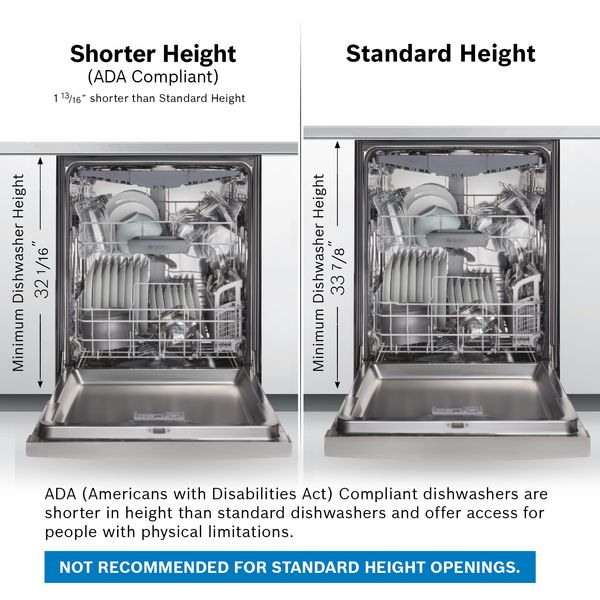
Even if the width fits, height issues are the second most common reason dishwashers do not install properly. A new floor can reduce clearance by nearly an inch, making it impossible for the unit to slide under the countertop.
Measure Floor to Countertop Underside
Use a vertical measurement from the finished floor to the underside of the countertop at both the front and back of the opening.
Compare both values:
- Front height
- Back height
Use the shorter of the two as your maximum allowable height.
Standard dishwashers range from 33.5 to 35.5 inches tall, adjusted via leveling legs. If your measured height is below 33.5 inches, most models will not fit without modifying the floor or countertop.
Adjust for Leveling Legs
Most units have front leveling feet that extend or retract. Check the product specs. Some models only offer 0.5 inch of adjustment, while others provide up to 1.5 inches.
If your floor slopes or has transitions, confirm the entire unit can sit flat without binding.
Measure Depth for Flush Fit

Depth affects how far the dishwasher extends into the kitchen and whether it aligns with your cabinet doors. A unit that sticks out looks unprofessional and can be a tripping hazard.
Measure Wall to Cabinet Face
Start at the back wall where the unit rests and extend the tape to the front face of the adjacent cabinets. Do not measure to the countertop overhang.
Standard depth is 24 inches, but many modern models range from 23.5 to 25 inches due to thicker insulation or control panels.
Countertops typically overhang cabinets by 1 inch. If you measure to the countertop edge, you will overestimate available depth.
For existing units, measure from the back of the dishwasher to the front edge of the door. Compare this to current cabinet alignment.
Ensure Front Panel Alignment
Your goal is a flush or nearly flush finish between the dishwasher door and surrounding cabinets.
Consider these factors:
- Handle style (recessed versus protruding)
- Trim kits or panel-ready designs
- Door swing clearance when open
A dishwasher that is too shallow will look recessed. One that is too deep may interfere with chair movement or island traffic.
Check Clearance and Obstructions
Even perfect measurements can fail if hidden obstructions block installation. These are often overlooked but easy to spot with a quick inspection.
Inspect the Toe-Kick Area
The toe-kick is the recessed space beneath cabinets, usually 3 to 6 inches high. It must be clear for the dishwasher to slide in.
Look for these common problems:
- Raised flooring transitions
- Protruding baseboards
- Subfloor patches or nails
- Previous plumbing modifications
Forcing a unit over a bump can damage the base, water lines, or electrical connections. Use a flashlight to peer under the cabinet. Run your hand along the floor to feel for uneven spots.
Allow Side and Front Clearance
While not always required, leaving about 5 centimeters (2 inches) on each side helps during installation and servicing.
This small gap allows:
- Easier alignment with plumbing
- Room for vibration without rubbing
- Access for future removal
Also ensure at least 1 square meter (10.8 square feet) of open space in front for loading and unloading. Avoid placing the unit where the door hits an island or adjacent appliance when opened.
Verify Plumbing and Electrical Setup
Size is not just physical. Your new dishwasher must connect to water, drain, and power. Mismatched systems cause delays and added costs.
Locate Water Supply and Drain
Find the water shutoff valve, usually under the sink. Confirm it is functional and accessible.
Check the drain hose path from the dishwasher location to the sink P-trap or garbage disposal. The route should be direct, without sharp bends.
Standard connection size is 3/8-inch compression fitting. Some models include adapters, but verify compatibility before purchasing.
Confirm Electrical Requirements
Determine your setup:
- Hard-wired (common in homes built before 2000)
- Plug-in (standard on most new models)
If your current unit is hard-wired, you may need an electrician to install an outlet unless the new model includes a power cord kit.
Never remove electrical panels if you are unsure. Label wires and take clear photos for professionals. Some local codes require GFCI protection for dishwasher circuits. Check before purchase.
Assess Delivery Path to Kitchen

A dishwasher that fits the cabinet is useless if it cannot reach the kitchen. Measure every step of the delivery route.
Measure Doorways and Hallways
Check these key areas:
- Width and height of all entry doors (front, back, garage)
- Hallway width
- Staircase turns
- Elevator dimensions (if applicable)
Standard dishwasher boxes are about 28 inches wide, 36 inches tall, and 24 inches deep. This is larger than the unit itself due to packaging.
Some units can be tilted diagonally or removed from pallets to fit tight corners. Ask the delivery team in advance about your specific situation.
Plan for Tight Corners
Use a measuring tape to simulate the appliance diagonal length. If the turn is too sharp, consider these options:
- Removing doors temporarily
- Using a hand truck with swivel wheels
- Opting for in-home delivery with assembly service
Many retailers offer white-glove delivery, which includes unpacking, removal of old units, and installation.
Handle Special Models and Exceptions
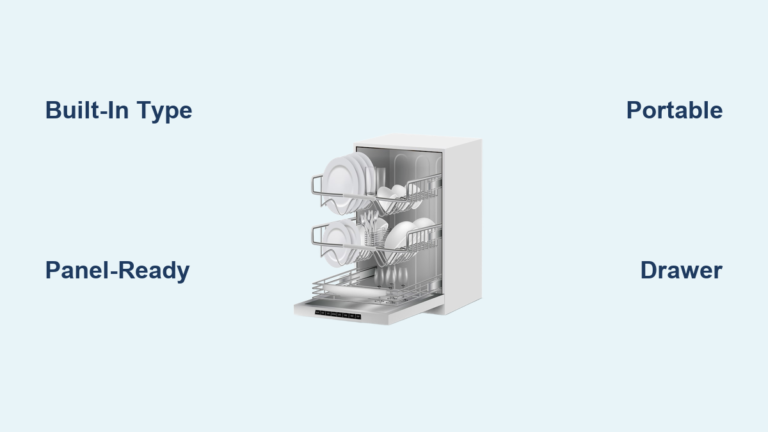
Not all dishwashers follow standard rules. If you are considering a compact, portable, or panel-ready model, adjust your approach.
Fit 18-Inch Compact Units
Compact dishwashers are ideal for small kitchens or second sinks.
Required opening is 17.5 to 18 inches wide. Typical depth is 22 to 24 inches.
Trade-offs include:
- Lower capacity (6 to 8 place settings versus 12 to 16)
- Fewer wash cycles
- Noisier operation
Ensure the unit height adjusts to your floor-to-countertop clearance. Many compacts are shorter but not always.
Install Countertop Portable Models
These sit on the counter and connect to the faucet. They do not require a built-in cavity.
Key dimensions:
- Width: 17 to 22 inches
- Depth: 15 to 20 inches
- Height: 16 to 20 inches
Must be near a water source and a drain. These units are ideal for renters, RVs, or kitchens without cabinet space. They are easy to install but take up counter space and require manual setup for each cycle.
Match Panel-Ready Dishwashers
These accept custom cabinet panels for a seamless look.
Critical requirements:
- Exact height and width match to surrounding cabinets
- Precise depth alignment to stay flush
- Confirmation of trim and overlay specs
Contact the manufacturer to verify compatibility with your cabinet design. Some brands require specific hinge types or panel thicknesses.
Final Verification Steps
Before buying, double-check everything. One missed detail can ruin the installation.
Measure Twice, Buy Once
Repeat all measurements:
- Width (top, middle, bottom)
- Height (front, back)
- Depth (wall to cabinet face)
Write them down clearly. Label each number.
Use a rigid metal tape measure, not a flexible one. Soft tapes stretch and give false readings.
Take Photos for Confirmation
Capture these images:
- Front view of the empty cavity
- Side profile showing floor and countertop
- Under-sink area with plumbing and wiring
Send these to appliance retailers, online support teams, or professional installers. Many offer free pre-purchase verification to confirm fit.
Consult Experts When Unsure
If measurements are tight or systems are unclear:
- Schedule an in-home assessment
- Use virtual consultation services
- Hire a licensed installer for evaluation
A 75 dollar site visit beats a 1,200 dollar return and restocking fee.
Frequently Asked Questions About Measuring Dishwasher Size
What is the standard dishwasher width?
The standard dishwasher width is 24 inches. However, you should always measure your cabinet opening because older kitchens may have shifted or been modified. A minimum of 23.5 inches is typically required for standard dishwashers.
How do I measure dishwasher height correctly?
Measure from the finished floor to the underside of the countertop. Take readings at both the front and back of the opening, then use the shorter measurement. Standard dishwashers are 33.5 to 35.5 inches tall with adjustable legs.
Should I measure depth to the countertop edge?
No. Measure from the back wall to the cabinet face, not the countertop edge. Countertops usually overhang by 1 inch, so measuring to the edge will give you an incorrect (larger) depth reading.
What if my opening is narrower than 23.5 inches?
If your opening is less than 23.5 inches wide, consider an 18-inch compact model. These require a minimum of 17.5 inches of clearance. You may also need to modify the cabinet or remove old flooring.
How much clearance should I leave around the dishwasher?
Leave about 5 centimeters (2 inches) on each side for installation and ventilation. Ensure at least 1 square meter (10.8 square feet) of open space in front for loading and unloading.
Does new flooring affect dishwasher fit?
Yes. New flooring can reduce clearance by 0.5 to 1 inch, which is why dishwashers installed before flooring upgrades may not fit in the same space. Always measure after new flooring is installed.
Key Takeaways for Measuring Dishwasher Size
Accurate measurements are the foundation of a successful dishwasher installation. Start by measuring width inside the cabinet at three points (top, middle, bottom) and use the smallest reading. For height, measure from the finished floor to the countertop underside at both the front and back, using the shorter value. For depth, measure from the back wall to the cabinet face, never to the countertop edge.
Do not forget clearance and delivery considerations. Check for obstructions in the toe-kick area, verify that the delivery path can accommodate the appliance box, and confirm your plumbing and electrical compatibility before purchasing. When measurements are tight or systems are unclear, consult a professional rather than risking a costly return.
By following these steps, you will avoid returns, delays, and frustration. Whether you are upgrading, renovating, or replacing, knowing how to measure dishwasher size ensures a perfect fit every time.