How to Load Pots and Pans in Dishwasher
Putting pots and pans in the dishwasher seems like a time-saving shortcut, but doing it carelessly can damage your cookware and shorten its lifespan. While modern dishwashers are powerful enough to clean heavily soiled cookware, not all pots and pans are built to survive repeated cycles. The key is knowing which materials are dishwasher safe, how to load them properly, and when it is better to hand-wash instead.
This guide breaks down everything you need to know about placing pots and pans in the dishwasher by material type, loading technique, cycle settings, and long-term impact. You will learn how to maximize convenience without sacrificing the quality of your kitchen essentials.
Check for Dishwasher Safe Labels First
Before tossing any pot or pan into the dishwasher, look for a dishwasher safe symbol on the bottom or handle. This small icon, usually a square with water droplets or a plate inside, confirms the manufacturer approval.
Why Labels Matter
Some cookware may fit in the dishwasher but is not designed for it. High heat, alkaline detergents, and mechanical force can degrade materials even if they seem durable. Using the dishwasher on non-approved items may void the warranty.
Pro Tip: If there is no label, check the manufacturer website or instruction manual. When in doubt, hand-wash.
Stainless Steel Pots and Pans

Can You Dishwash It? Yes, with precautions.
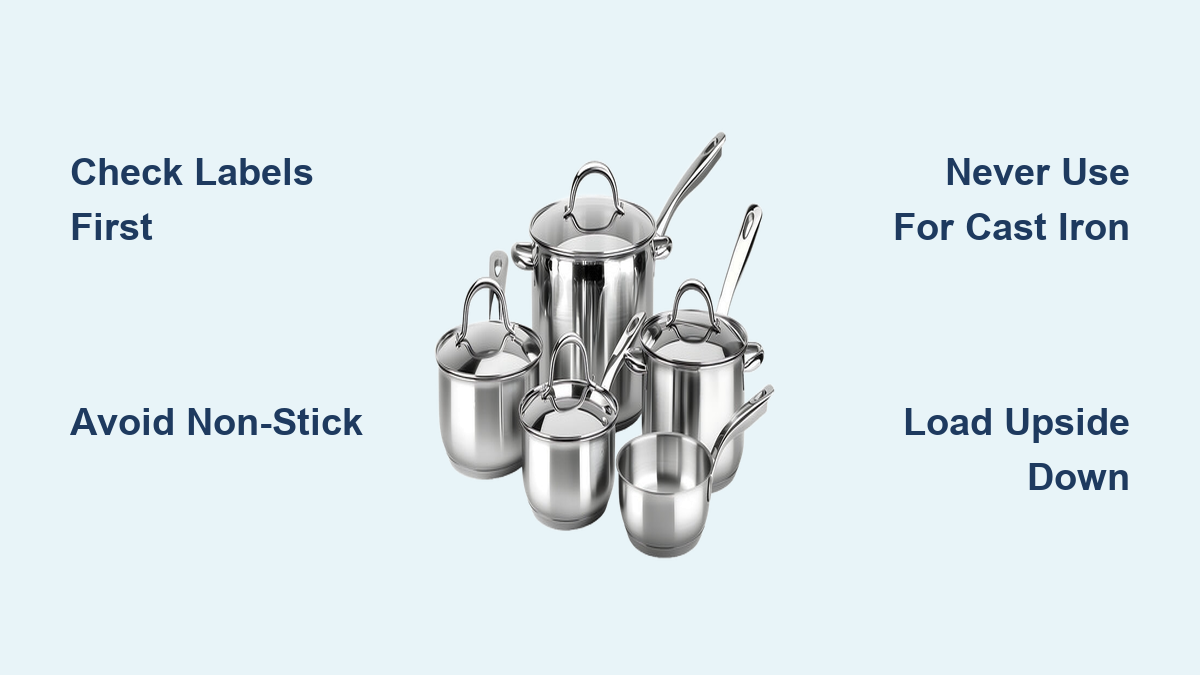
Stainless steel is one of the few cookware types generally safe for the dishwasher, especially if it has welded handles and a multi-ply construction.
Best Practices for Stainless Steel
Place pots upside down on the bottom rack for full spray coverage. Avoid overcrowding to allow water circulation. Use a multi-chamber detergent tab for heavy residue. Select the pots and pans or heavy-duty cycle.
Long-Term Risks
Spotting or pitting may occur in hard water areas. Handle corrosion can develop if rivets trap moisture. Discoloration may appear from aggressive detergents over time.
Expert Note: High-end brands like All-Clad recommend hand-washing to preserve shine and finish, especially for polished surfaces.
Non-Stick Pans

Can You Dishwash It? No. Not recommended.
Even if labeled dishwasher safe, repeated exposure harms non-stick coatings.
Why Dishwashing Damages Non-Stick
Alkaline detergents break down the coating. High heat and pressure cause flaking and peeling. Riveted handles trap food and water, promoting bacteria.
What Happens Over Time? Loss of non-stick performance can occur after just a few months. Coating chips can end up in food, creating a health risk. The warranty may be void if damage is linked to dishwasher use.
Better Alternative: Wash with mild soap, soft sponge, and warm water. Dry immediately to prevent water spots.
Aluminum Cookware
Can You Dishwash It? No. Avoid entirely.
Both regular and anodized aluminum react poorly with dishwasher conditions.
Risks of Dishwashing Aluminum
Darkening and pitting occur from alkaline detergents. Surface etching dulls the appearance. Warping can happen under high heat, especially with soft alloys.
Exception: Some hard-anodized non-stick cookware, like certain Calphalon products, may be labeled dishwasher safe. However, manufacturers still recommend hand-washing to extend the life of the coating.
Cast Iron
Can You Dishwash It? No. Never.
Dishwashing destroys what makes cast iron special: its seasoning.
Why It Is Dangerous
The process removes the polymerized oil layer that provides non-stick properties. It leaves bare metal exposed to moisture, leading to rust. Even one cycle can undo years of careful seasoning.
How to Clean Cast Iron
Scrape off food with a paper towel or soft brush. Use coarse salt and oil for stuck-on bits. Rinse quickly with minimal water. Dry thoroughly on the stove. Apply a light coat of oil before storing.
Maintenance Rule: No soap, no soaking, no dishwasher.
Enamel-Coated Cast Iron

Can You Dishwash It? No. Despite the durable look, avoid it.
Brands like Le Creuset and Staub specifically warn against dishwasher use.
What Goes Wrong
The enamel dulls over time. Rust forms at the rim or lid edges. Lid screws loosen or corrode. Non-stick performance declines significantly.
While the enamel will not crack immediately, repeated cycles take a toll on both function and appearance.
Copper Cookware
Can You Dishwash It? No. Too delicate.
Copper is soft and reactive, making it unsuitable for dishwasher cleaning.
Consequences of Dishwashing
Tarnishing and discoloration occur from detergents. Warping happens due to high heat. Linings, if tin or stainless steel, can become damaged.
Cleaning Alternative: Use gentle soap and a soft cloth. Polish occasionally with a copper cleaner to maintain shine.
Ceramic and Enamel-Ware
Can You Dishwash It? Yes, with care.
Ceramic Baking Dishes
Safe on the bottom rack. Excellent for removing baked-on food. Avoid sudden temperature changes to prevent thermal shock.
Enamel-Ware
Dishwasher safe but may lose shine over time. Hand-washing preserves luster.
Silicone and Plastic-Handled Cookware
Can You Dishwash It? It depends.
Silicone Bakeware
Dishwasher safe. Place on the top rack to avoid warping.
Stainless Steel with Plastic Handles
May be labeled safe, but repeated use can weaken plastic, degrade adhesives, and loosen seals.
Always Check: Verify the handle heat resistance rating, looking for labels indicating greater than 140°F or 60°C tolerance.
Load Pots and Pans Correctly
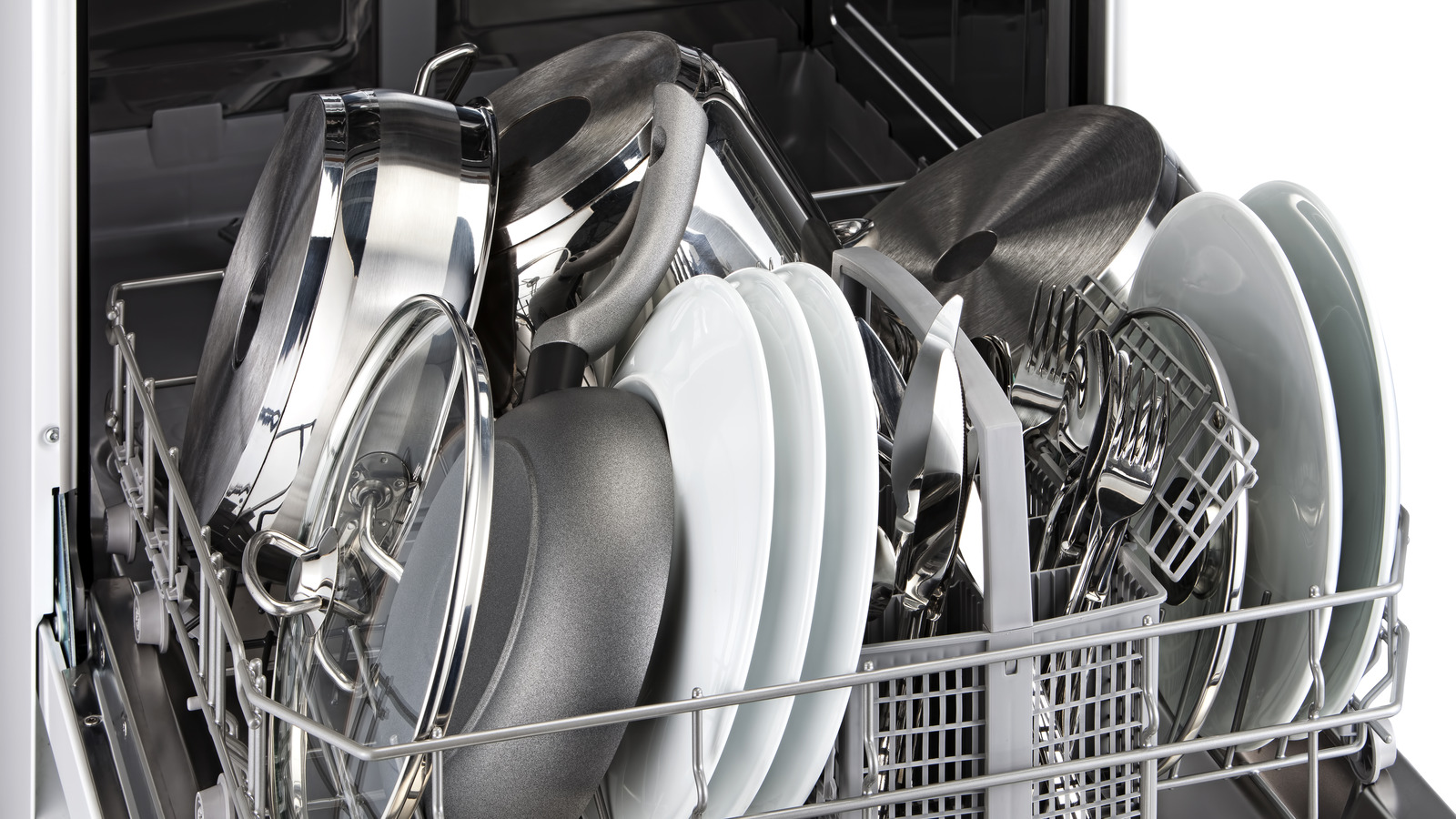
Even dishwasher-safe cookware will not clean well if loaded wrong.
Step-by-Step Loading Guide
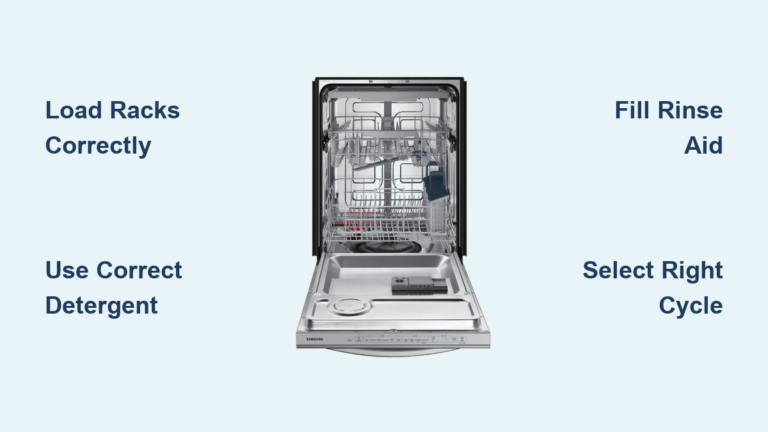
Scrape off large food scraps first to protect the filter. Ensure pots do not block the spray arm. Use the bottom rack for heavy, large items like pots and pans. Position pots upside down so interiors face the spray jets. Avoid nesting pans inside each other. Leave at least 1 to 2 inches between items for water flow.
Pro Tip: Fold down tines or remove racks if needed to fit bulky cookware.
Choose the Right Cycle and Detergent
Cleaning power matters, especially for greasy or baked-on residue.
Recommended Dishwasher Cycles
Use the pots and pans mode for intensive washing with high pressure and heat. Select heavy duty or auto-sensing to adjust based on soil level. Choose the longest cycle available, up to 3 hours, for maximum cleaning.
Best Detergents for Cookware
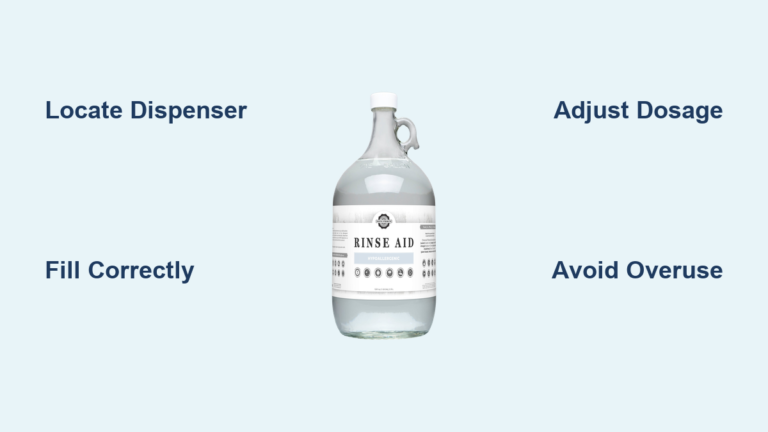
Use multi-chamber tabs like Finish Power All In One. Look for enzyme-based stain removers, grease-cutting agents, and rinse aid with anti-spot protection.
Avoid powders, as they can be abrasive and contribute to glass etching.
Prevent Long-Term Damage
Even safe items degrade over time with repeated dishwasher use.
Stainless Steel
Risk involves handle corrosion and spotting. Prevention includes using rinse aid and drying promptly.
Non-Stick
Risk is coating breakdown. Prevention is hand-washing only.
Aluminum and Cast Iron
Risk is irreversible damage. Prevention is never loading these items in the dishwasher.
Reality Check: Dishwasher safe does not mean damage-proof. It means no immediate failure, not no long-term effects.
Know Your Use Case
Your lifestyle affects how strict you need to be with dishwasher rules.
Busy Households
Temptation is to load everything to save time. The smart move is to reserve the dishwasher for stainless steel and ceramic. Hand-wash non-stick and cast iron.
High-End Cookware Owners
Priority is longevity and appearance. Best practice is hand-washing all specialty items to protect the investment.
Budget Cookware Users
Acceptable risk is dishwashing inexpensive stainless steel occasionally. The trade-off is shorter lifespan for convenience.
Eco-Conscious Users
Run the dishwasher only when full. Skip pre-rinsing because modern detergents work best on food residue.
Final Verdict: What Can Go in the Dishwasher
| Cookware Type | Dishwasher Safe | Key Notes |
|---|---|---|
| Stainless Steel | Yes | Use bottom rack; avoid high-end models |
| Non-Stick Pans | No | Coating degrades fast; hand-wash only |
| Aluminum | No | Discolors and pits; avoid completely |
| Cast Iron | No | Strips seasoning; causes rust |
| Enamel-Coated Cast Iron | No | Dulls enamel; risks rust and loose screws |
| Copper | No | Tarnishes and warps; hand-clean only |
| Ceramic Baking Dishes | Yes | Great for baked-on food; bottom rack |
| Enamel-Ware | Yes | May dull over time; hand-wash for shine |
| Silicone Bakeware | Yes | Top rack only |
| Plastic-Handled Pans | Occasionally | Limit use; check heat rating |
Key Takeaways for Putting Pots and Pans in the Dishwasher
The dishwasher can be a powerful ally, but only when used wisely. By following material-specific rules, loading correctly, and choosing the right cycles, you can enjoy convenience without sacrificing performance.
Quick Recap: Always check labels before loading. Stainless steel and ceramic can be washed carefully. Non-stick, cast iron, aluminum, and copper should be hand-washed to preserve quality. Use the right detergent and cycle for tough jobs. Dry promptly to prevent spotting and rust.
Final Tip: When in doubt, hand-wash. A few extra minutes now can save you from replacing expensive cookware later.
Frequently Asked Questions About Putting Pots and Pans in the Dishwasher
Can I put non-stick pans in the dishwasher?
No, non-stick pans should not go in the dishwasher. The alkaline detergents and high heat break down the coating, causing flaking, peeling, and loss of non-stick performance within months. Hand-washing with mild soap and a soft sponge is the recommended cleaning method.
Is stainless steel cookware safe to wash in the dishwasher?
Yes, stainless steel is generally safe for dishwasher use. Place pots upside down on the bottom rack and use a pots and pans or heavy-duty cycle. However, high-end stainless steel may develop spotting or discoloration over time, so hand-washing is recommended for premium pieces.
Why should cast iron never go in the dishwasher?
Dishwashing removes the seasoning, which is the polymerized oil layer that provides non-stick properties and rust protection. Even one cycle can compromise years of seasoning and leave the pan vulnerable to rust.
Can I put aluminum pots in the dishwasher?
No, aluminum should not be placed in the dishwasher. The alkaline detergents cause discoloration, pitting, and surface etching. Both regular and anodized aluminum can be damaged by the harsh dishwasher environment.
What happens if I put copper cookware in the dishwasher?
Copper cookware will tarnish, discolor, and may warp due to the high heat. The detergent accelerates oxidation. Hand-washing with gentle soap is the only recommended method to preserve copper appearance and integrity.
How should I load pots and pans in the dishwasher for best results?
Scrape off large food particles first. Place pots upside down on the bottom rack so interiors face the spray jets. Leave 1 to 2 inches between items for water circulation. Avoid nesting pans inside each other or blocking the spray arms.