Dishwasher Bacteria Kill: How Hot Water Cleans
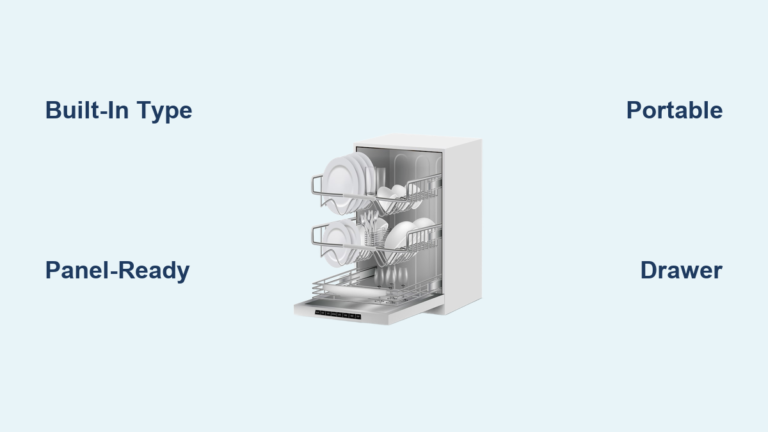
You run your dishwasher daily, but have you ever wondered if it’s actually destroying harmful bacteria or just moving grime around? The answer is yes, a dishwasher can kill bacteria, but only when specific conditions are met. Modern dishwashers with sanitize cycles can eliminate up to 99.999% of pathogens, making them significantly more effective than hand washing at reducing microbial load.
This guide covers exactly how dishwashers destroy bacteria, what temperature thresholds matter, which cycles deliver true sanitization, and practical steps to ensure your machine provides the cleanest, safest results for your household.
How Dishwashers Kill Bacteria: The Heat Factor
Dishwashers rely on a combination of high temperatures, detergent chemistry, and extended exposure time to destroy harmful microbes. Understanding each element helps you optimize your machine for maximum germ elimination.
Temperature Thresholds for Microbial Destruction
Heat is the primary mechanism for bacterial inactivation in dishwashers. Different pathogens require different temperature exposures to ensure complete elimination.
- E. coli and Salmonella begin to break down at 140°F (60°C)
- At 150°F (65.6°C) sustained exposure kills 99.999% of bacteria, meeting the NSF residential sanitization standard
- Commercial dishwashers reach 180°F (82.2°C), ensuring surfaces hit 160°F for at least 10 seconds
Key point: Standard home water heaters set to 120°F cannot sanitize dishes. Your dishwasher must internally boost temperatures to reach sanitization thresholds.
Why Detergent Matters for Germ Control
Detergent plays a dual role in bacterial elimination beyond just cleaning food residue.
- Amphiphilic molecules in detergent dissolve lipid membranes, breaking apart viruses like coronavirus
- Enzymes in modern detergents break down proteins and fats, exposing hidden bacteria that hot water alone might miss
- Without detergent, biofilms can reform, creating slimy layers where bacteria regrow
Pro tip: Never run a rinse-only or pre-wash-only cycle if your goal is sanitization. Detergent is essential for germ control.
Sanitize Cycle vs Regular Wash: What’s the Difference?
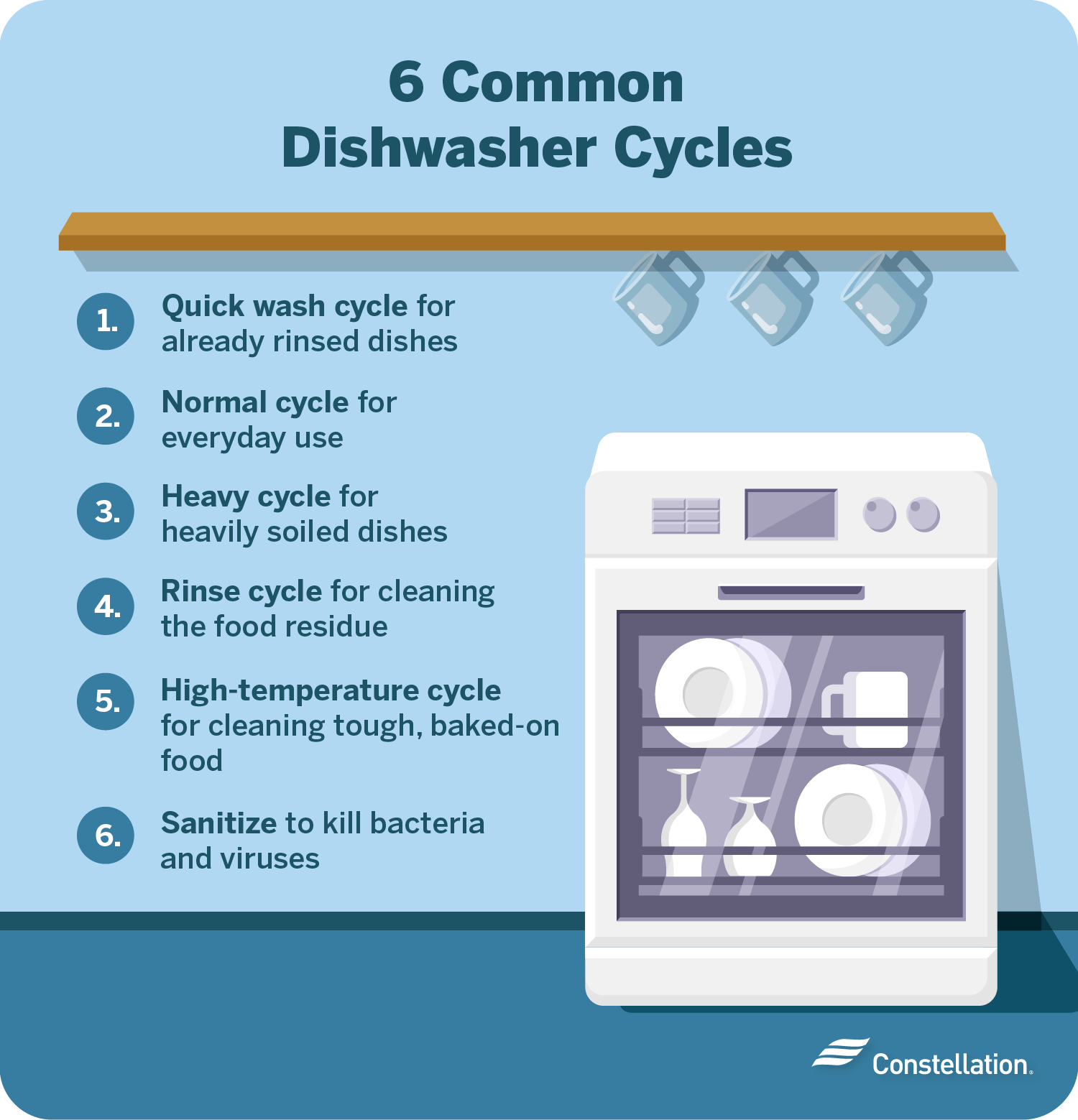
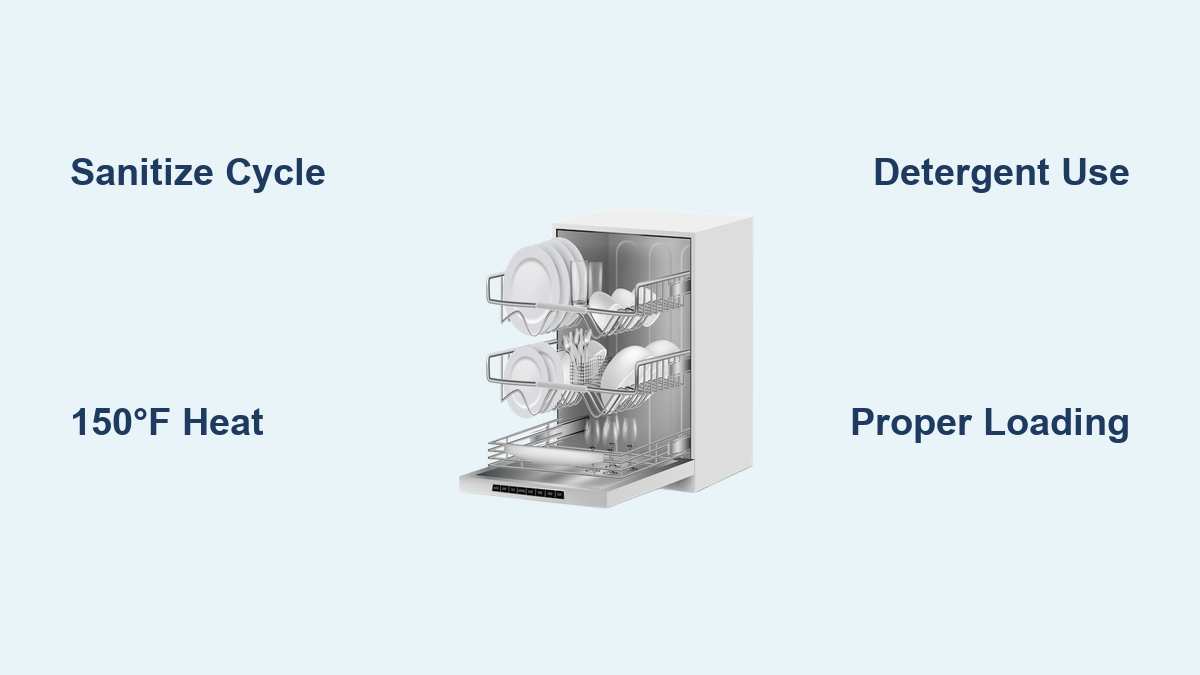
Not all dishwasher cycles deliver the same hygienic results. Understanding the distinction between cleaning and sanitizing helps you choose the right cycle for your needs.
What Defines True Sanitization
A sanitize cycle must meet specific regulatory standards to legally claim germ elimination.
- NSF/ANSI Standard 184 requires final rinse water to reach at least 150°F (65.6°C)
- This temperature must achieve a 5-log reduction (99.999%) of test bacteria like Staphylococcus aureus and E. coli
- Only NSF-certified models can legally claim sanitization capabilities
When to Use Each Cycle Type
| Situation | Recommended Cycle |
|---|---|
| Baby bottles and feeding supplies | Sanitize |
| Cutting boards after raw meat | Sanitize |
| Everyday plates and glasses | Regular |
| Immunocompromised household members | Sanitize |
| Items used during illness recovery | Sanitize |
Reality check: Regular cycles clean effectively but rarely reach temperatures needed for true sanitization. They reduce bacterial load significantly but don’t meet public health standards for germ elimination.
Can Dishwashers Kill Coronavirus and Other Viruses?
Yes, dishwashers can inactivate SARS-CoV-2 and other viruses, though effectiveness depends on temperature and detergent use.
Heat Inactivation of Viruses
Viruses differ from bacteria because they are inactivated rather than killed. The process disrupts the viral structure, rendering it non-infectious.
- At 132.8°F (56°C), low levels of coronavirus are inactivated, as demonstrated in laboratory studies
- High viral loads, such as respiratory secretions, may require temperatures up to 197.6°F (92°C) for complete inactivation
- Most commercial dishwashers operating at 180°F exceed these thresholds comfortably
The Detergent Advantage Against Viruses
Soap molecules compete with lipid bonds in the viral envelope, causing the virus to disintegrate.
- Dishwasher detergents contain surfactants that pierce and dissolve the outer lipid layer
- Combined with heat, this dual action ensures complete viral inactivation on smooth surfaces
- This applies only to dishwasher-safe items like glass, metal, and ceramic
Bottom line: A full cycle with detergent and high heat renders coronavirus non-infectious on properly cleaned dishes.
Commercial vs Home Dishwashers: Which Sanitizes Better?

Commercial units are designed to meet strict health department standards, making them more reliable for germ elimination than most home models.
Commercial Dishwasher Specifications
- Final rinse temperature must reach 180°F (82.2°C) under NSF/ANSI Standard 3
- Ensures dish surfaces hit 160°F for at least 10 seconds, achieving 99.999% microbial reduction
- Often includes booster heaters to maintain temperature during high-volume use
Home Dishwasher Capabilities
- Only NSF 184-certified home models can claim sanitization (final rinse at 150°F or higher)
- Many eco-friendly or budget models prioritize energy savings over peak heat
- Internal heaters help, but inlet water temperature and cycle selection significantly affect results
| Feature | Commercial | Home Sanitize Cycle | Basic Home Model |
|---|---|---|---|
| Final Rinse Temp | 180°F | 150°F | 120-130°F |
| NSF Certification | Yes (Standard 3) | Yes (Standard 184) | Usually No |
| Microbe Reduction | 99.999% | 99.999% | Limited |
| Best For | Restaurants, hospitals | Families, infants | General cleaning |
Why Hand Washing Falls Short on Sanitization
Hand washing is convenient but cannot match dishwasher performance for bacterial elimination.
Temperature Limitations of Hand Washing
- Most people wash dishes in water around 104°F (40°C), which is comfortable for skin but too cold to kill pathogens
- E. coli and Salmonella survive easily at these temperatures
- Even hot tap water at 120°F loses heat quickly in an open sink
Inconsistent Cleaning Results
- Manual scrubbing often misses crevices and hard-to-reach areas
- Sponges and dishcloths can harbor millions of bacteria, recontaminating cleaned items
- Detergent concentration is uneven compared to dishwasher dispenser systems
Research finding: Studies show dishwashers reduce bacteria more effectively than hand washing, even without using sanitize cycles.
How to Maximize Bacteria Kill in Your Dishwasher
You can optimize every cycle for better germ reduction regardless of your dishwasher model.
Strategic Use of Sanitize Cycles
Activate the sanitize cycle for high-risk items including baby bottles, utensils after raw meat contact, and items used by sick family members. Avoid overuse on delicate items that may degrade with repeated high heat exposure.
Proper Loading for Complete Coverage
- Face soiled surfaces directly toward spray arms
- Avoid overcrowding, which prevents water from reaching all surfaces
- Place plastics on the top rack to prevent melting
Visual cue: If food residue remains after a complete cycle, spray arms are likely blocked or loading was improper.
Regular Machine Maintenance
- Clean filters monthly to prevent clogs and bacterial buildup
- Run a vinegar or dishwasher cleaner cycle every 4-6 weeks
- Check spray arms for mineral deposits and clear clogged holes with a toothpick
Air Drying for Maximum Safety
High heat during the drying phase further reduces microbial load. If you must towel dry, use disposable gloves and a fresh, clean towel to avoid recontamination.
Signs Your Dishwasher Isn’t Reaching Safe Temperatures
Even with a sanitize cycle, mechanical issues can prevent proper heating.
Warning Indicators
- Dishes emerge wet and cool instead of warm and dry
- Food residue remains after a full cycle
- Minimal or no steam is present at cycle end
- Water feels lukewarm during mid-cycle (exercise caution when checking)
How to Test Your Dishwasher Temperature
- Place a high-heat thermometer in a glass on the top rack
- Run a sanitize cycle
- Check the temperature during the final rinse phase
- Reading should reach at least 150°F for sanitization
Alternative: Use temperature-sensitive strips designed for dishwasher testing.
Common Causes of Inadequate Heat
- Faulty heating element
- Malfunctioning thermostat
- Inlet water below 120°F
- Disabled or broken internal heater
Who Needs Sanitization Most in Your Household?
Most healthy adults need only cleaning, but certain household members benefit significantly from true sanitization.
High-Risk Individuals
- Infants and toddlers with developing immune systems
- Elderly individuals with weakened immune response
- Immunocompromised people including cancer patients and organ transplant recipients
- Households with frequent illness where shared utensils spread germs
When Clean Isn’t Enough
Use sanitize cycles when preparing food for someone undergoing chemotherapy, after cutting raw poultry, or when a family member is recovering from stomach illness.
What Materials Can Handle High-Heat Sanitizing?
High heat kills germs effectively but can damage certain materials.
Safe for Sanitize Cycles
- Glass, ceramic, and stainless steel
- Most hard plastics labeled dishwasher safe
- Silicone baking mats and lids
Avoid in High-Heat Cycles
- Wooden utensils, which can crack, warp, or trap moisture
- Non-stick cookware, whose coating degrades with repeated high heat
- Cast iron, which loses seasoning and may rust
- Delicate plastics that may melt or leach chemicals
- Bone-handled knives that can loosen or crack
Workaround: Use gentle or eco cycles for delicate items, but understand they won’t achieve sanitization.
Key Takeaways for Maximizing Dishwasher Sanitization
A dishwasher can kill bacteria effectively when operated correctly with proper temperature, detergent, and cycle selection. NSF-certified sanitize cycles deliver 99.999% germ reduction, making them essential for households with vulnerable members. Even basic models clean more hygienically than hand washing, though they don’t meet true sanitization standards.
To maximize germ elimination, always use the sanitize cycle for high-risk items, maintain your machine regularly, and air dry dishes instead of towel drying. Check your dishwasher specifications to confirm it reaches sanitizing temperatures, and address any heating issues promptly. With the right practices, your dishwasher becomes one of the most powerful tools in your kitchen for protecting family health.
Frequently Asked Questions About Dishwasher Bacteria Killing
What temperature must a dishwasher reach to kill bacteria?
A dishwasher must reach at least 150°F (65.6°C) in the final rinse to achieve sanitization under NSF/ANSI Standard 184. This temperature ensures a 99.999% reduction of bacteria like E. coli and Salmonella.
Does a dishwasher kill more bacteria than hand washing?
Yes, dishwashers are significantly more effective at reducing bacteria than hand washing. Hand washing typically uses water around 104°F, which is below the threshold needed to kill most pathogens, while dishwashers can reach temperatures exceeding 150°F.
Can a dishwasher kill coronavirus?
Yes, dishwashers can inactivate coronavirus. At temperatures around 180°F (commonly achieved in commercial dishwashers), the heat combined with detergent breaks down the viral lipid envelope, rendering it non-infectious on smooth surfaces like dishes and glassware.
Do I need special detergent to kill bacteria in the dishwasher?
Standard dishwasher detergent is essential for sanitization. Detergent contains amphiphilic compounds that break down viral envelopes and help remove biofilms where bacteria hide. Never run a cycle without detergent if sanitization is your goal.
How often should I run the sanitize cycle?
Run the sanitize cycle for baby bottles, cutting boards after raw meat, utensils used by sick family members, and items for immunocompromised household members. For everyday dishes in healthy households, using sanitize cycle 2-3 times weekly provides adequate protection.