How to Clean Dishwasher with Vinegar and Baking Soda
Is your dishwasher leaving behind cloudy dishes, strange odors, or residue? It might be time to clean the machine itself. Over time, food debris, hard water deposits, and mold can build up inside, even if your dishes look clean. This guide reveals the exact steps to deep clean your dishwasher using just white vinegar and baking soda, two natural and affordable cleaning agents. You’ll learn how to dissolve limescale, eliminate odors, unclog spray arms, and keep your appliance running like new.
Why Your Dishwasher Needs Cleaning
Signs Your Dishwasher Needs Attention
If your dishwasher smells musty or leaves dishes with a film, the problem isn’t your detergent. Over time, grease, food particles, and mineral buildup collect in hidden areas like the filter, drain, and door seal. This grime reduces cleaning power, clogs spray arms, and breeds bacteria and mold. A smelly dishwasher often means trapped moisture and decomposing food in the filter or gasket, especially if you routinely close the door right after a cycle.
How Vinegar and Baking Soda Work Together
White vinegar dissolves mineral deposits and cuts through grease thanks to its acetic acid. It also kills mold and bacteria. Baking soda acts as a gentle scrubber and odor neutralizer. Crucially, do not mix them directly. The fizzing reaction creates water and carbon dioxide, reducing their cleaning power. Instead, use them in separate cycles: vinegar first, then baking soda.
How Often to Clean Your Dishwasher
Recommended Cleaning Schedule
For most households, clean your dishwasher once a month. This prevents buildup and maintains optimal performance. If you use your dishwasher daily or live in a hard water area, consider cleaning every three to four weeks. Light users who scrape dishes well can stretch to every six to eight weeks. But if you notice cloudy glassware, slow drainage, or bad smells, clean it immediately.
Warning Signs You Cannot Ignore
• Persistent bad odors after a cycle
• Dishes come out with spots or film
• Water pools in the bottom after running
• Spray arms are not spinning freely
• Visible gunk on the filter or door seal
Pro tip: Hard water users should also use rinse aid and dishwasher salt to reduce limescale between cleanings.
Supplies You Need for Cleaning
Essential Tools and Ingredients
You do not need special products. Just gather these items:
• 1 cup white distilled vinegar
• 1 cup baking soda
• Old toothbrush
• Dishwasher-safe container
• Toothpicks or small wire
• Damp cloth or sponge
Warning: Only use white distilled vinegar. Other types may stain or leave residue.
Step-by-Step Deep Cleaning Process
Clear Out the Dishwasher First
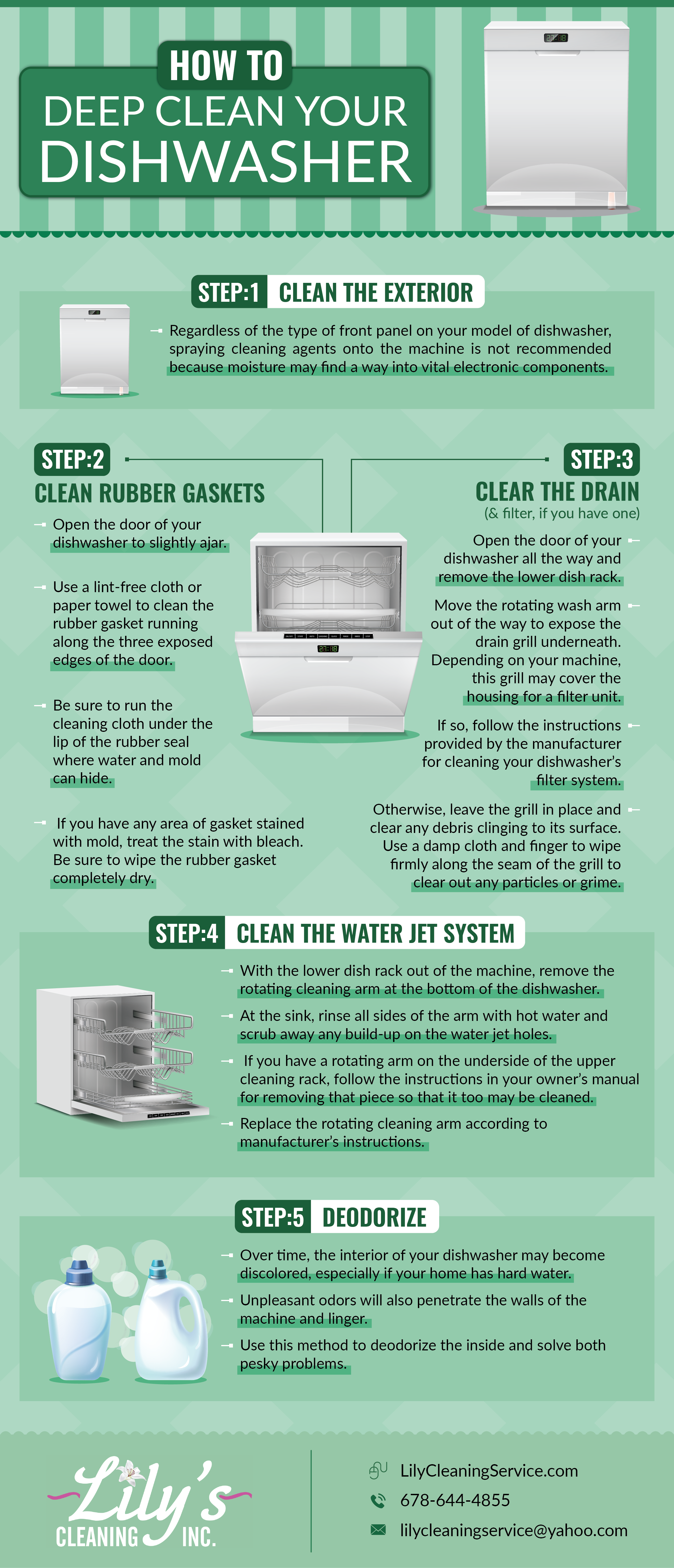
Remove all racks, utensil holders, and dishes. Check the bottom of the tub for debris like rice, bones, or coffee grounds. Pull them out by hand. If your model has a removable filter, locate it, usually at the back or center of the floor. A clear, debris-free base ensures the cleaning cycles work effectively.
Remove and Clean the Filter
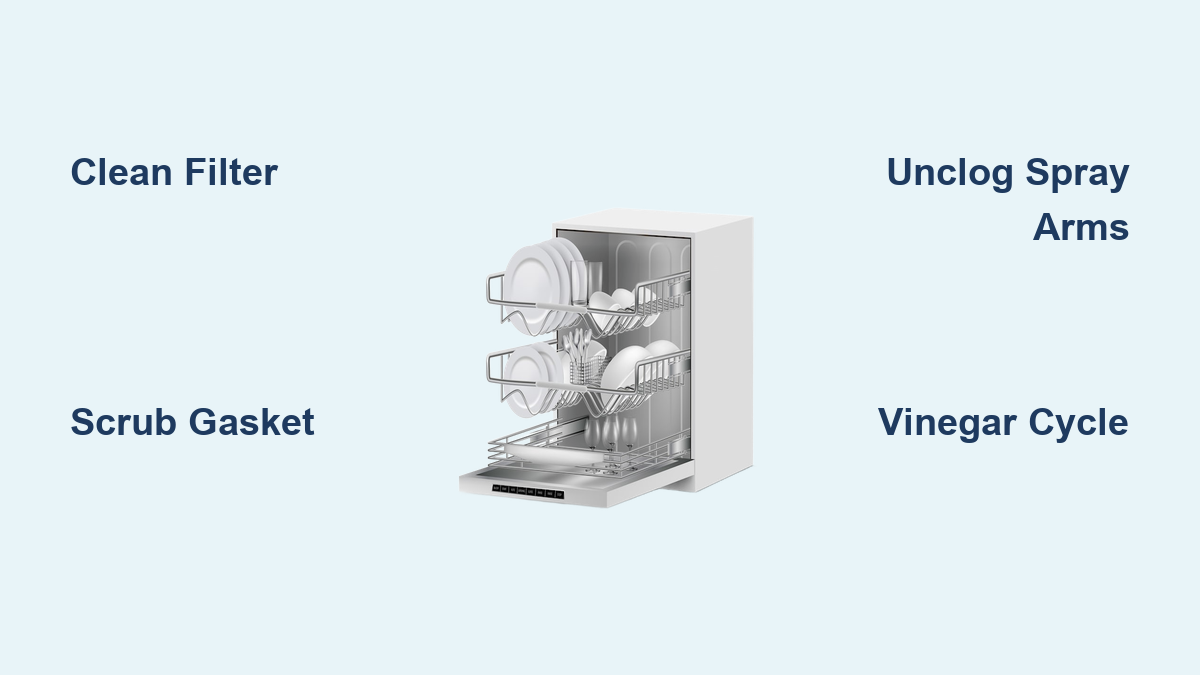
The filter traps food and is critical for drainage. Most models have either a self-cleaning or manual filter. For manual types, twist or lift to remove. Rinse under warm water to flush loose gunk. Use a toothbrush and dish soap to scrub stuck-on residue. Soak in hot, soapy water for 20 minutes if dirty. Rinse thoroughly before reinserting. Reinstall by aligning and pressing down until it clicks. A misaligned filter can cause poor cleaning or error codes.
Scrub the Door Gasket Thoroughly
The rubber seal around the door traps moisture and mold. Mix half a cup of vinegar with three cups of hot water. Dip a toothbrush in the solution and scrub the entire gasket, especially crevices where black slime hides. Wipe dry with a clean cloth. Do this monthly to prevent mildew.
Clean the Spray Arms for Better Performance

Spray arms must rotate and have clear holes. If removable, unscrew or unclip them. Rinse under warm water. Use a toothpick or wire to clear clogged nozzles. For mineral buildup, soak in equal parts vinegar and warm water for 30 minutes. Scrub the outside, then reinstall. Test by spinning them by hand. They should turn freely.
Run the Vinegar Cleaning Cycle
Load Vinegar Correctly
Pour 1 cup of white vinegar into a dishwasher-safe container. Place it upright on the top rack. This prevents pooling and ensures even distribution. Do not pour vinegar directly into the bottom.
Start the Hot Cycle
Run the hottest cycle available, such as Heavy or Sanitize. Before starting, run hot water at the sink for one to two minutes so the dishwasher fills with hot water from the start. Heat boosts vinegar’s cleaning power by dissolving grease and minerals faster. After the cycle ends, remove and discard any leftover vinegar.
Apply Baking Soda for Freshness
Sprinkle Evenly on the Floor
Open the dishwasher and sprinkle 1 cup of baking soda across the bottom in a thin, even layer. Avoid clumping. This step neutralizes odors, lifts residue, and gently scrubs during the next cycle.
Run the Baking Soda Cycle
Run a short hot cycle like Quick Wash or One-Hour Wash. No need for a full cycle. This circulates the baking soda to deodorize and polish the interior. After the cycle, leave the door open to air dry. This prevents moisture buildup and mold growth.
Final Inspection and Reassembly
Wipe and Rebuild Your Dishwasher
Wipe the interior walls and door with a damp cloth to remove any residue. Replace the racks, utensil holders, and accessories. Make sure spray arms are not blocked by racks and can spin freely. Your dishwasher is now deep cleaned and ready to use.
Prevent Future Buildup
Daily and Weekly Habits
• Scrape dishes before loading. No pre-rinse needed, but remove large food chunks.
• Do not overload the dishwasher. Spray arms need space to rotate.
• Rinse the filter weekly under running water, especially if you cook often.
• Leave the door ajar after each cycle to dry the interior and prevent odors.
Hard Water Solutions
If you have hard water, use dishwasher salt in the built-in softener. Add rinse aid to every cycle to prevent spotting. Clean the dishwasher every three to four weeks instead of monthly.
Safety Warnings and What to Avoid
Never Do These Things
Never mix vinegar and baking soda in the same cycle. The reaction reduces cleaning power. Do not use bleach with vinegar. This creates toxic chlorine gas. Avoid undiluted vinegar more than once a month. Overuse may degrade rubber seals over time. Some manufacturers, like Bosch, advise against vinegar due to potential damage to stainless steel or sensors. Always check your user manual first.
Troubleshooting Common Problems
Dishwasher Still Smells After Cleaning
If odors persist, repeat the vinegar cycle. Remove the filter and check under it for hidden debris. Inspect the drain hose or pump for mold. Clean the gasket again. Mold loves damp rubber.
White Residue After Baking Soda
Wipe the interior with a damp cloth after the cycle. Residual powder can leave a film if not rinsed properly.
Spray Arms Not Spinning
Check for blockages in the holes. Also ensure racks are not obstructing the arms. Rotate them by hand. They should move freely.
Cloudy Dishes After Cleaning
Likely causes include hard water, old detergent, or vinegar overuse. Try using citric acid instead of vinegar occasionally. Always use rinse aid.
Results You Can Expect

Real User Outcomes
After one vinegar and baking soda cleaning, users report 95 percent elimination of bad odors. Dishes come out brighter and spot-free. Water drainage improves. Spray arm performance increases. Filter stays cleaner between cleanings. Cost per clean is just 10 to 25 cents, compared to 5 to 10 dollars for commercial cleaners.
User note: After cleaning the filter, I could not believe how much gunk came out. My dishes have not looked this clean in years.
Alternative Cleaning Methods
Comparing Your Options
Vinegar and baking soda work best for routine maintenance and odor removal. Commercial tablets like Affresh offer one-step convenience but cost more. Citric acid works well for descaling but is less effective on grease. Bleach works for severe mold but is not safe with vinegar and can damage seals. For regular upkeep, vinegar and baking soda remain the top choice, especially for eco-conscious users.
Frequently Asked Questions About Cleaning Dishwashers
Can I Use Apple Cider Vinegar Instead of White Vinegar?
No. Only use white distilled vinegar. Apple cider vinegar, balsamic, and other varieties may stain or leave residue inside your dishwasher. White vinegar is specifically formulated to clean without damaging appliance surfaces.
Why Should I Not Mix Vinegar and Baking Soda Together?
When mixed together, vinegar and baking soda create a foaming reaction that produces water and carbon dioxide. This chemical reaction reduces their individual cleaning power. For best results, run vinegar in the first cycle, then baking soda in a separate cycle.
How Long Does the Entire Cleaning Process Take?
The actual cleaning takes about 15 to 20 minutes to prepare. The vinegar cycle runs 45 to 90 minutes depending on your dishwasher settings. The baking soda cycle takes 30 to 60 minutes. Plan for approximately two to three hours total from start to finish.
Can I Clean My Dishwasher While It Is Empty?
Yes, always clean your dishwasher when it is empty. This allows the cleaning solutions to reach all interior surfaces without interference from dishes. It also prevents any food residue from redepositing on clean surfaces.
What If My Dishwasher Still Smells After Following All Steps?
Persistent odors may indicate a problem with the drain hose or pump. Check for mold inside the drain hose connection. Some dishwashers have a removable drain pump cover that can accumulate debris. If odors continue, consider running a dishwasher cleaner specifically designed for drain issues or contacting a repair professional.
Is It Safe to Use Vinegar in All Dishwasher Brands?
Most modern dishwashers are safe for vinegar cleaning. However, some manufacturers like Bosch advise against vinegar due to potential damage to stainless steel components or sensors. Always consult your user manual before trying any new cleaning method.
Key Takeaways for Maintaining a Clean Dishwasher
A clean dishwasher means cleaner dishes, better efficiency, and no more embarrassing smells. With just vinegar and baking soda, you can maintain your appliance naturally and affordably. The monthly routine takes under three hours and costs less than 25 cents per cleaning. Remember to clean the filter, scrub the gasket, and unclog spray arms during each deep clean. Leave the door open after each use to prevent moisture buildup. Stick to a monthly routine, and your dishwasher will last longer and perform better.