How to Fix E1 Error on Dishwasher
Your dishwasher stops mid-cycle and flashes E1 on the display. This frustrating error code means clean dishes are put on hold, and you are left wondering what went wrong. The E1 error is one of the most common dishwasher fault codes, but the solution depends entirely on your specific brand. Whether you own an LG, Thor, Gorenje, Cookology, or another model, this guide walks you through exactly what E1 means, step-by-step fixes you can try at home, and how to prevent it from happening again.
The key to fixing E1 is understanding that it is not a universal code. In LG models, E1 typically signals a leak or water in the base pan. In Thor, Gorenje, or Midea-based units like Cookology, E1 usually means fill failure due to low water pressure or blockage. This guide helps you identify the exact issue based on your model and apply the right fix without waiting for a technician.
Decode Your E1 Error by Brand
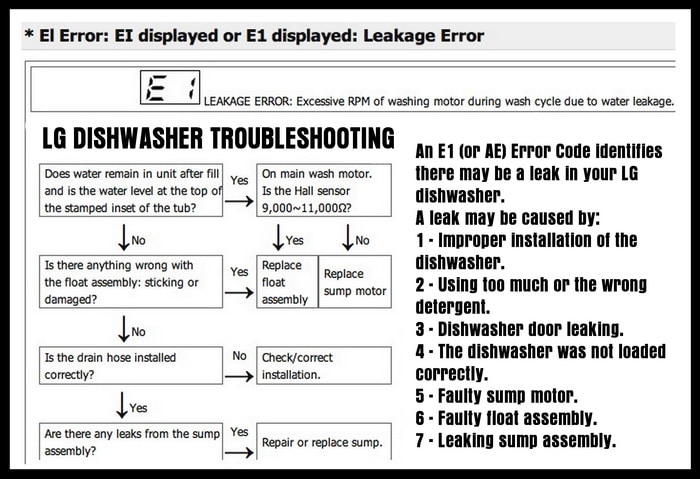
LG: E1 Means Leak Detection Triggered
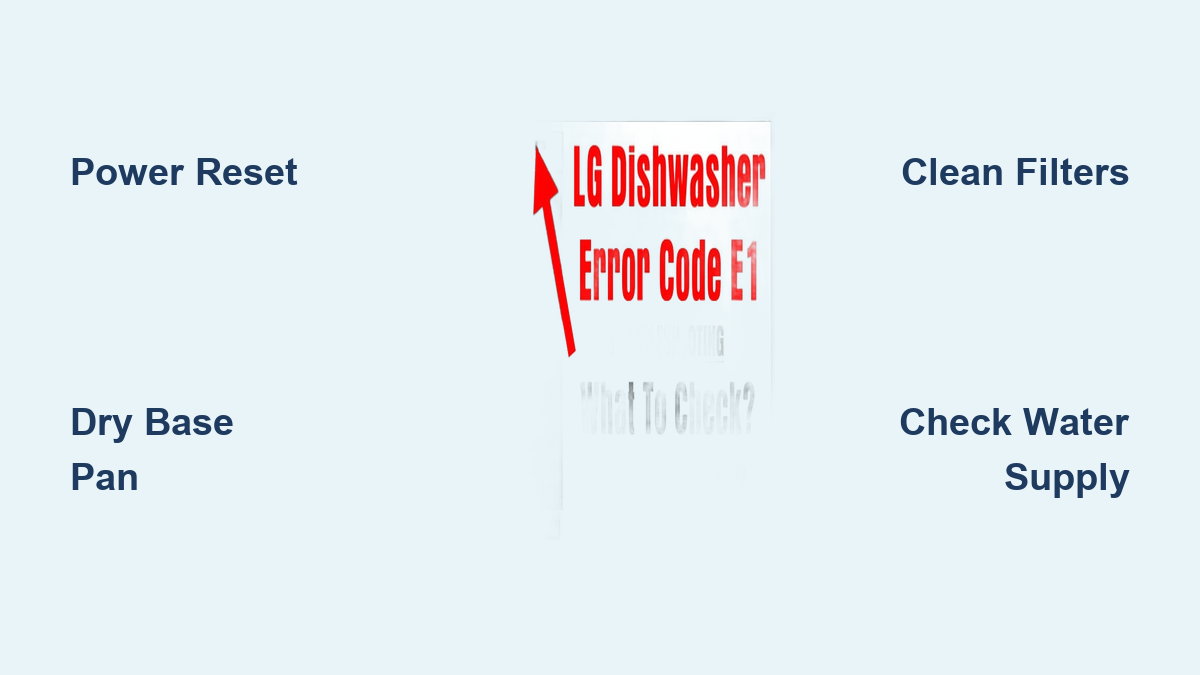
In LG dishwashers, E1 (sometimes displayed as AE) activates when water is detected in the base pan beneath the tub. This triggers the leak protection system, which stops the cycle to prevent floor damage and electrical issues.
What to look for includes dampness or water under the kick plate, a musty smell near the toe-kick panel, and the error appearing after heavy washing or excessive sudsing. The fix focuses on drying the base, checking the gasket, and verifying there are no active leaks.
Thor: E1 Means Low Water Pressure or Inlet Failure
Thor dishwashers use E1 to signal insufficient water intake. The machine expects a certain flow rate and specific time to fill the tub. Any delay or restriction triggers the E1 error.
Common causes include a kinked inlet hose, a clogged filter or fan assembly, and a closed water supply valve. The fix focuses on inspecting the supply line, cleaning filters, and testing inlet flow.
Gorenje and Cookology: E1 Means Fill Cycle Failed
These models trigger E1 when the water level sensor does not detect enough water within 8 to 12 minutes of starting the cycle. This usually indicates a problem with the fill system rather than a leak.
Primary culprits are a blocked inlet screen, a faulty pressure switch, and impeller obstruction. The fix focuses on cleaning the inlet, checking the impeller, and verifying water supply is functioning properly.
Power Reset the Dishwasher
Clear Temporary Glitches and Sensor Errors
A simple power reset can resolve E1 if it is caused by a sensor hiccup or temporary software error. This should be your first troubleshooting step before moving to more involved repairs.
Follow these steps to reset your dishwasher. Press Cancel to stop the current cycle. Turn off the circuit breaker or unplug the unit from the power outlet. Wait 5 to 10 minutes to allow the control board memory to clear. Restore power to the dishwasher. Run a quick rinse cycle to test whether the error has cleared.
Pro tip: approximately 30 percent of users report that E1 clears after a reset, especially after cleaning or drying the base pan. If E1 returns immediately after the reset, there is a physical issue that requires deeper inspection.
Dry the Base Pan on LG Models
Remove Water from the Leak Sensor Area
LG models have a float switch or leak sensor in the base pan. Even a small amount of water can trigger E1 over time, activating the leak protection system.
To access the base pan, shut off water and power to the dishwasher. Remove the two screws from the kick plate, also called the toe-kick panel. Pull the panel down and away from the unit. Shine a flashlight into the base to inspect for standing water. Use towels or a wet-dry vacuum to remove all water. Allow the area to air dry for 24 to 48 hours before restarting the dishwasher.
Check for recurring water: if it reappears after drying, there is an active leak likely from the sump, gasket, or a hose connection. Never restore power with standing water present, as this risks electrical damage.
Inspect and Clean the Door Gasket
Prevent Water from Escaping During Wash Cycles
A damaged or dirty door gasket allows water to escape during the wash cycle. This water pools in the base and triggers the E1 error in leak-sensitive models like LG.
Open the door fully and examine the rubber seal for cracks, warping, food debris, or grease buildup. Clean the gasket with warm, soapy water and a soft cloth. Dry completely before closing the door.
Replace the gasket if it is hardened, torn, or loose, or if the door does not close flush against the seal. LG recommends professional repair for gasket replacement. Contact LG support to schedule service if the gasket is damaged.
Level the Dishwasher
Stop Water Pooling and Prevent Leaks
An unlevel unit causes water to shift toward the front during cycles, increasing the chance of leakage past the door seal. This is a common trigger for E1 errors in leak-detection models.
Place a spirit level on the tub’s top edge to test leveling. Check both front-to-back and side-to-side alignment. The ideal setup is 1/4 inch lower in front to keep water inside the tub during cycles.
Use a wrench to adjust the front leveling legs up or down. Tighten the lock nuts once the unit is level. For a water test, remove the bottom rack and pour one gallon of water into the tub. Watch for pooling. If water gathers on one side, relevel the unit.
Use the Correct Detergent
Avoid Oversudsing and Foam-Related Errors
Using hand-washing dish soap is a leading cause of E1 errors. Dish soap creates excessive foam that increases internal pressure and pushes water past the seal, triggering the float switch.
Use only dishwasher-safe detergents including pods, tablets, powder, or gel. Never use more than one pod or exceed the recommended amount. In soft water areas, reduce detergent to prevent sudsing.
User reports confirm this issue. One owner used dish soap once, resulting in massive foam, an E1 error, and water under the unit. After drying and resetting, it worked, but the owner now double-checks detergent type before every load.
Clean Filters and Fan Assembly

Unblock Water Flow in Thor, Gorenje, and Midea Models
Clogged filters are a leading cause of E1 in many models. They restrict water intake and circulation, preventing proper fill and triggering the error.
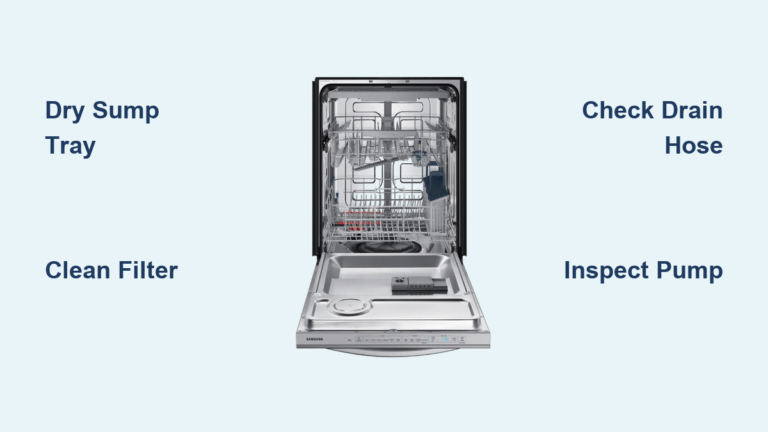
Remove the bottom rack to access the filter assembly. Remove the main filter, fine filter, and blade fan, also called the impeller cover. Twist the fan counter-clockwise to unlock it. Rinse all parts under running water. Use a soft brush to remove grease, food, or scale buildup. Inspect all parts for cracks or wear.
Clear the sump using a wet-dry vacuum to remove sludge or debris such as seeds or toothpicks. Reassemble all parts, ensuring they are fully seated. Run a 20-minute rinse cycle with no dishes. No standing water should remain after completion.
Clean filters every 1 to 3 months, especially in hard water areas where mineral buildup is common.
Check Water Supply and Inlet Hose
Restore Proper Water Flow to the Dishwasher
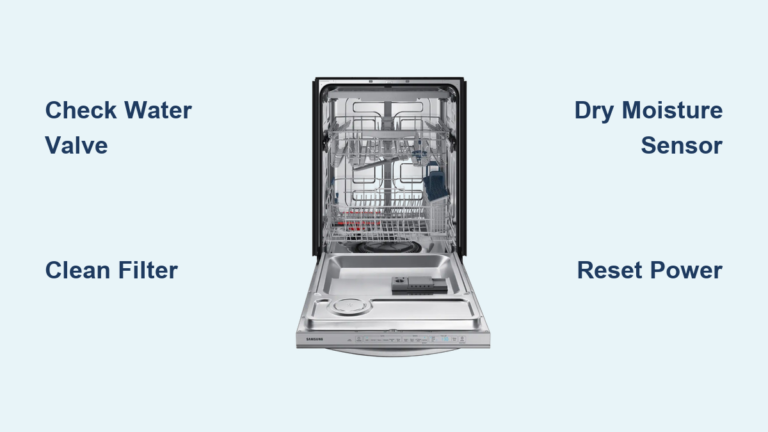
If the dishwasher is not filling with water, E1 will trigger in fill-failure models like Gorenje, Cookology, and Thor. The issue is often related to the water supply rather than the machine itself.
Inspect the water supply valve under the sink and make sure it is fully open. Check the inlet hose for kinks, twists, or crushing. Disconnect the hose from the valve and remove the mesh filter inside the connector. Clean out sand, rust, or mineral deposits that may be restricting flow.
Clean the inlet screen every 6 to 12 months as part of regular maintenance. If no water is entering the dishwasher, test household water pressure by running another faucet. Low pressure may indicate main valve issues or concurrent appliance use drawing too much water.
Test Inlet Valve and Pressure Switch
Diagnose Fill System Failures
Water Inlet Valve
The water inlet valve, also called a solenoid, controls water entry into the dishwasher. Signs of failure include no humming sound at cycle start, moisture or corrosion on the solenoid, and a stuck diaphragm.
Test with a multimeter by disconnecting power, removing the wires, and setting the meter to ohms. The reading should be between 500 and 1500 ohms. An open circuit indicates the valve needs replacement.
Pressure Switch
The pressure switch detects fill level via an air tube connected to the tub. Check the tube for cracks or disconnection. Inspect the sensor for corrosion. Blow through the tube to clear any blockages.
A faulty pressure switch often mimics low water conditions and is common in Midea-based units. If testing reveals the switch is defective, replacement is needed.
Inspect Impeller and Pump
Ensure Proper Water Circulation
The impeller helps circulate water and may assist in fill detection. If jammed by debris, it can trigger E1 in some models.
The impeller is located under the filter in the sump area. Access may require removing a cover. Remove any debris such as plastic, food, or bones. Spin the impeller by hand. It should move freely. If stuck, clean the area or replace the impeller.
Listen during the cycle. If the motor hums but no water moves, the pump or motor may be failing. Impeller or pump replacement usually requires a professional technician.
Clear Drain System Blockages
Prevent Backflow and False Errors
A clogged drain can cause water to back up, affecting fill sensors and triggering false E1 errors in some models.
If the dishwasher connects to a garbage disposal, ensure the knockout plug is removed from the disposal inlet. Run the disposal to clear debris. Check the air gap if installed by removing the cap and cleaning inside. Inspect the drain hose for kinks or clogs. Make sure the hose connection is looped high to prevent siphoning.
Run a drain-only cycle to verify the system empties completely. If water remains, further drain cleaning is needed.
When to Call a Professional
Know Your Limits for DIY Repairs
DIY fixes work for most E1 errors, but some issues require expert help. Call a technician if E1 returns after completing all troubleshooting steps, if water keeps appearing in the base pan despite drying, if no water enters despite an open valve and clean hose, or if there are visible leaks from hoses, sump, or seals.
Also call a professional if the pump or motor fails to run, if there is a burnt smell or corrosion on wiring, or if the control board or sensor needs replacement.
Beacon Services and Appliances in Citrus County specializes in LG leak diagnostics. Call 352-726-7530 or visit BeaconSaves.com. LG also offers 24/7 chat support to request repair service for gasket, sump, or sensor issues.
Prevent E1 Errors Long-Term
Maintain Peak Dishwasher Performance
Prevention beats repair. Follow these habits to avoid E1 errors in the future.
Clean filters every 1 to 3 months. Use only dishwasher detergent, never hand-washing soap. Inspect the door gasket monthly for wear and debris. Run a vinegar cycle monthly by placing one cup of vinegar in an empty tub with no detergent. Clean the inlet screen every 6 to 12 months. Keep the unit level after any floor or cabinet changes. Replace aging hoses that are 5 years or older. Consider installing a water softener if you have hard water.
Using dishwasher cleaner tablets quarterly also helps remove buildup and keeps components functioning properly.
Final Fixes by Brand
Quick Reference for Your Specific Model
For LG models, focus on leaks. Dry the base pan, check the gasket and sump seals, avoid dish soap, and reset power after any intervention.
For Gorenje and Cookology models, fix fill issues. Clean the inlet screen, test water pressure, inspect the impeller, and verify the pressure switch is functioning.
For Thor models, unblock flow. Clean the filter and fan, straighten the inlet hose, and ensure full water supply is available.
Most E1 errors are simple to fix with cleaning, drying, and resetting. The sooner you act, the less damage occurs. With regular maintenance, you can keep E1 from ever coming back.
Frequently Asked Questions About E1 Error on Dishwasher
What does E1 mean on my dishwasher?
E1 means different things depending on your brand. On LG models, it indicates a leak or water in the base pan. On Thor, Gorenje, and Cookology models, it typically means the dishwasher failed to fill with enough water during the cycle.
Can I fix E1 error myself without a technician?
Yes, most E1 errors can be resolved at home. Try power resetting, drying the base pan, cleaning filters, checking the inlet hose, and ensuring proper detergent use. If E1 persists after these steps, professional help may be needed.
Why does E1 keep coming back after I clear it?
If E1 returns, there is an underlying physical issue. Common causes include a cracked sump seal, faulty gasket, clogged inlet screen, or low household water pressure. Continue troubleshooting or call a professional for diagnosis.
Does using dish soap cause E1 error?
Yes, using hand-washing dish soap instead of dishwasher detergent causes excessive foam. This foam pushes water past seals and into the base pan, triggering the E1 error. Always use only dishwasher-specific detergents.
How long does it take to fix an E1 error?
Simple fixes like power reset or detergent correction take minutes. Cleaning filters and inspecting components takes 30 to 60 minutes. Drying the base pan fully may require 24 to 48 hours before restarting the dishwasher.
Should I unplug my dishwasher when E1 appears?
Yes, always turn off power at the circuit breaker when troubleshooting E1. This prevents electrical damage and allows you to safely inspect and clean components without risk of shock.
Key Takeaways for Fixing E1 Error on Dishwasher
The E1 error is not a one-size-fits-all code. LG models require leak-focused troubleshooting, while Thor, Gorenje, and Cookology models need fill-system attention. Start with a power reset, then work through cleaning filters, checking water supply, and verifying proper detergent use.
Regular maintenance prevents E1 errors from returning. Clean filters monthly, inspect the door gasket, use only dishwasher detergent, and keep the unit level. Address E1 errors promptly to prevent mold, rust, and permanent component damage.