How to Use Glisten Dishwasher Cleaner
Is your dishwasher leaving spots on glasses or emitting a musty odor? Even if it looks clean, mineral buildup, grease, and bacteria can accumulate inside, reducing efficiency and hygiene. Glisten Dishwasher Cleaner is specifically formulated to tackle these hidden problems. As the only EPA-registered dishwasher cleaner and disinfectant, it goes beyond surface grime to deep-clean internal components like spray arms, filters, and pipes. Using it correctly ensures your appliance runs like new, dishes come out spotless, and harmful bacteria like E. coli and Salmonella are eliminated.
This guide walks you through exactly how to use Glisten Dishwasher Cleaner for maximum effectiveness. You will learn the right cycle settings, proper bottle placement, troubleshooting tips if the wax plug does not melt, and how often to clean. Whether you are dealing with hard water residue or just want to maintain peak performance, following these steps will keep your dishwasher fresh, clean, and functioning efficiently.
Preparing Your Dishwasher for Deep Cleaning
Empty the Dishwasher Completely
Before using Glisten, remove all dishes, racks, utensils, and even rinse aid. The cleaner must work in an empty machine to circulate freely and reach all internal parts. Running it with dishes inside risks leaving residue that could require hand-washing afterward.
Preheat the Water Supply
Run the kitchen faucet nearest the dishwasher until the water runs hot. This takes about 30 to 60 seconds. Glisten wax plug requires water above 120°F to melt. Preheating ensures the dishwasher starts with hot water, increasing the chance of full activation.
Skip Regular Detergent
Do not add regular dishwasher detergent, pods, or rinse aid during this cycle. Glisten is not a substitute for daily cleaning but a monthly deep treatment. Mixing products can reduce effectiveness or cause excess suds.
Applying Glisten Dishwasher Cleaner Correctly
Keep the Wax Plug Intact
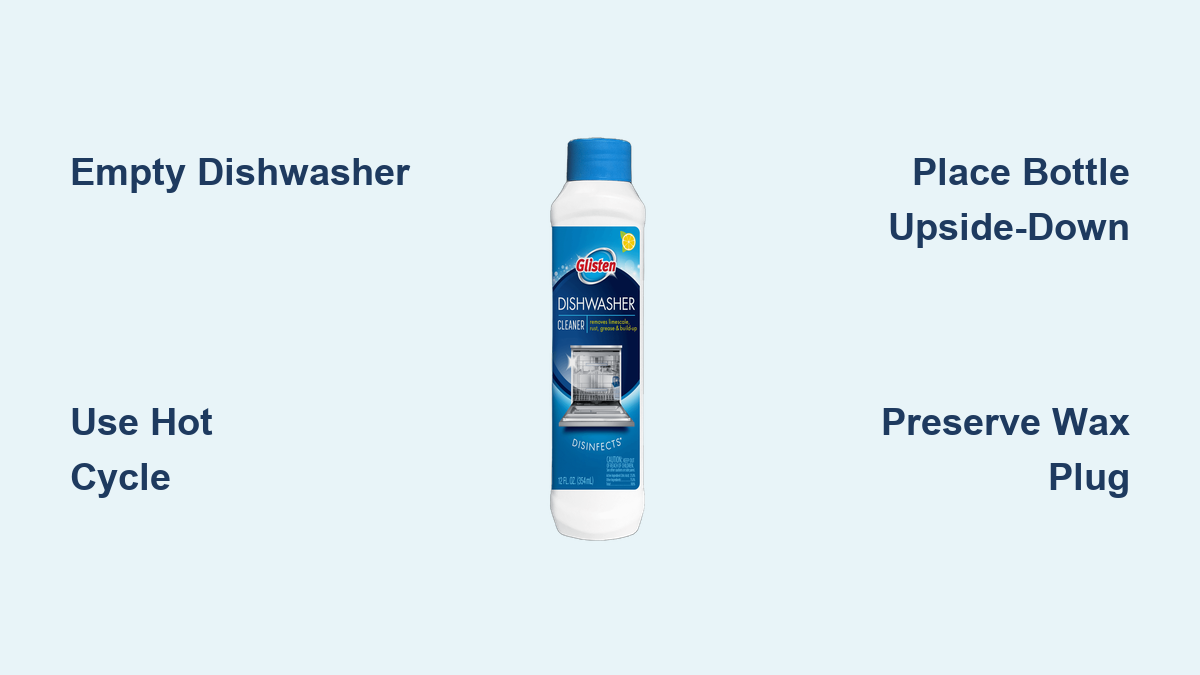
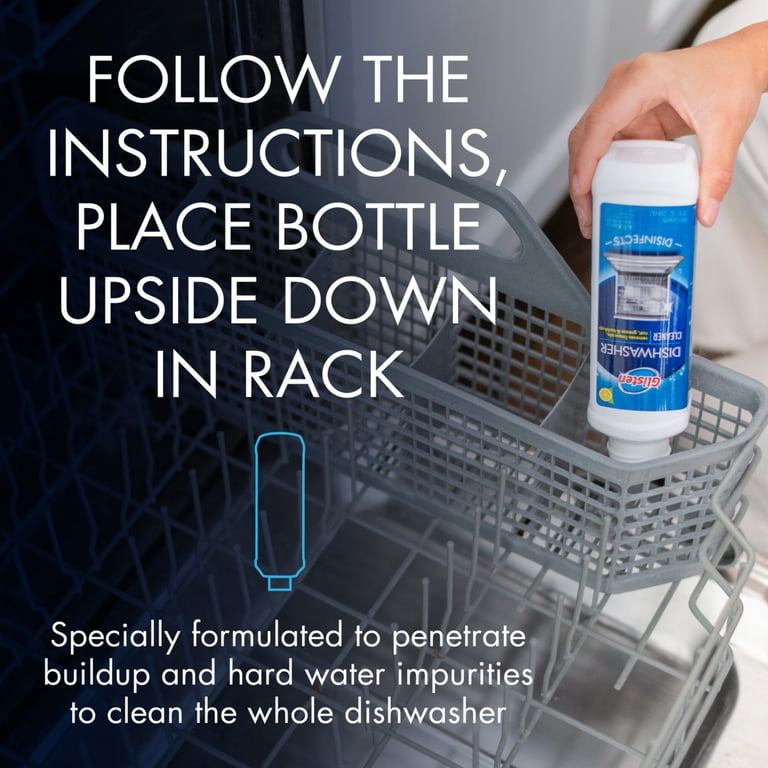
Twist off the cap but do not remove or puncture the wax plug underneath. This is critical. The wax seal melts only when exposed to sufficient heat, releasing the cleaner at the optimal time in the cycle. If the plug is damaged or removed early, the liquid may drain too soon and fail to clean properly.
Place Bottle Upside-Down in Bottom Rack
Set the bottle upside-down in the silverware basket on the bottom rack. This position exposes the bottle to the hottest water, allows gravity to assist in dispensing once the wax melts, and prevents tipping. If the silverware basket is not suitable, place it securely upright on its cap in the bottom rack. However, upside-down is best for full release.
Running the Correct Wash Cycle
Select the Hottest, Longest Setting
Choose the Heavy, Pots and Pans, Sanitize, or Normal wash cycle. Whichever runs the hottest and longest, typically 1.5 to 2 hours. These cycles reach higher temperatures needed to melt the wax plug and allow thorough circulation.
Avoid Eco or Quick Wash Modes
Eco, Quick, or 60-minute cycles do not generate enough heat or run long enough to activate Glisten properly. Using them may result in the wax plug remaining intact and the cleaner not dispensing.
Let the Cycle Finish Completely
Do not open the door or interrupt the cycle. The cleaner typically releases after the second rinse phase, when water temperature peaks. Full cycle completion ensures complete distribution and disinfection.
Troubleshooting Wax Plug Problems
Wax Plug Did Not Melt? Check These
If the wax plug remains solid after the cycle, the cleaner likely did not dispense. Common causes include water that was not hot enough. Always pre-rinse the tap until hot. Another cause is selecting the wrong cycle. Avoid Eco or Quick modes. Also check that the bottle was not placed upside-down. Must be inverted in the bottom rack. Finally, verify the wax plug was not damaged. Never remove or poke it before use.
Pro Tip: If the plug still has not melted, submerge the bottle in very hot tap water for 1 to 2 minutes to confirm activation. If it does not melt, your dishwasher heating element may need service.
What If Cleaner Leaked Early
If liquid drained during the first rinse, the wax plug was likely compromised. Check that you did not accidentally puncture it. In the future, handle the bottle gently and ensure the cap is tightly closed after opening.
Post-Cycle Cleanup Steps
Remove and Recycle the Bottle
Once the cycle ends, open the dishwasher and take out the empty Glisten bottle. Recycle the plastic bottle according to local guidelines. The bottle is designed for single use and should not be reused.
Wipe Away Loosened Debris
It is normal to see discolored residue, particles, or film on the tub floor. This is buildup that Glisten has broken loose. Wipe it away with a damp cloth or let the next rinse cycle wash it down the drain.
Inspect Spray Arms and Filter
For best results, occasionally remove and rinse the filter and spray arms to clear any debris that may have been dislodged. This enhances water flow and prevents clogs.
Maintaining Optimal Dishwasher Performance
Clean Monthly for Best Results
Use Glisten once a month to prevent limescale, rust, and odor buildup. Regular use keeps your dishwasher running efficiently and extends its lifespan. Hard water areas may benefit from cleaning every 3 weeks. Heavy usage households should clean monthly. Notice bad smells or cloudy dishes? Clean immediately.
Pair with Weekly Freshener
For continuous freshness, use Glisten Dishwasher Cleaner and Freshener weekly between deep cleans. This separate product helps neutralize odors and maintain a clean scent without deep-cleaning intensity.
Signs You Need a Second Treatment
If after one use you still notice lingering odors, visible limescale on walls or door, or poor spray arm rotation, run a second consecutive cycle with a fresh Glisten bottle. Severe buildup may require back-to-back treatments.
Safety and Compatibility Information
Safe for All Dishwashers
Glisten is safe for all models, including stainless steel interiors, plastic tubs, standard plumbing, and septic systems. No damage to seals, spray arms, or internal components when used as directed.
Not for Consumption
If dishes were accidentally left inside, hand wash them before use. While Glisten is safe for appliances, it is not meant for direct food contact.
Kosher Status Clarified
Glisten Dishwasher Cleaner is not officially kosher-certified, but contains no non-kosher ingredients. Many users following kosher practices find it acceptable, though individual standards may vary.
Why Glisten Beats DIY Cleaning Methods
Vinegar vs. Glisten: Key Differences
:max_bytes(150000):strip_icc()/GlistenDishwasherCleaner3Pack-d1d2dd995a914e9399a9a66a289f498a.jpg)
Glisten offers significant advantages over vinegar and baking soda methods. Vinegar does not disinfect or proven kill E. coli or Salmonella, while Glisten is an EPA-registered disinfectant. Vinegar has only a mild effect on limescale, while Glisten strong formulation dissolves rust and hard water deposits. Vinegar releases immediately and washes away early, but Glisten wax plug ensures timed release. Vinegar leaves no fragrance, while Glisten leaves a fresh, lasting scent. Vinegar requires bowls and manual setup, while Glisten is a simple drop-in with no prep required.
No More Scrubbing or Disassembly
Unlike homemade methods that require placing bowls on racks or scrubbing filters weekly, Glisten works automatically. Just place, run, and recycle. No effort required.
Frequently Asked Questions About Glisten Dishwasher Cleaner
How often should I use Glisten Dishwasher Cleaner?
Use Glisten once a month for optimal maintenance. Households with hard water or heavy dishwasher usage may benefit from cleaning every 3 weeks. If you notice bad smells or cloudy dishes, clean immediately regardless of schedule.
Can I use Glisten with dishes inside the dishwasher?
No. Glisten must be used in an empty dishwasher to circulate freely and reach all internal components. Running it with dishes inside risks leaving residue that could require hand-washing afterward.
What should I do if the wax plug does not melt?
If the wax plug remains solid after the cycle, check that you preheated the water supply, selected the hottest longest cycle, and placed the bottle upside-down in the bottom rack. If problems persist, your dishwasher heating element may need service.
Is Glisten safe for stainless steel dishwashers?
Yes. Glisten is safe for all dishwasher models, including those with stainless steel interiors. It will not damage seals, spray arms, or internal components when used as directed.
Does Glisten kill bacteria?
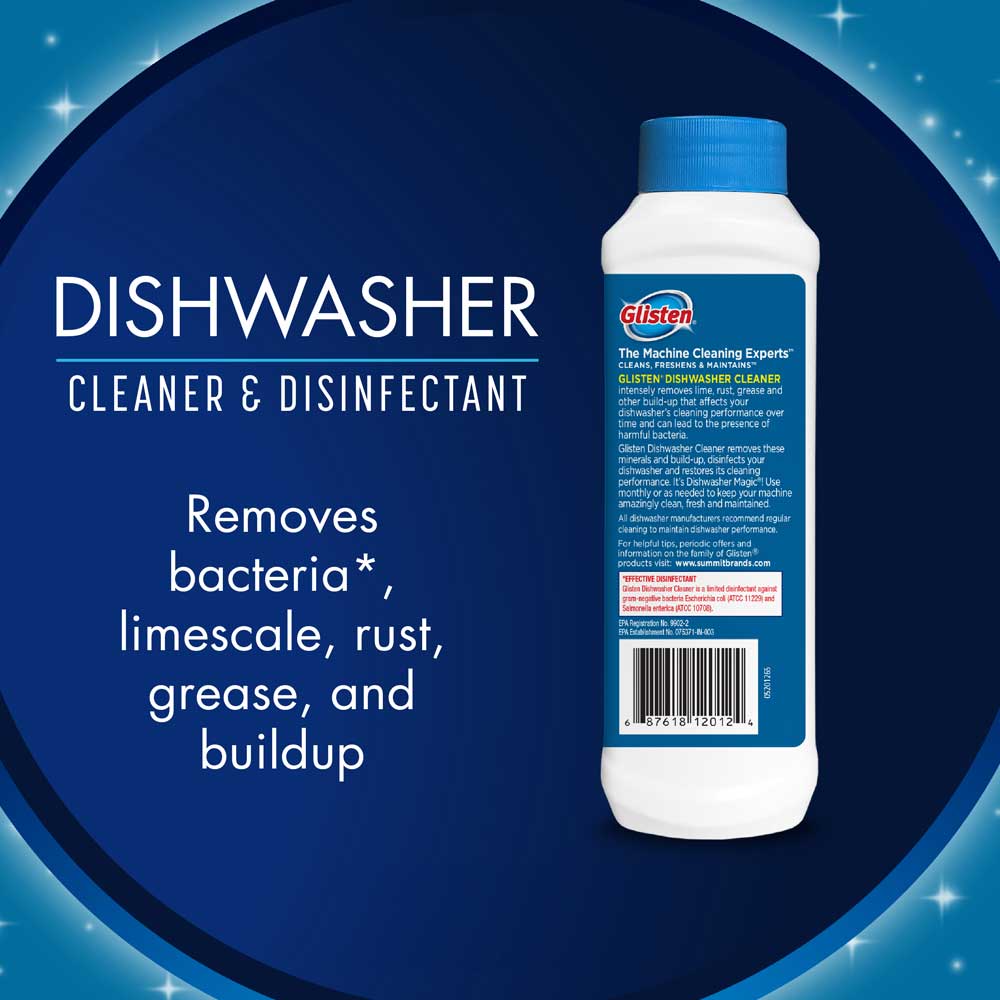
Yes. Glisten is the only EPA-registered dishwasher cleaner and disinfectant. It is effective against gram-negative bacteria including Escherichia coli and Salmonella enterica.
Can I recycle the Glisten bottle after use?
Yes. The empty plastic bottle is recyclable. Follow your local recycling guidelines for proper disposal.
Key Takeaways for Using Glisten Dishwasher Cleaner
Glisten Dishwasher Cleaner is more than a deodorizer. It is a science-backed solution for deep cleaning and disinfecting your dishwasher. By following these steps, using the hottest cycle, placing the bottle upside-down, preserving the wax plug, and cleaning monthly, you ensure optimal performance, eliminate harmful bacteria, and extend your appliance life. Make it part of your kitchen routine, just like cleaning the fridge or descaling the coffee maker, and enjoy consistently clean, fresh-smelling dishes every time.