Dishwasher Won’t Turn On? Fix It Fast
You press the Start button and nothing happens. No lights, no beeps, no hum. Your dishwasher is completely dead. Before calling a technician or replacing the unit, take a breath. Dishwasher won’t turn on is one of the most common appliance issues, and in over 80% of cases, it is fixable with simple troubleshooting.
Most failures are not caused by a broken motor or dead electronics. They stem from overlooked power sources, a tripped safety switch, or a door that did not latch properly. This guide walks you step by step from basic checks to advanced diagnostics, helping you restore power quickly and safely, often in under 30 minutes.
Check Power at the Source
Before opening panels or testing wires, confirm your dishwasher is getting electricity.
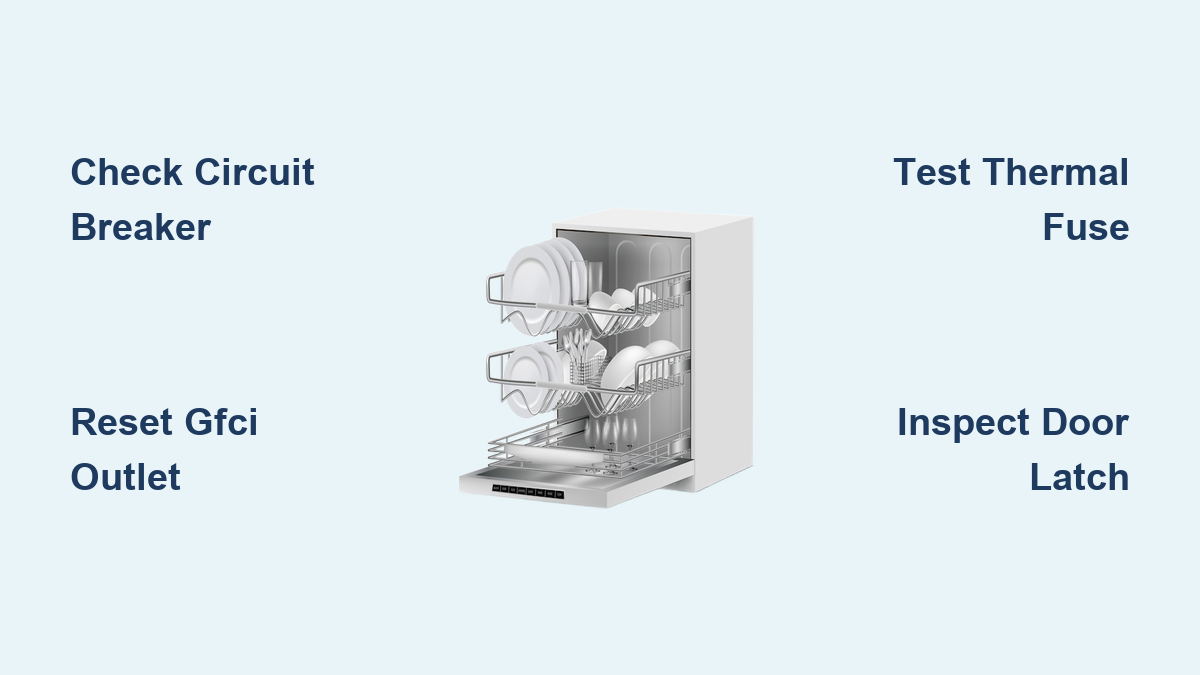
Test the Circuit Breaker
Dishwashers run on a dedicated 120V circuit with a 15-20 amp breaker. A tripped breaker is the number one reason for total power loss.
- Go to your electrical panel
- Look for a switch in the middle position, not fully on or off
- Flip it off completely, wait 3 seconds, then flip it back on
- Listen for a click, which means power is restored
Warning: If the breaker trips again immediately, stop. This signals a short circuit, ground fault, or failed control board. Call an electrician.
Locate and Reset the GFCI Outlet
Some dishwashers plug into a GFCI outlet under the sink or on a nearby counter. These cut power during moisture exposure or surges.
- Crouch under the sink and look for an outlet with Test and Reset buttons
- Press Reset, usually red
- If it clicks and stays in, power is restored
- If it pops out again, there is a ground fault, likely from water intrusion
Note: Modern electrical codes discourage GFCI for dishwashers due to nuisance tripping, but older homes may still use them.
Inspect the Power Plug
If your dishwasher is plug-in, not hardwired:
- Pull the unit out gently from under the counter
- Check that the plug is fully seated in the outlet
- Look for bent prongs, discoloration, or burn marks
A loose connection can mimic a total failure. Replug firmly and test.
Verify the Under-Sink Service Switch
Many homes have a dedicated toggle switch under the sink for service access.
- Shine a flashlight to locate it near the junction box
- Ensure it is in the on position
- Flip it off and back on to reset contact
This switch is easy to bump accidentally, especially during cabinet use.
Perform a System Reset
Sometimes the control board locks up due to a glitch or power surge.
Power Cycle the Dishwasher
A full reset clears temporary faults.
- Press Cancel or Drain to stop any active cycle
- Turn off power at the breaker
- Wait 5 minutes to drain capacitors and reset the control board
- Restore power
- Close the door and press Start
Result: Many dead dishwashers reboot and function normally after this.
Unlock Control Lock Mode
Many models have a child lock that disables all buttons.
- Look for a lock icon on the display
- If lit or flashing, the controls are locked
Fix by brand:
- LG: Hold Delay Start for 3-5 seconds
- Samsung: Hold Heated Dry or Options for 5 seconds
- GE, Frigidaire: Hold Dry or Lock button
- Whirlpool: Press Heated Dry twice
Tip: Consult your manual. Unlock sequences vary widely.
Cancel Delayed Start
If Delay Start is enabled, the dishwasher waits hours before running. There is no error, no lights, just silence.
- Press Cancel or Drain to clear the delay
- Try starting a normal cycle
This is often mistaken for a power failure.
Confirm Door Is Fully Latched
The dishwasher will not start if the control board does not detect a secure door closure.
Check for Obstructions
- Open the door fully
- Ensure the lower rack is inserted correctly, handles down, rails aligned
- Remove any utensils, packaging, or tall items blocking closure
Even a slight gap prevents startup.
Listen for the Latch Click
Close the door firmly. You should hear a distinct mechanical click.
- No click means the latch may be broken or misaligned
- Partial click means the striker, the metal pin on the tub, could be bent
Inspect the Latch Mechanism
- Open the door and look at the top center
- The latch should sit flush and move smoothly
- Shine a light inside and check for cracked plastic, worn springs, or debris like food or detergent residue
Pro Tip: A failed door switch can mimic total power loss, even if electricity is flowing.
Test the Door Switch
You can simulate closure by pressing and holding the latch manually, then trying to start the dishwasher. If it powers on, the latch or switch is faulty. Replace the door latch assembly if damaged.
Diagnose the Thermal Fuse
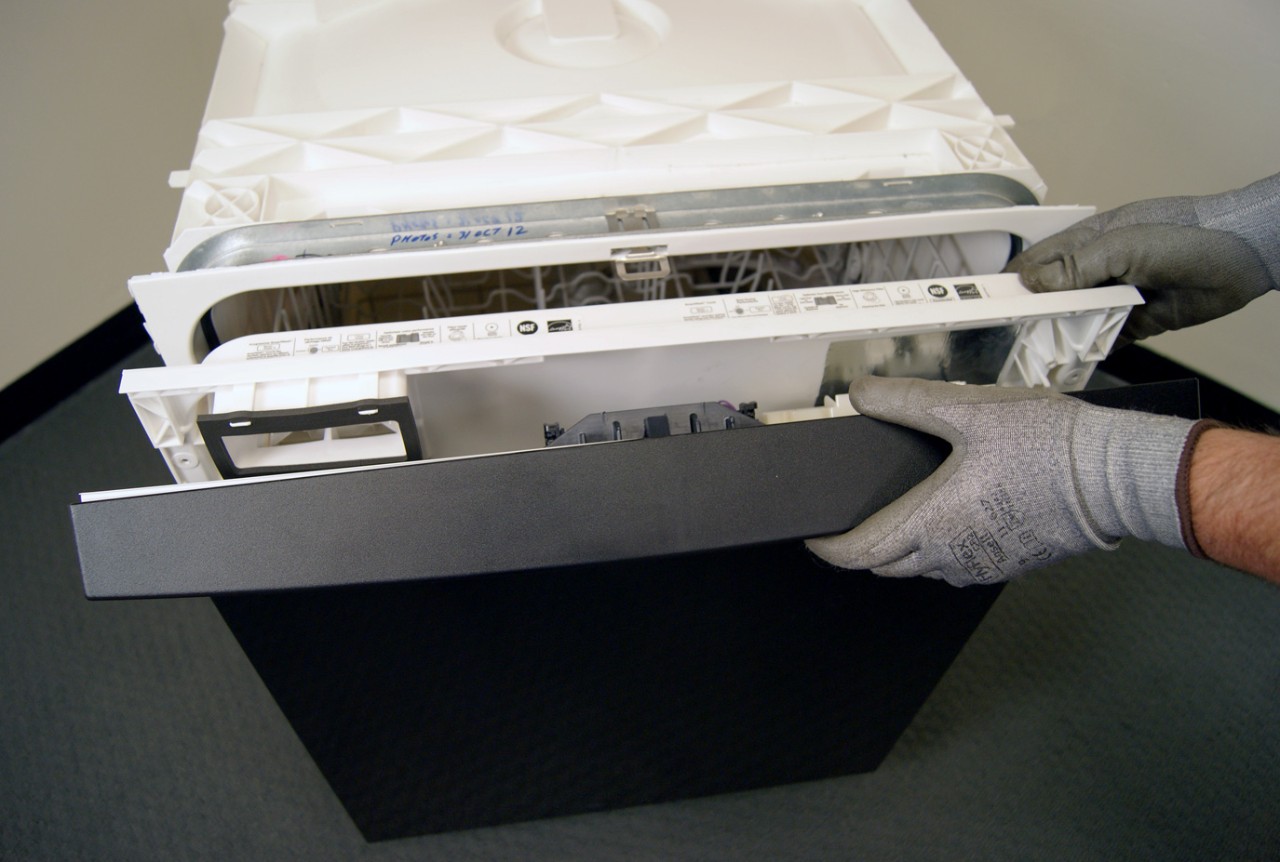
The thermal fuse is a safety device that cuts power if the dishwasher overheats.
Locate the Thermal Fuse
- Power off at the breaker first
- Remove 2-4 screws from the top of the door frame using Torx T15 or T20
- Lift the console to expose the control board
- Find a small white or black fuse, about 1 inch long, clipped near the board
- Two wires connect to it
Common in: Whirlpool, KitchenAid, Samsung, GE, LG, Frigidaire.
Test for Continuity
Use a digital multimeter.
- Disconnect both wires from the fuse
- Set multimeter to continuity mode, symbol with a beep
- Touch one probe to each terminal
- Listen for a beep
- Beep means the fuse is good
- No beep means the fuse is blown and must be replaced
Specs: Most fuses are 16A, 125/250V, trip at 160 degrees Celsius.
Replace a Blown Fuse
- Pry the fuse from its plastic holder
- Slide in a new fuse matching the part number to your model
- Reconnect wires
- Snap the fuse back into place
- Reinstall the console and front panel
Warning: A blown fuse means the unit overheated. Check for blocked vents, failed heating element, leaking door seal, or steam buildup from poor ventilation.
Inspect Internal Wiring and Control Board
If power reaches the unit but nothing works, check internal components.
Verify Incoming Power
- Pull out the dishwasher
- Remove the lower front panel, the toe kick, with 2-4 screws
- Locate the wire connection block behind a small cover
- Power on at the breaker
- Set multimeter to AC voltage
-
Touch probes to line and neutral wires
-
120V means power is reaching the unit
- 0V means the issue is upstream, at the breaker, switch, or outlet
Safety: Never test live wires with wet hands or standing on a damp floor.
Examine the Door Flex Cable
This ribbon cable connects the control panel to the main board.
- Open the door
- Inspect wires near the hinges and where they enter the door frame
- Look for frayed insulation, pinched or kanked sections, or corrosion or moisture
Repeated door slamming breaks internal wires.
Fix: Replace the door harness assembly if damaged.
Diagnose Control Board Failure
The main control board manages all functions.
Symptoms of failure:
- No power after confirming supply
- Single click when pressing Start
- Flickering display that dies
- No response after reset
Common causes:
- Power surges, especially after storms
- Moisture from leaks
- Aging capacitors
Note: Control boards are expensive, $100-$300. Replace only after ruling out fuse, latch, and wiring issues.
Brand-Specific Tips and Fixes

Whirlpool, Kenmore, KitchenAid
- Thermal fuse is a common failure point. Check first
- May enter sleep mode after inactivity. Press any button to wake
- Use Heated Dry to unlock control
LG
- CL error code means Control Lock is active
- Hold Delay Start for 3-5 seconds to unlock
- Check GFCI under sink. Frequent tripping is common
Samsung
- Prone to moisture damage in control panel
- Ribbon cable failures are common. Inspect door wiring
- Reset by holding Heated Dry for 5 seconds
GE, Frigidaire
- Similar thermal fuse layout. Check continuity
- Delay Start is often mistaken for power failure
- Replace latch if door does not click
Bosch, Miele
- European models often integrate thermal protection into the control module
- No user-replaceable fuse. May require full board replacement
- Use diagnostic mode to check error logs
Always use your model and serial number to find exact parts and diagrams.
Prevent Future Power Failures
Avoid repeat issues with simple maintenance.
Avoid Slamming the Door
Hard closures damage latch mechanisms, door switches, and internal wiring. Close gently every time.
Keep the Under-Sink Area Dry
Moisture causes corroded connections, short circuits, and tripped GFCI. Wipe up spills and fix leaks immediately.
Install Surge Protection
Lightning or grid surges can fry the control board. Use a whole-house surge protector or an appliance-specific surge strip for plug-in models.
Clean the Door Gasket Monthly
Dirt and grime prevent proper sealing. Wipe with a damp cloth, remove food debris from latch area, and ensure the gasket sits flush.
Level the Dishwasher
An unlevel unit causes vibration, door misalignment, and seal leaks. Use a bubble level and adjust feet as needed.
When to Repair vs. Replace
Repair If:
- Unit is under 7-10 years old
- Problem is one fixable part, like fuse, latch, or switch
- Repair cost is less than 50% of a new model
- It has good efficiency and performance
Replace If:
- Dishwasher is over 10 years old
- Multiple components are failing, like board, latch, and wiring
- Repair estimate is high compared to new price
- New models offer better features, noise reduction, or energy savings
Tip: Compare annual energy cost, dB rating, and cycle options before buying new.
Frequently Asked Questions About Dishwasher Power Issues
Why does my dishwasher have no power but other appliances work?
This typically points to a dishwasher-specific issue rather than a general power outage. Check the dedicated circuit breaker for the dishwasher first. If it is not tripped, inspect the GFCI outlet under the sink, as dishwashers often share this circuit. The thermal fuse inside the dishwasher may also have blown, which requires testing with a multimeter.
Can a door latch cause a dishwasher not to start?
Yes. Dishwashers will not start if the control board does not detect a fully closed door. The door latch assembly contains a switch that signals closure. If this switch fails or the latch is damaged, the dishwasher appears dead. Listen for a click when closing the door, and check for obstructions preventing full closure.
How do I reset my dishwasher control board?
Turn off power at the circuit breaker. Wait 5 minutes to allow capacitors to discharge. Restore power and try starting a cycle. This clears temporary software glitches. For specific models, holding certain buttons like Heated Dry or Delay Start for 3-5 seconds can also reset the control lock or other settings.
What causes a thermal fuse to blow?
Thermal fuses blow when the dishwasher overheats. This happens due to blocked vents, a failed heating element, a leaking door seal, or prolonged high-temperature cycles. Moisture intrusion from leaks or steam buildup can also cause failure. Address the underlying cause before replacing the fuse.
Is it worth repairing a dishwasher that won’t turn on?
Repair is worth it if the dishwasher is under 10 years old and the problem is one fixable component like a thermal fuse, door latch, or switch. If the control board has failed or multiple components are faulty, replacement makes more sense, especially if repair costs exceed half the price of a new unit.
Key Takeaways for Fixing a Dishwasher That Won’t Turn On
Most dishwasher power failures stem from simple causes that you can diagnose and fix yourself. Start by checking the circuit breaker and GFCI outlet, as these are the most common culprits. Verify the door latches properly and look for any control lock settings that may be blocking operation. Use a multimeter to test the thermal fuse, which is a frequent failure point in models from Whirlpool, Samsung, GE, and LG. Replace only one component at a time to identify the true root cause, and always disconnect power before working inside the unit.
If your dishwasher is over 10 years old or showing multiple failing components, consider replacement rather than expensive repairs. New models offer improved energy efficiency, quieter operation, and better cleaning performance. Keep your unit level, avoid slamming the door, and address leaks promptly to prevent future power issues. With systematic troubleshooting, you can save the cost of a service call and get your dishwasher running again quickly.