Dishwasher Not Cleaning? Fix It Fast
Is your dishwasher leaving food residue on plates or clouding your glasses? This is one of the most common household complaints, but the good news is that most cleaning problems stem from simple issues you can fix yourself. In fact, over 80% of dishwasher not cleaning cases can be resolved without calling a technician. This guide walks you through every major cause, from clogged filters to water temperature problems, and shows you exactly how to restore your dishwasher’s cleaning power.
Check Detergent Dissolution First
If your detergent tablet remains intact after a wash cycle, it never released its cleaning agents. This is one of the most common reasons for poor cleaning results.
Why Detergent Fails to Dissolve
Several factors can prevent proper dissolution. Utensils placed above the detergent dispenser tray can physically block the lid from opening during the cycle. Low water temperature below 120°F prevents activation. Expired or low-quality detergent may not break down properly. Limescale buildup in the dispenser can also cause issues.
Quick fixes to try:
• Reload dishes to ensure nothing sits above the detergent tray
• Switch from tablets to powder or liquid detergent temporarily
• Run hot water at the sink for 30 seconds before starting the dishwasher
• Clean the dispenser with a vinegar-dampened cloth to remove residue
Clean the Filter Monthly

A dirty filter recirculates grimy water back onto your dishes, leaving food particles and causing odors. Located at the tub’s base, the filter traps debris but requires regular cleaning.
Signs of a Clogged Filter
Watch for these warning signs. Standing water at the bottom after the cycle completes. Food residue appearing on plates even after washing. A musty or unpleasant odor emanating from the machine.
How to clean the filter properly:
1. Remove the lower rack to access the filter
2. Twist the filter assembly counterclockwise to unlock it
3. Pull out both the cylindrical and mesh filters
4. Rinse thoroughly under warm running water
5. Use a soft brush for stubborn debris, never use metal tools
6. Reinstall by aligning arrows and locking securely in place
Clean the filter every 30 days or after heavy-use cycles to maintain optimal performance.
Unclog Spray Arms for Full Coverage
Spray arms rotate and distribute pressurized water across all dishes. When food scraps or mineral buildup clog their nozzles, water cannot reach your plates.
How to Clean Spray Arms
Remove both upper and lower spray arms by unscrewing or unclipping them. Use a toothpick or cocktail stick to clear each individual nozzle hole. Soak the arms in warm white vinegar for 30 minutes to dissolve limescale. Rinse thoroughly and reinstall, ensuring they lock into place properly.
Test rotation manually — the arms should spin freely without wobbling or sticking. If they feel stiff, debris is still blocking the nozzles.
Load Dishes the Right Way
Even a perfectly functioning dishwasher fails if dishes are loaded incorrectly. Blocking spray arms or stacking plates too tightly prevents water from reaching surfaces.
Upper Rack Guidelines
Place glasses and cups at a slight angle for proper drainage. Never position utensils above the detergent tray. Use bottom rack holders for tall items like wine glasses for stability. Place dishwasher-safe plastics on the top rack only to prevent warping from heat.
Bottom Rack Guidelines
Face plates inward toward the spray jets for best coverage. Place pots and pans upside down for thorough cleaning. Position large items along the sides rather than in the center. Never allow items to block the spray arms.
Cutlery Basket Tips
Mix forks and spoons together to prevent nesting, which blocks water flow. Place knives sharp-edge down for safety. Secure lids and baby bottles with clips to prevent displacement during washing.
Pro Tip: You do not need to pre-rinse dishes. Modern detergents work best with light food residue. Simply scrape off large chunks to avoid clogging the filter.
Test Water Temperature
Detergents need hot water between 120°F and 160°F to activate and dissolve grease effectively. Cold water leaves films on dishes and fails to dissolve detergent properly.
Signs of Low Temperature
Watch for greasy film on dishes, cloudy glassware, or poor drying performance. These indicate the water is not hot enough to clean properly.
How to Ensure Hot Water
Run hot water at the sink for 30 seconds before starting the dishwasher. This purges cold water from the pipes and ensures hot water enters the machine immediately. If dishes are too hot to touch after the cycle, the heating element is working correctly.
Verify Water Pressure and Inlet Valve
Low water pressure reduces spray force and cleaning power significantly. If the dishwasher isn’t filling properly, the spray arms cannot distribute water effectively.
Simple Pressure Test
Pour one liter of water directly into the tub and run a normal cycle. If cleaning improves noticeably, low inlet volume from insufficient water pressure is likely the culprit.
Checking the Inlet Valve
Turn off water and power to the dishwasher. Locate the inlet valve near the front panel. Disconnect the hose and check for debris blocking the screen. Replace the valve if it’s damaged or fails to open properly.
Inspect the Drain System
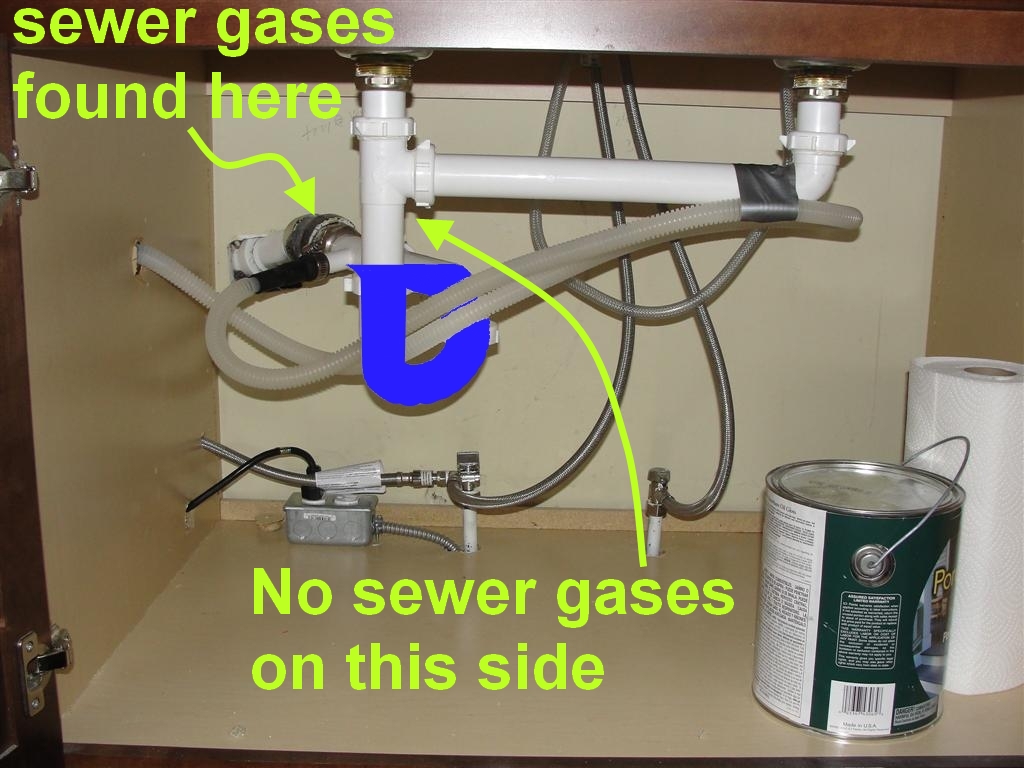
A clogged drain causes dirty water to recirculate onto your dishes, leaving residue and causing odors.
Check These Common Points
Inspect the drain hose under the sink for kinks or clogs. Check the air gap if your sink has one installed. Examine the garbage disposal connection for blockages.
Disconnect the hose and flush with hot water to clear minor clogs. Use a plumber’s snake for deeper blockages. Replace any kinked or cracked hoses.
Run a vinegar cycle monthly to break down grease and prevent future buildup.
Use the Right Detergent and Rinse Aid
Not all detergents clean equally. Low-quality tablets may not dissolve properly or lack enzymes needed to break down proteins and starches.
Recommended Products
Use high-quality tablets like Finish Ultimate Plus that dissolve reliably in all water conditions. Choose pods with built-in rinse aid and salt for hard water areas.
Always use rinse aid to prevent water spots, improve drying performance, and help sheet water off dishes. One user added rinse aid but still had cleaning issues, proving the problem was water circulation rather than drying.
Run Monthly Deep Cleaning Cycles
Over time, limescale and grease build up inside the pump, hoses, and spray arms, reducing efficiency even when components appear clean.
Deep Cleaning Steps
Remove all dishes from the dishwasher. Place a dishwasher cleaner tablet or powder on the bottom rack. Run the hottest cycle available without pre-wash. Repeat every one to two months.
Alternatively, place two cups of white vinegar in a dishwasher-safe bowl on the top rack and run a hot cycle.
Follow a Preventive Maintenance Schedule
Prevention beats repair. Simple monthly habits extend your dishwasher’s life and maintain peak performance.
Monthly tasks:
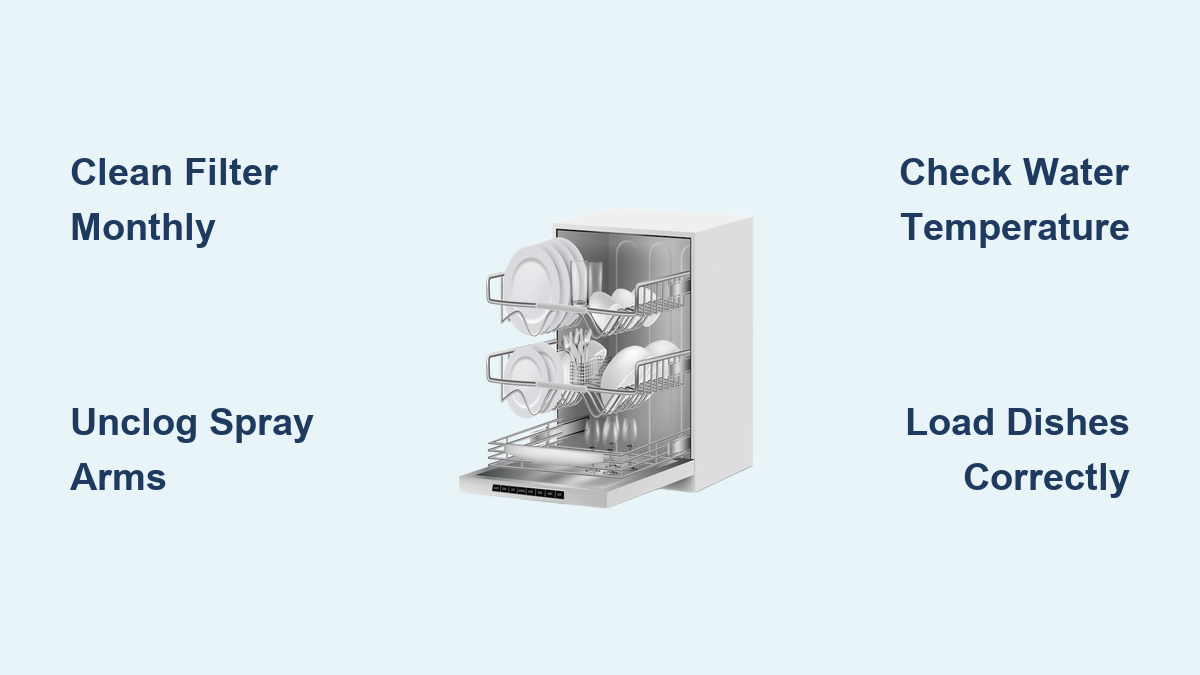
• Clean the filter to prevent clogs and odors
• Inspect spray arms to ensure full water coverage
• Wipe door gasket to prevent mold and leaks
Weekly tasks:
• Replenish rinse aid for optimal drying and shine
Every one to two months:
• Run a deep cleaning cycle to remove limescale and grease
Set a calendar reminder. Just 10 minutes of monthly maintenance saves hours of troubleshooting later.
When to Call a Technician
If you have checked all the above components and dishes still come out dirty, professional help may be needed.
Signs You Need a Pro
Spray arms, filter, and detergent are all clean but dishes remain dirty. Unusual noises from the inlet valve or pump. No water enters the dishwasher despite proper connections. Error codes appear on the display.
Before Calling
Note your dishwasher model number from the rating plate. Describe symptoms clearly, such as “tablet undissolved” or “no water in tub.” List all troubleshooting steps you have already attempted.
Contact authorized support with your model and production number ready for faster service.
Key Takeaways for Fixing Your Dishwasher
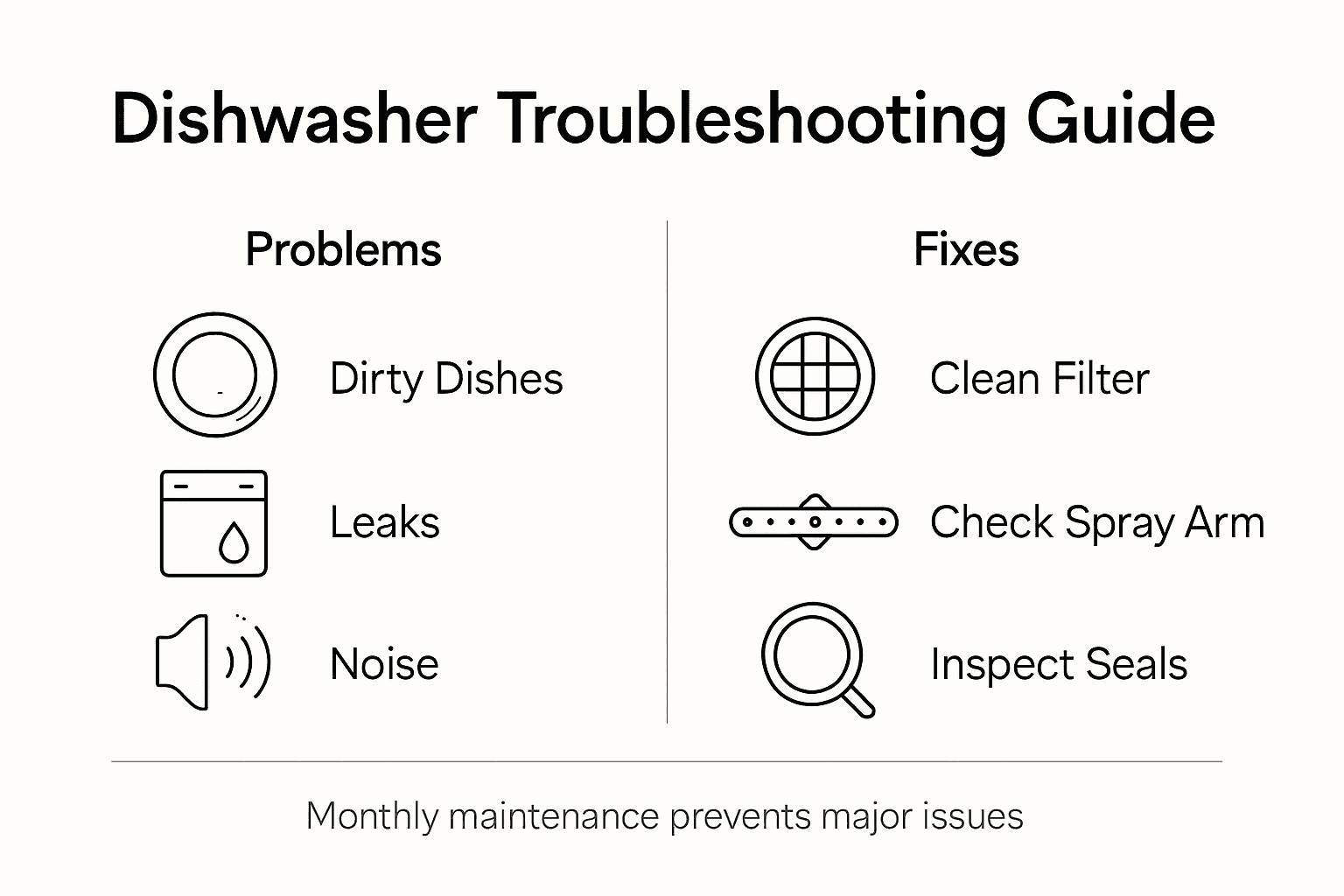
Your dishwasher not cleaning is rarely a mystery. Most issues stem from three core problems: water flow restrictions, inadequate water temperature, or improper loading. Start with the simplest fixes first.
Quick action checklist:
• Clean the filter thoroughly
• Unclog spray arm nozzles with a toothpick
• Verify detergent dissolves properly
• Check hot water supply and temperature
• Reload using proper loading techniques
• Run a deep cleaning cycle
With these steps, your dishwasher will deliver clean, dry, spotless dishes every time. Most problems resolve in under an hour without professional help.
Frequently Asked Questions About Dishwasher Not Cleaning
Why is my dishwasher leaving food on clean dishes?
This usually indicates a clogged filter, blocked spray arms, or improper loading. Start by cleaning the filter and checking spray arm nozzles for debris. Ensure dishes are not blocking water spray paths.
How often should I clean my dishwasher filter?
Clean the filter every 30 days or after heavy-use cycles. Monthly cleaning prevents clogs that cause poor cleaning and odors.
Can I use regular dish soap in my dishwasher?
Never use regular dish soap. It creates excessive suds that can damage the dishwasher and cause leaks. Use only detergent specifically designed for dishwashers.
Why does my dishwasher not clean the top rack?
Blocked or clogged spray arms typically cause this issue. Remove and clean the upper spray arm, clearing each nozzle hole with a toothpick. Ensure the arm rotates freely after reinstallation.
What temperature should dishwasher water be?
Dishwasher water should be between 120°F and 160°F for proper cleaning and detergent activation. Run hot water at the sink before starting the dishwasher to ensure hot water enters the machine.
Do I need to rinse dishes before loading them?
No, you do not need to pre-rinse. Simply scrape off large food chunks. Modern detergents are designed to handle light food residue and work best when some soil remains on dishes.